Can you grind a material that breaks at the wrong pressure – and is worth more than gold? I have been working on infrared optics for more than 7 years. I know what does and what doesn’t. In this article I’ll describe the IR Optics Grinding Machine in simple words.
You will find out what IR optics grinding is. You will see what materials they are using. You will also learn how to choose the proper machine and approach. By the end you’ll realise why Vimfun is the best option for this task.
What Is an IR Optics Grinding Machine, and Why Does It Matter?
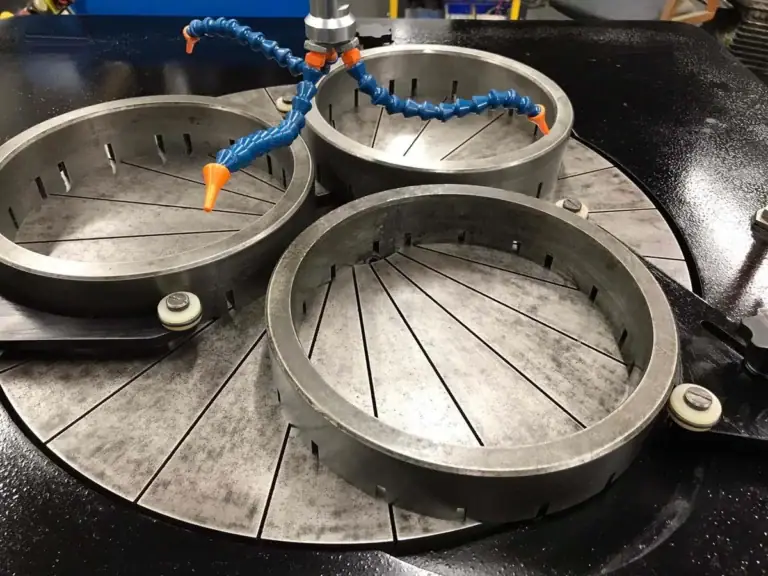
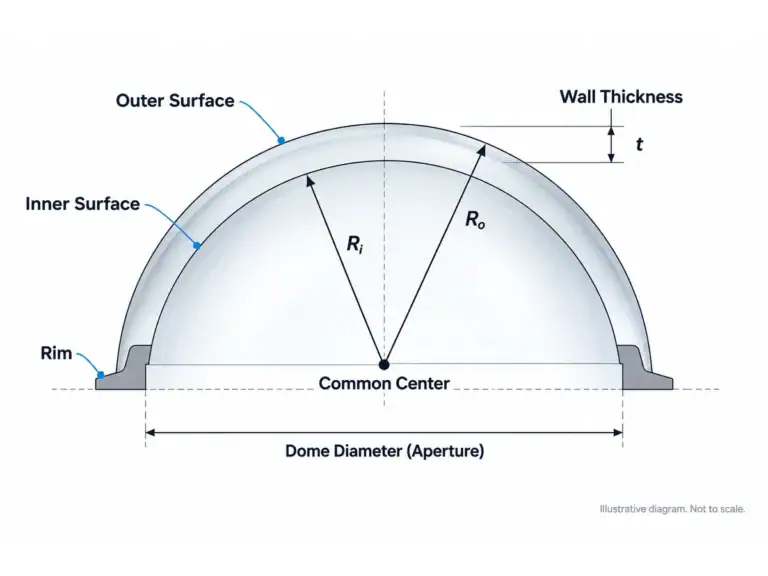
An IR optics grinding machine grinds infrared optical materials. It converts raw blanks into lenses, windows and domes. Difficult materials such as Germanium, Silicon and ZnSe may be processed. They are fragile, soft or poisonous. A regular glass grinder cannot work with them safely.
It’s either too quick or too harsh. The speed, pressure, coolant and wheel type are controlled very carefully by a good Infrared Lens Grinding Machine. Make the incorrect move and lenses fracture, surfaces fail, and pricey material is wasted. Precision is not a luxury here.
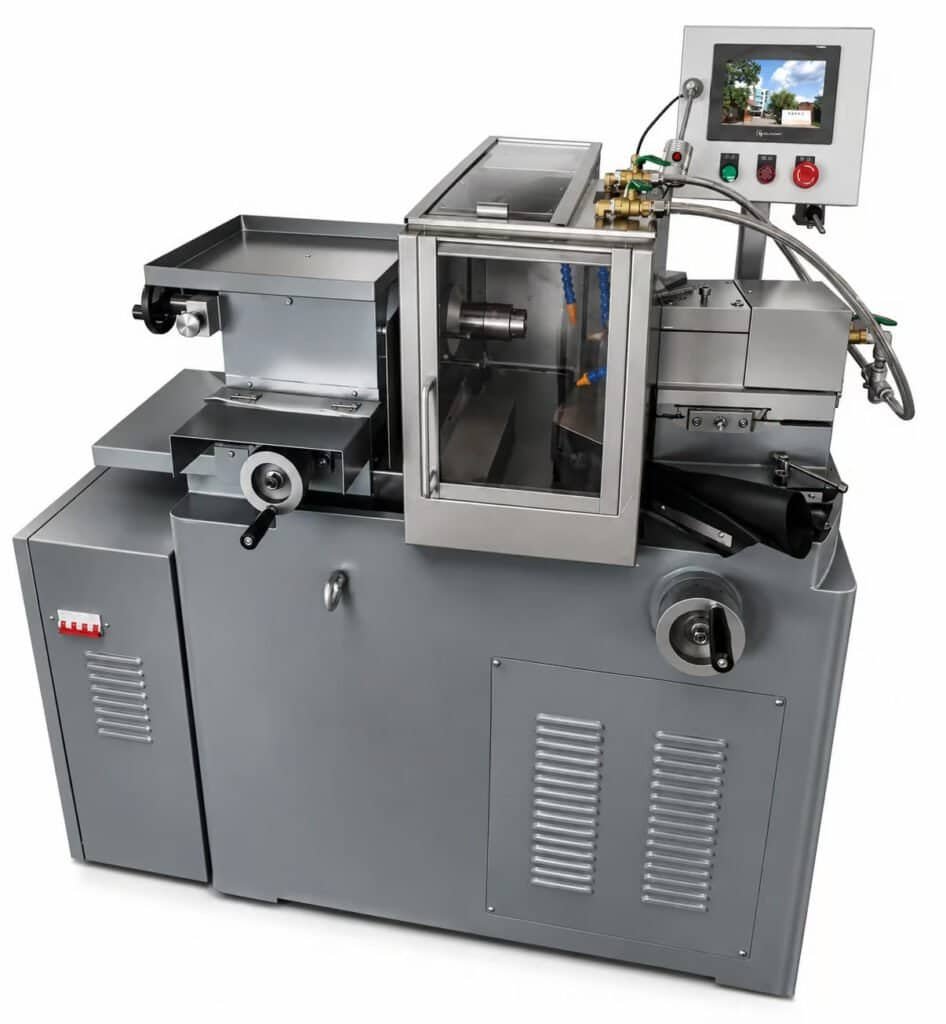
Standard Grinder vs. IR Optics Grinding Machine
| Feature | Standard Glass Grinder | IR Optics Grinding Machine |
| Material Range | Borosilicate, Soda-lime | Ge, Si, ZnSe, ZnS, Sapphire |
| Spindle Speed Control | Basic | High-Precision, Variable |
| Coolant System | Water-based | Controlled pH, Non-reactive |
| Surface Tolerance | ±10 microns | ±1–2 microns |
| Wheel Type | Standard abrasive | Diamond, CBN |
| Suitable For | Standard optics | Infrared, thermal, laser optics |
Which IR Material Is the Hardest to Grind Without the Right Machine?
Each IR substance is an individual material. Germanium is fragile and breaks easily. The silicon chips at the edges are under the improper pressure. ZnSe scratches quite readily with the least error. Using the incorrect machine for any of these implies lost material and lost money.
Each material requires an adaptable Optical Lens Grinding Machine. Speed, pressure, coolant and kind of wheel all have to alter. Here’s a deeper look at the three basic IR materials and what each requires.
Germanium: Dense, Brittle, and High-Value
Thermal imaging lenses often use germanium (Ge) lenses. It is effective in the 8-12 \um range. But it comes apart easily. One false move and it’s all gone to hell.
- Low feed rates on a Germanium Lens Grinding Machine
- 600+ mesh fine-grit diamond wheels are important
- pH Neutral Water Coolant Stops Surface Staining
- Make numerous light passes never one massive cut
Silicon: Hard but Edge-Sensitive
Silicon (Si) is used in mid-wave infrared systems. It’s more difficult than Germanium. But it does still crumble at the corners.
- Precision IR Optics Grinding Machine with hard spindle control required
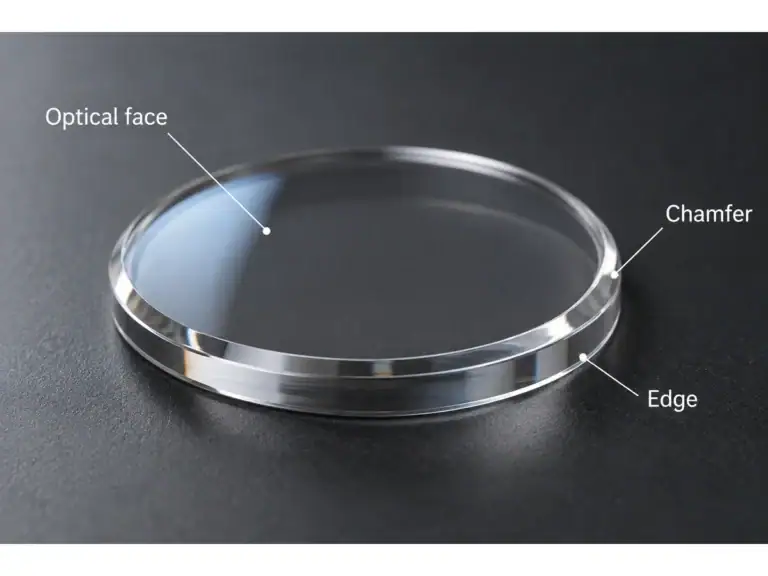
- Chamfer edges before grinding to reduce chip risk
- Wet grinding results in a superior finish than dry grinding
- Coating adhesion requires surface finish Ra < 1 nm
ZnSe: Soft, Toxic, and Scratch-Prone
ZnSe is used in CO2 laser systems. It is incredibly soft and poisonous as dust. Handle with care.
- Dust Control Needed for ZnSe Lens Grinding Machine Enclosed
- Apply extremely mild pressure – too much would scrape the surface.
- Fine diamond slurry polish required for rough grinding.
- Operators must wear full respiratory PPE
IR Material Grinding Quick Reference Guide
| Material | Hardness (Knoop) | Grinding Risk | Wheel Grit | Coolant Type |
| Germanium | 780 | Brittle fracture | 600–1200 mesh | pH-neutral water |
| Silicon | 1150 | Edge chipping | 800–1500 mesh | Water + surfactant |
| ZnSe | 120 | Surface scratch | 1200–2000 mesh | Oil-based slurry |
| ZnS | 160 | Cleavage planes | 1000–1800 mesh | Water-based |
How Do You Choose the Right Grinding Method for IR Optics?
It will depend on the approach you choose. It influences the quality of the finish, the cycle speed, the waste rate and the tool life. One approach may not suit all tasks. The best choice relies on your material, lens shape and batch quantity. Some tasks need CNC control.
Others need a hand touch. There are many techniques of excellent spherical optics grinding machines. You may swap depending on the work. Below are shown the main techniques utilised nowadays in the manufacture of IR optics.
CNC Grinding vs Manual Grinding
Do modern IR optics work? CNC Grinding is the best option. It delivers stable outcomes and close tolerances.
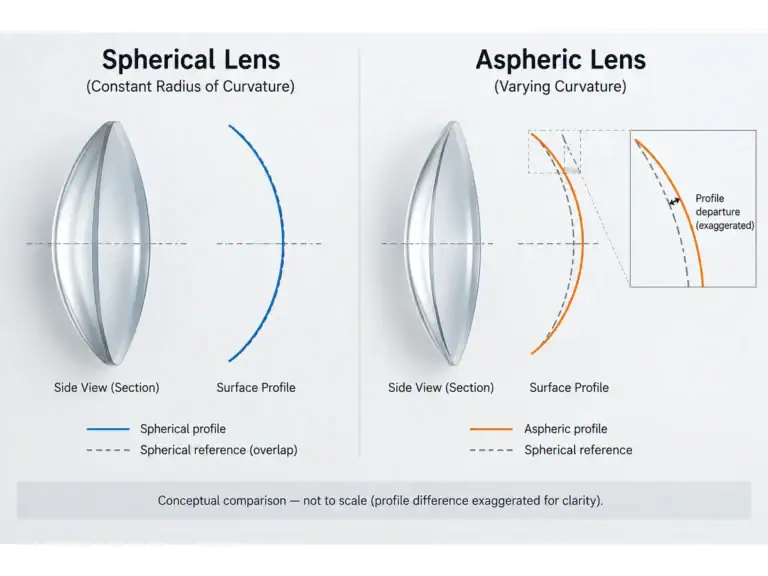
- CNC processes multi-axis structures such as aspheres and freeforms
- It reduces the human error factor in feed rate and pressure
- Best for big quantities of Germanium and Silicon lens
- Higher initial cost, reduced cost per part over time
Manual Grinding works for small runs or custom shapes.
- More versatile for single lenses or prototypes
- Requires knowledgeable operator with IR material expertise
- Increased chance of uneven outcome or surface damage
- Better for ZnSe, since it is sensitive to vibration
Single-Point Diamond Turning (SPDT) vs. Abrasive Grinding
| Method | Best For | Surface Finish | Speed | Cost |
| CNC Abrasive Grinding | Spherical lenses, high volume | Ra 2–5 nm | Fast | Medium |
| SPDT | Aspheres, freeform | Ra < 1 nm | Medium | High |
| Manual Grinding | Prototypes, custom shapes | Ra 5–20 nm | Slow | Low |
| Lapping/Polishing | Final finish after grinding | Ra < 0.5 nm | Very Slow | Medium |
The finest all-around option is CNC abrasive grinding using a quality Optical Glass Grinding Machine. SPDT is highly useful if form accuracy is very tight. Manual grinding is only for rare instances.
What Real Results Can a Precision IR Optics Grinding Machine Deliver?
What counts is not theory but real outcomes. The best precision IR Optics Grinding Machine has been proved in various sectors. It is used in imaging, defence, medicinal and industrial lasers. Every industry requires a distinct degree of surface quality.
Each material is a different difficulty. The correct machine does it all. Gives the precision, polish and repeatability serious manufacturing needs. These are true instances of what the correct machine can achieve.
Case Studies: IR Optics in Action
| Application | Material | Machine Type | Result |
| Thermal drone camera | Germanium | CNC IR Grinder | ±1.5 µm surface accuracy |
| CO2 laser cutter lens | ZnSe | ZnSe Lens Grinder | Ra 0.8 nm, zero scratch |
| Night vision system | Silicon | Precision Optics Machine | Edge chip rate < 0.5% |
| Medical imaging window | Sapphire | Sapphire Optics Grinder | 99.9% transmission retained |
Small Aperture and Sapphire Optics
Small aperture optics grinding machines are quite popular. tiny lenses less than 10 mm are becoming increasingly prevalent in tiny thermal cameras and compact lasers.
- These need ultra-accurate spindle bearings (runout < 0.1 µm)
- Grit and wheel size matter more at small diameters
- Sapphire Optics Grinding Machines used for UV to IR window projects
- Sapphire is exceedingly hard (Mohs 9) – only diamond cutting wheels can cut it.
Why Vimfun Leads in IR Optics Grinding Machines
Vimfun manufactures machinery tailored for IR optical materials. They operate with Germanium, Silicon, ZnSe, ZnS and Sapphire. All machines are tested on actual IR blanks before shipping. Vimfun understands that you can’t just use any grinder for high-value IR work.
More Factors That Affect IR Optics Grinding Quality
Even a wonderful machine might fail if not set up appropriately. These other elements are as significant as the equipment itself.
Coolant Management
- Wrong coolant pH can stain or pit Germanium surfaces
- ZnSe needs an oil-based coolant to lower dust risk
- Grinding of Silicon produces fine particles – filtering must be robust
- Maintain constant coolant temperature to prevent size mistakes
Wheel Dressing and Maintenance
- Avoid glazing by treating diamond wheels
- Glazed wheels have more pressure and create deeper surface damage
- The dressing frequency depends on the material hardness and on the depth of incision.
- Monitor wheel life for each material type
Vibration Isolation
- Grinding of IR optics is very sensitive to vibration
- put equipment on isolated bases or anti-vibration mats
- Even HVAC vibration may destroy delicate materials such as ZnSe
FAQs About IR Optics Grinding Machine
What is the best machine for grinding Germanium lenses?
CNC Control Germanium Lens Grinding Machine is the finest option. Germanium is fragile and expensive. The machine should provide exact feed control and safe coolant. Vimfun develops CNC models and tests them on actual Germanium blanks. Key takeaways:
- Use fine diamond wheels (600-1200 mesh)
- Low feed rates avoid microcracking
- A lot of mild passes are safer than one hefty cut
Can one machine grind both Silicon and ZnSe?
Yes, but you have to adjust the settings for each substance. Silicon and ZnSe are quite different with regard to hardness. An Optical Lens Grinding Machine can do both . Adjustable speed and pressure. Highlights
- Change wheel type between tasks
- Switching Materials Clean the Coolant System
- Set RPM and feed rates to match each material
Is a Sapphire Optics Grinding Machine different from a standard IR grinder?
Yes. Sapphire is much tougher than either germanium or ZnSe. Getting it going need a high torque spindle and coarse diamond wheels. A conventional IR grinder may not have adequate power. Highlights:
- Only Sapphire works with diamond wheels
- The spindle has to be extremely stiff
- Slow feed rates prevent heat and cracking of the
How do I reduce waste when grinding ZnSe lenses?
ZnSe is soft and expensive. Excessive pressure causes waste. Wrong wheel grit or vibration. Finish using a machine with pressure feedback and with fine slurry. Key points
- Do not exceed pressure limit for ZNSe
- Use an enclosed chamber for collection of poisonous dust
- Fine slurry polishing after rough grinding saves material
Conclusion
Still grinding Germanium, Silicon or ZnSe on a conventional grinder? You are throwing money away on shattered lenses and wasted material . The right IR optics grinding machine is for IR work – not converted from a glass grinder.
It manages every variable and gives the surface quality required by IR optics. Vimfun is the name that experts trust. Their machines work on all IR materials with accuracy, true CNC programming and complete technical assistance. Take a look at Vimfun today.