An industrial glass wafer slicing machine must fit the material, workpiece dimensions, target slice, and production pattern. The word “industrial” alone does not define a machine’s capacity or prove that it can process every brittle material. Selection should begin with the actual glass grade and blank, then move through the cutting method, work envelope, process controls, and production requirements.
This guide explains how to evaluate that fit. It focuses on glass wafer slicing and distinguishes a small-workpiece machine from equipment intended for larger or higher-volume jobs. Material compatibility and cut quality should be confirmed with the supplier using the customer’s sample and acceptance criteria.
What an industrial glass wafer slicing machine does
An industrial slicer separates a glass blank into thinner sections using a cutting tool and a controlled feed. The finished result depends on the glass composition and condition, blank geometry, support and fixturing, cutting tool, process settings, and downstream finishing allowance. The machine is one part of the process; it cannot by itself guarantee a particular yield, surface finish, or final tolerance.
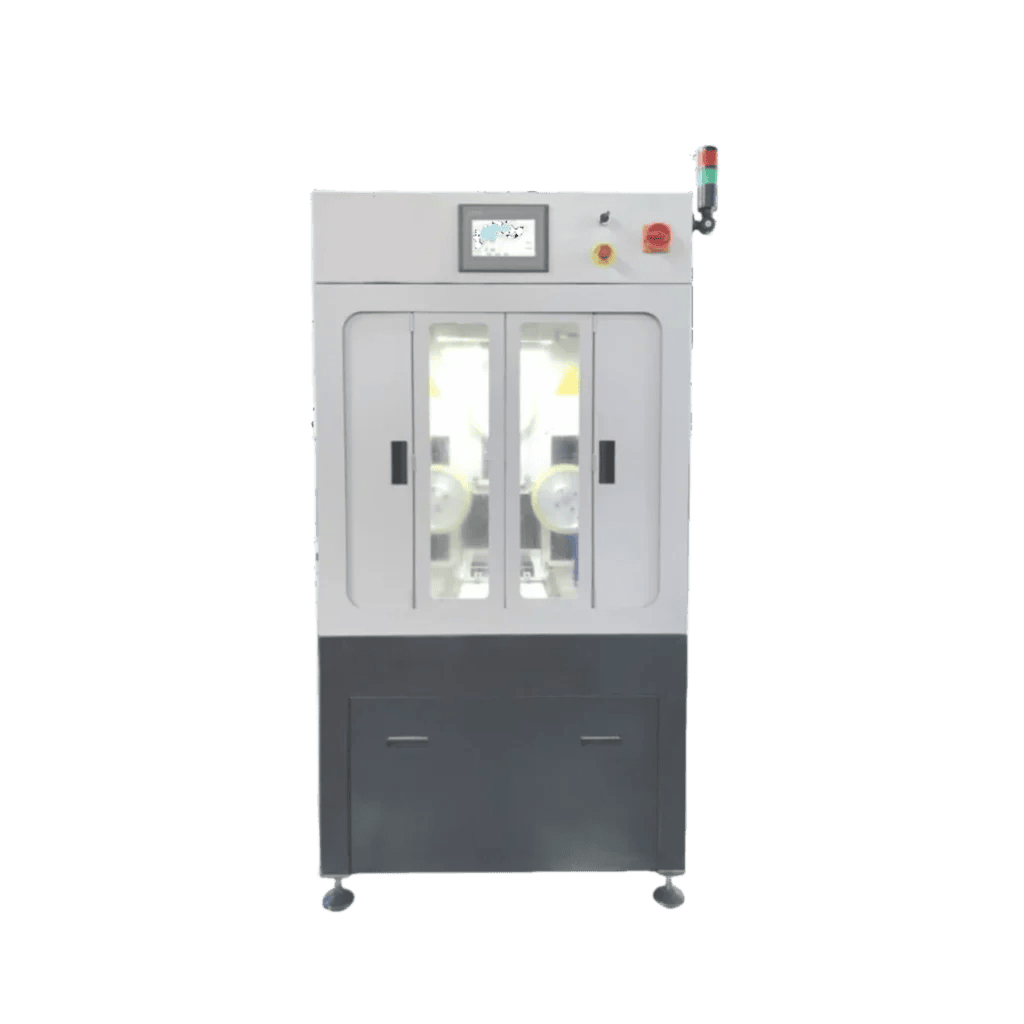
Diamond-wire slicing and process fit
A diamond-wire saw can be considered when the application calls for slicing a brittle blank and the wire path, kerf, and work envelope suit the part. The appropriate method depends on blank size, required thickness, material value, cutting allowance, edge condition, and the next operation. Review the alternatives in our glass wafer cutting method guide before specifying equipment.
A selection checklist for industrial applications
1. Confirm the material and its condition
Identify the glass type, dimensions, surface condition, and any coating or handling restrictions. If the application involves a different material such as a crystal or ceramic, name it explicitly; compatibility with one material does not establish compatibility with another. For an unverified grade or geometry, request a sample-cut evaluation rather than assuming it will run from a generic material list.
2. Check the work envelope and target slice
Compare the blank’s length, width, and height with the machine’s documented limits. Then specify target slice thickness, number of cuts per blank, dimensional acceptance criteria, and the finishing allowance. The required output may be a series of equal slices or a mix of thicknesses; confirm that the control system supports the intended sequence.
3. Define production volume and changeovers
Describe expected batch size, shifts, changeover frequency, and loading method. A machine suited to research samples or small batches may not be the right choice for a larger blank or a continuous production target. Compare cycle time and labor using a representative trial; do not rely on a generic speed or yield promise.
4. Review controls, fluid management, and safety
Check how the machine sets slice thickness, compensates for kerf, detects a wire break, and records production. Review guarding, operator access, cleaning, fluid circulation, and any extraction or mist-control requirements for the proposed setup. Ask which functions are standard and which are optional.
Where a small-workpiece slicer fits
The SG-20 glass wafer slicing machine is documented for small optical-glass, crystal, and ceramic workpieces, with a maximum workpiece envelope of 200 × 200 × 220 mm. Its published information describes an endless diamond wire of 0.3–1.0 mm, equal-thickness slicing, and variable-thickness slicing for up to ten layers in one job. These are SG-20-specific details. They should not be read as specifications for larger industrial saws or as proof of compatibility with an untested material.
For a larger blank, higher throughput target, or material not identified in the equipment documentation, provide the workpiece drawing and process requirements for review. Machine selection should follow the validated application rather than the page title or a broad claim about “all hard materials.”
Information to include in a machine inquiry
| Input | Why it matters |
|---|---|
| Glass type and blank condition | Establishes what material and handling conditions must be evaluated |
| Blank drawing and dimensions | Checks the work envelope, support, and fixture requirements |
| Target slice thickness and quantity | Defines the cut sequence and acceptance criteria |
| Batch size and shifts | Helps assess loading, changeovers, and production fit |
| Downstream operation | Identifies the required cutting allowance and surface condition |
| Sample and inspection method | Allows the result to be reviewed against agreed criteria |
Frequently asked questions
Can one glass wafer slicer cut every glass or crystal?
No. Material name, composition, blank condition, size, and process requirements all matter. Confirm the exact application with the machine supplier and use a sample evaluation where compatibility is not documented.
Does “industrial” mean high-volume production?
Not by itself. Ask for the documented work envelope, intended duty, loading approach, and trial results for your batch pattern. A small-workpiece machine may suit laboratory or small-batch work while a different configuration may be required for larger blanks or higher throughput.
Which cutting method should I compare?
Compare methods against the blank, kerf allowance, slice geometry, material value, and downstream finishing. Start with the glass wafer cutting comparison and confirm the choice with a representative workpiece.