What causes a sudden breakdown of a germanium wafer slicing machine? I have over 6 years experience in semiconductor wafer manufacturing. “I’ve seen manufacturers lose a lot of money on this.
In this article I will teach you how to take care of your guide wheel, wire spool and coolant filter. I’ll also tell you what to check, when to check it and how to repair common issues quickly.
What Is a Germanium Wafer Slicing Machine and How Does It Work?
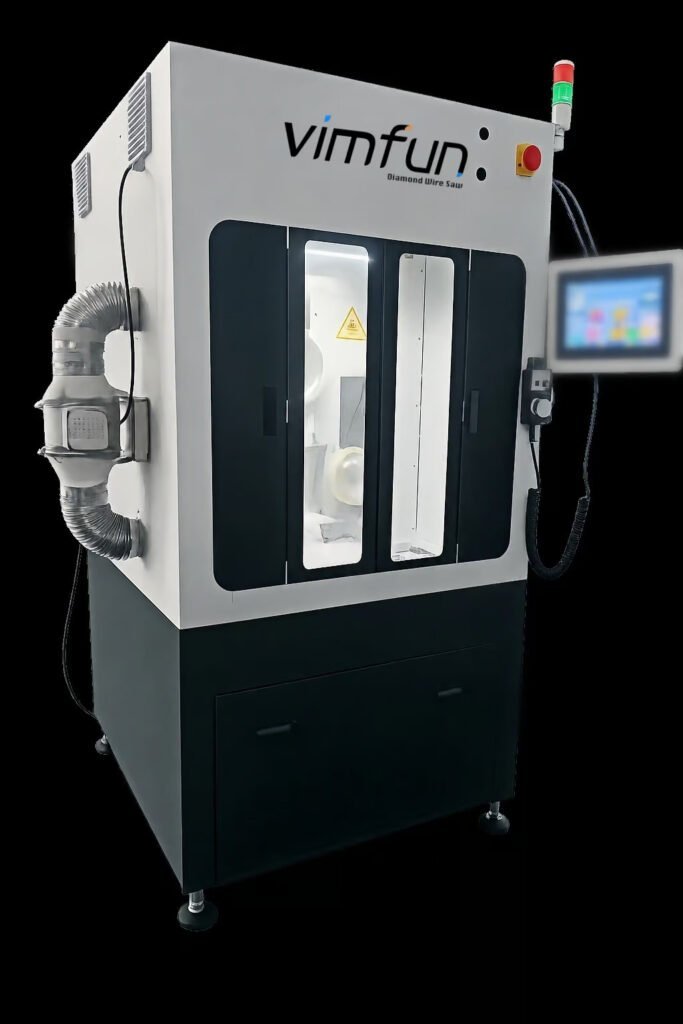
A germanium wafer slicing machine slices exceedingly thin wafers from germanium ingots. These wafers find use in solar cells, infrared optics and semiconductors. The machine cuts with a tiny wire. This wire is often coated with diamond abrasive. It travels at great speed on guide wheels. A coolant system is used to cool and clean the cutting zone.
A precision germanium wafer slicing machine has to slice with an accuracy of a few microns. For this to happen all parts must operate properly. Today the slicing action is servo controlled slicing motion and PLC controlled slicing automation technologies are used. These govern wire speed, tension and feed rate in real time. Without good maintenance, tiny faults might cause the wire to break or the wafers to split.
| Component | Function | Maintenance Impact |
| Guide Wheel | Guides wire path and tension | Groove wear causes wire deviation and wafer breakage |
| Wire Spool | Feeds and collects cutting wire | Uneven winding causes tension spikes |
| Coolant Filter | Removes debris from coolant | Clogging leads to overheating and poor cut quality |
| Wire Tension System | Keeps wire taut during cutting | Loss of tension causes wafer thickness variation |
| PLC Control Unit | Automates feed, speed, tension | Faults stop production and cause errors |
| Diamond Wire | Does the actual cutting | Wear reduces cut quality and increases breakage risk |
Key Components of an Industrial Wafer Slicing Equipment and Their Maintenance Role
Why Does Guide Wheel Condition Affect Cut Quality So Much?
One of the most crucial components of any automated germanium wafer slicing machine is the guiding wheel. It directs the wire on the appropriate course. If the groove is worn or filthy the wire moves. The wire moves, and you get uneven or broken wafers.
The guiding wheel has to be examined after each run. Needs to be cleaned periodically. Change it at the first indication of wear. The number one reason of wire breakage in multi thickness wafer cutting system equipment is faulty guiding wheel. Fixing it early saves wire and saves wafers.
How Do You Inspect and Clean a Guide Wheel Properly?
- Safely remove the guide wheel before you begin any examination
- Check for groove wear or flat patches with a microscope or magnifying instrument
- Clean up the grooves with a soft brush and appropriate solvent; never use metal tools
- Check alignment using a dial indication – it has to be in spec
- Replace the wheel if the depth of the groove has reduced by more than 20%
Guide Wheel Wear Comparison
| Condition | Wire Path | Wafer Quality | Action Needed |
| New / Good | Stable and centered | Consistent thickness | Routine cleaning only |
| Slight Groove Wear | Minor deviation | Small thickness variation | Monitor closely |
| Moderate Wear | Frequent deviation | Surface scratches visible | Schedule replacement |
| Severe Wear | Wire jumps grooves | High breakage rate | Stop and replace immediately |
Signs That Your Guide Wheel Needs Immediate Attention
- Cutting – Sharp rise in wire tension measurements
- Batch variations in wafer thickness
- You notice a peculiar vibration or grinding sound when in use
- The wire leaves imprints or tracks on the surface of the wheel .
How do you maintain the wire spool on a high-accuracy wafer cutting machine?
The wire spool supplies new wire to the machine. It also gathers the used wire on the other side. On a high precision germanium wafer slicing machine, the spool has to wound and unwind wire at a constant equal pace. Uneven wire build-up causes tension spikes.
The wire is broken by tension spikes. You have to examine the wind-up pattern every shift.” Check the spool bearings and tension brake as well. A good spool will keep your germanium ingot slicing machine working nonstop.
Wire Spool vs. Tension System – Advantages and Disadvantages
| Feature | Wire Spool Maintenance | Tension System Maintenance |
| Frequency | Every production shift | Weekly check |
| Main Risk | Uneven winding, wire snap | Tension drop, wafer variance |
| Tools Needed | Visual check, torque gauge | Tension meter, calibration tool |
| Cost of Neglect | Wire breakage, lost batch | Wafer thickness failure |
Key Wire Spool Maintenance Steps
- Check the winding pattern at the start and conclusion of each shift – the wire should be evenly layered
- Listen for noise or stiffness in the shaft bearings change every 6 months
- After each run, clean the surface of the spool to eliminate wire dust and coolant residue
- Test the tension brake – engage smoothly and retain the selected tension value
Sectors That Depend on Wire Spool Accuracy
- Infrared optics – requires wafer surfaces to be exceedingly flat with little variance
- Solar cell manufacturing – consistent wafer thickness from batch to batch is needed
- 5G chip manufacturing — precise tolerances and 0% wire variation needed
How Often Should You Change the Coolant Filter on a Water-Cooled Cutting System?
The coolant filter maintains a clean and cool cutting zone. It picks up germanium dust, tiny fragments of wire and other microscopic particles. With slicing these particles collect fast. A clogged filter slows down the coolant flow.
Slow flow = greater heat. More heat = broken wires and cracked wafers. Daily inspect the filter on a PLC driven slicing automation machine. Replace it every 200 to 400 hours, depending on the load on the machine.
Real-World Example: Coolant Filter Neglect vs. Proper Maintenance
| Factory | Filter Change Frequency | Problem Reported | Result After Fix |
| Factory A | Never changed | 40% wafer breakage rate | Dropped to 6% after new filter |
| Factory B | Every 200 hours | No major issues | Wafer yield above 94% |
| Factory C | Only when clogged | Coolant pump failed | Full pump replacement needed |
| Factory D | Weekly visual check | Small flow drop found early | No production loss, pump safe |
Steps to Replace a Coolant Filter Correctly
- First stop machine and remove pressure in coolant system.
- Wear gloves – coolant contains tiny germanium dust which may hurt the skin
- Remove old filter, see condition – dark or flat suggests it was long overdue
- Change the filter and inspect all the seals for leakage.
- Write the date and machine hours in your maintenance journal.
Benefits of Regular Coolant Filter Changes on a Semiconductor Wafer Slicing Machine
- Maintains a constant coolant flow and temperature at the cutting zone
- Less wear on wire, longer life of wire
- Protects the coolant pump against debris-induced damage
- Leaves wafer surfaces clean and free from any markings or contaminants
FAQs – Germanium Wafer Slicing Machine Maintenance
When should I change the guide wheel on my precision wafer slicing machine?
The first indication is an irregular wafer thickness. The groove is worn if one side is thicker or the surface has markings. Also, check for tension spikes on the control screen. Act quickly – the more you delay, the more harm a worn wheel does.
Check grooves with microscope after every 500 hours of usage
Replace the wheel when the groove depth loss exceeds 20% of the original size
If your equipment has more than one wheel always replace in pairs
How often should I replace the cutting wire on an automatic germanium wafer slicer?
Depends on wire type, cut speed and batch size. Most manufacturers provide a guidance as to how many cuts a reel should give. Don’t wait for the string to break. Replace before it becomes too thin.
Measure wire diameter using a micrometer at start of each new reel
Log number of cuts per reel per shift
Replace early A mid-cut snap ruins the entire batch.
Can I use any coolant in a water-cooled cutting system for wafer slicing?
No. Use only the coolant recommended by the machine manufacturer. The improper coolant may harm parts, increase bacterial growth in the system, and leave residue on wafers. Follow the spec sheet always.
Maintain mix at proper ratio, check coolant pH weekly
Flush and replace the whole cooling system every 3 to 6 months
Keep coolant in a sealed container in a cold, dark place
What does PLC-controlled slicing automation do for maintenance?
It observes the machine in real time. It warns you before a little mistake becomes a huge breakdown. And it records data on tension, speed and temperature. This data may be used to schedule maintenance before issues arise.
Set alarm limitations on tension, temperature and feed rate.
Check PLC records weekly for early warning indicators
Back up all applications and settings at least monthly
Conclusion
With proper maintenance, your germanium wafer slicing machine runs. Better cuts. Three most important pieces are: guide wheel, wire spool and coolant filter. Check them in time. Fix it early. Use good replacement parts.
Little and often prevents huge and expensive problems. The finest firms succeed with solid practices, not simply new equipment. Vimfun is your partner for industrial germanium wafer slicing machines, spare parts and technical support. Go to Vimfun now and secure your productivity.