The majority of buyers judge a diamond coated cutting wire solely on grit size. They don’t even check the bead spacing. But it’s often the spacing that decides whether a cut is smooth or a wire dies young. I guess people who use wire saws learn that the hard way over the years. Spacing and pattern can make two wires with the same diamond grit behave very differently.
This article explains bead spacing. It investigates spacing and the effect on cooling and cut pattern. It also shows you how to figure the right spacing for stone, metal or mixed materials. This is not a sales pitch, just a plain technical guide.
What Is a Diamond Coated Cutting Wire?
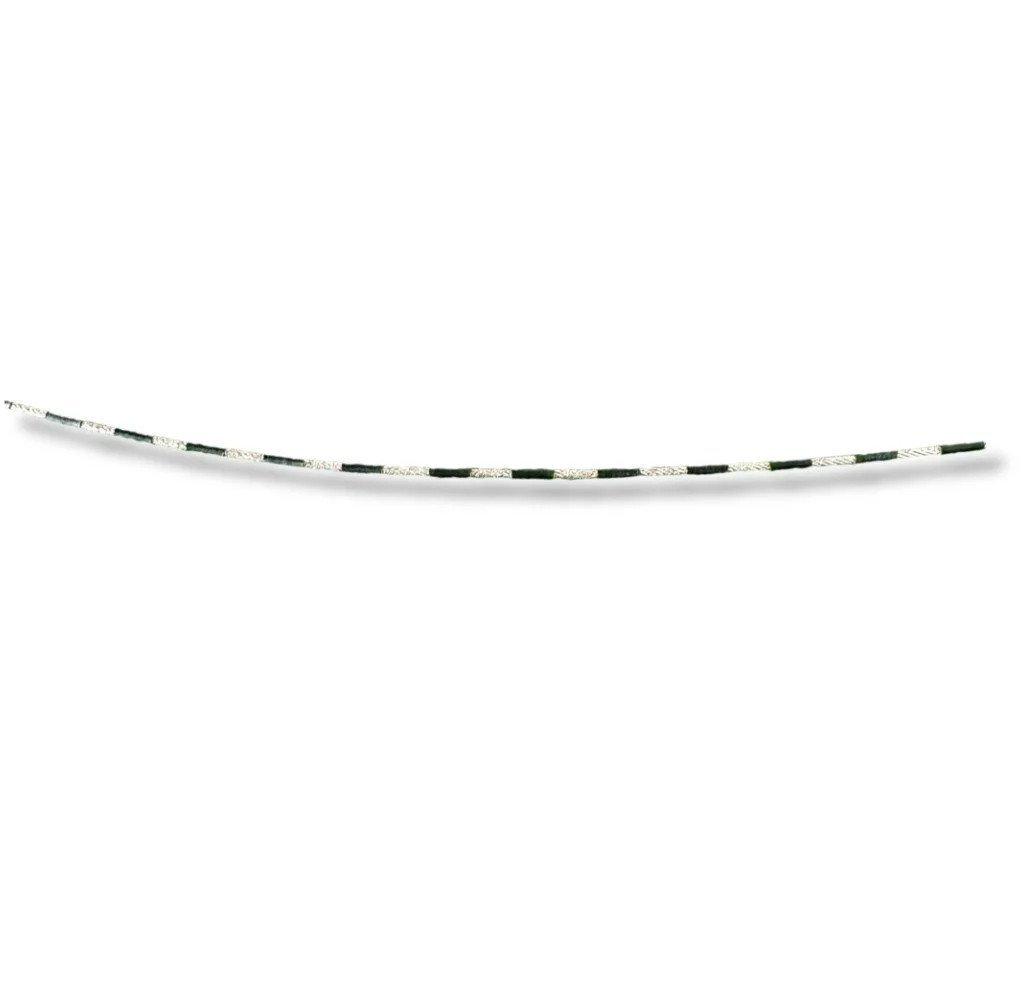
Diamond coated cutting wire is a steel wire rope with diamond-coated beads disposed along its length. Not a keen edge. It is the grind that gives a blade its cutting ability. Small beads of metal are bonded to diamond bits. The beads are strung on a flexible rope core. The wire goes around and moves fast and the beads grind away the material little by little.
This is not like a saw blade. A blade cuts with a single stiff edge. A wire can slice through big chunks, can go around corners, can get into tight spots a blade can’t. Hence you will see diamond wire cutting in quarries, demolition sites, and metal shops.
| Component | Function | Typical Material |
| Wire rope core | Carries tension and drives motion | High-strength steel strand |
| Diamond beads | Do the actual cutting | Diamond bonded to metal |
| Spacers/springs | Set the gap between beads | Rubber, plastic, or metal |
| Coating layer | Protects the rope from wear | Plastic or rubber sheath |
The same setup employs a simple diamond cutting wire. It works whether it’s made for a quarry or a small metal shop.
Where This Wire Type Gets Used
- Granite quarries marble for straight cuts in stone
- Concrete demolition, cutting through rebar and concrete together
- Metal shops, for cutting diamond wire through pipe or solid metal blocks
- In tight spaces and work in the water Where a stiff blade will not fit
What Bead Spacing Affects Most
More than any other part of the wire, bead spacing affects cutting speed, water flow and wire life. Closer spacing means more beads working together. Wide spacing allows for more space between beads to let water to clean away heat and dust. Not always is best, either. The right one depends on what you are cutting.
Tight spacing means more beads are working per turn. This can accelerate cuts in soft stone. But it has less room for water, so heat can build quickly. Wide spacing cuts slower per pass . On hard, dense material it keeps beads cooler, because fewer beads are competing for water at the same time.
How Spacing Affects Cutting Speed and Lifespan
The cutting speed tends to increase as the spacing gets smaller. But that can only go so far. In addition, the heat trapped in the wire slows it down instead of speeding it up. Beads crowded on a wire may cut more slowly than beads spaced correctly. Each bead’s grip on the material is reduced by heat and dust.
If the spacing is not according to the material, the wire life goes down. A wire used for soft limestone won’t last long on hard granite. The diamond coating on it can burn off way too early. One of the easiest ways to get more cuts out of one wire is to match the spacing to the job.
Bead Pattern and Cut Quality
Bead pattern is the way the beads are strung on the wire. They can also sit in groups or staggered. Pattern determines how smoothly the wire passes through a cut. Spacing is the distance between beads. Pattern is the rhythm. A wire can have the correct spacing and still cut poorly if the pattern is off.
An even pattern maintains a uniform distance between beads. The result is smooth, repeatable cuts. Most wires you use everyday use this pattern, it’s just easier to build the same each time. Some makers deliberately use uneven patterns. Some stones might shake less because of this. But irregular patterns are more difficult to bring up to a fixed standard.
A poor pattern may cause the wire to “whip” or shake as it moves. This hurts cut precision. It also burns out the rope core faster. This is most prevalent on long wire loops and fast machine speeds . Soft stone is more tolerant of change in pattern. Hard granite and metal are far less forgiving, metal conducting shaking more readily than soft, porous stone.
Cooling: The Overlooked Performance Factor
Cooling is the area most workers do not think enough about. But bead spacing is a direct control of cooling, and cooling has the single biggest effect on wire life. Water has to go over every bead, every time. Spacing determines if that is even possible.
More space lets water get under the diamond coating and wash cut dust away. If the spacing is too tight, the water can’t move quickly enough between the beads. Dust then acts like a sandpaper on the wire itself. This is a common source of early wire wear. It can happen even on a job that appeared to be rigged right.
The heat builds up and weakens the bond that holds the diamond bits to each bead. That causes diamonds to fall out sooner than would be expected with normal wear. A wire that “suddenly slowed down” is usually a cooling problem, not a bad batch of diamond. Stone cutting requires a steady flow of water, stone dust and heat wear down a wire fast. Even with less dust overall, metal cutting can build up heat in a small spot at each bead.
Diamond Coated Cutting Wire for Metal vs Stone
Wire built for metal often has tighter bead patterns and a hard bond than wire built for stone . Metal and stone will wear a wire out in different ways.” The stone is soft and full of holes. Metal is dense and solid . Using the wrong kind of wire with the wrong material is a waste of time and diamond coating.
| Application | Bead Spacing | Pattern Style | Cooling Need | Typical Lifespan |
| Granite/stone | Wide | Even | High, steady water | Long, if cooled well |
| Reinforced concrete | Medium-wide | Even or mixed | High | Moderate |
| Metal/steel | Tight | Steady, low-shake | Moderate, focused | Shorter, precision use |
| Composite/mixed | Medium | Hybrid | Varies | Depends on job |
A wire designed for granite will usually cut metal badly. A metal construction is hard on rough stone dust. Bond strength is intentional: metal wires need a strong bond to prevent heat. Stone wire is like a bond that allows worn diamond to fall off, so that fresh diamond can grip the stone. Practical take away: First choose spacing and bond hardness for the material. Grit size is second.
Bead Spacing and Overall Cutting Efficiency
General efficiency combines cycle time , breakage rate and cost per finished cut . Spacing shapes all three together. If a wire cuts fast but breaks a lot, it’s not really any more efficient. At the end of the day a slower wire that does the whole job wins.
Proper spacing keeps the cutting speed steady from start to finish. It doesn’t get sluggish in heat and dust. This is most obvious for shops that run a diamond wire saw cutting machine all day. Small time saved on every cut, adds up over a full shift. Here are some simple habits that lead to less breakage:
- Match spacing to the hardness of the material, not just the grit size
- Keep the water flow sufficient to the spacing you use
- Use a stable pattern to control the whip of the wire
- Set machine tension to work with the spacing, not against it
Faster cutting has a cost. Tight spacing, designed to maximize speed, often gives up some lifespan. Shops must balance whether replacing the wire more often is worth the savings of a few minutes per cut.
Diamond Coated Cutting Wire Sizes and Price
These sizes are usually measured by overall wire width These are generally between about 6mm and 11mm depending upon the job. Heavy industrial cutting is better for larger sizes. Smaller sizes are good, for fine detailed work. The bead spacing also scales with the size. Heavier wire tends to have larger beads further apart to carry the heavier load.
Price depends on diamond grit quality, bead count, wire size and bond type. More diamonds and better bonds are costlier per meter. Not always is cheap wire per meter the cheaper way. When you count the total cuts finished the real number that counts is the cost per cut. It is more important than just the price tag.
In-House Cutting vs Diamond Wire Cutting Services
Deciding between your own machine and outside help comes down to a few things. How often do you shave? How exact does the work have to be? What’s your upfront money budget? One time or special jobs are often best done by outside help. Steady repeated cutting favors owning a machine.
Diamond wire saw cutting services make sense for a one-off demolition job. They also fit special stonework or a project that needs gear that your shop doesn’t have. Hiring a service takes worry, choice and maintenance off your plate. Running cutting in-house means paying for the saw, wire, water systems and training staff. It’s worth it if you are cutting enough to make it worth the price.
Ask what spacing and pattern they use for your material when you compare providers. Request samples of work on similar hardness. Ask them to quote a cost per cut, not just an hourly rate.
Choosing the Right Bead Spacing for Your Job
The first step in choosing the correct spacing is to know the hardness of your material. Then set your machine speed and water feed for that material. There is no one correct answer here. It depends on the specific mix of your material and machine and water setup.
Harder material usually requires closer spacing and slower machine speed. Wider spacing allows softer material to run faster. The spacing can be tighter with a strong water flow machine than with a weak flow machine. The gap between beads is smaller but good water makes up for it. Before you place a bulk order, ask your supplier:
- What would you recommend for spacing on this material?
- At full speed, how does your water system react to that spacing?
- What is the life expectancy with normal usage?
- Is there a way to test a small amount before ordering in bulk?
The best way to check spacing and pattern choices is to try a short length on a real job sample. It shows cutting speed, heat and wear in real conditions. No spec sheet will tell you that.
Common Mistakes That Shorten Wire Life
Most wire failures are caused by a short list of repeat mistakes, not bad wire:
- Running water flow is too low for the spacing used
- Using a metal rated wire on stone, or vice versa
- Forget the early wire whip and don’t adjust the tension
- Only price per meter buying, without checking cost per cut
Frequently Asked Question
- How does the cutting speed depend on the bead spacing?
Bead spacing influences the cutting speed, which is determined by the number of beads in contact with the material at any given time. It also determines the amount of space water has to clear heat and dust. Close spacing can accelerate soft cuts. But it increases the risk of overheating on hard material.
- What is the difference between tight and wide bead spacing?
Tight spacing puts beads closer together, so there is more contact at once. Wide spacing allows more space for water to pass through. Close spacing is good. Soft Material. Hard, dense material is better with wide spacing.
- What are the sizes of this wire?
Diamond coated cutting wire sizes generally run about 6mm up to 11mm across depending on the manufacturer. The big sizes are for heavy loads. Okay, good work is more suited to smaller sizes.
- Can the same wire be used to cut both metal and stone efficiently?
The same wire usually can’t do both very well. Spacing, pattern and bond hardness are different for each material. A stone wire gives out quick metal. Metal wire wears out quickly on rough stone dust.
- What is the normal cost of this wire?
Diamond coated cutting wire price changes with grit quality, bead count, wire size and bond type. The price per meter can vary a lot between sellers. Price per meter is not a good indicator, better is cost per finished cut.
- How long does the wire last normally?
Wire life depends largely on whether the spacing, pattern and cooling all fit the material being cut. The best way to get a true idea of the lifespan of your job is to trial a small sample before ordering in bulk.
Conclusion
More than just looking at grit size is needed when choosing a diamond coated cutting wire. Bead spacing impacts cooling, cutting speed and wire life all at once and it’s easy to miss on a spec sheet. The difference is getting the spacing, pattern and cooling to match the material. It separates a wire that does the job from one that quits halfway through.
If you’re comparing sizes, prices, and specs from sellers, give Vimfun a try. There are different spacing and pattern settings for different kinds of material. This makes it easier to match wire to job rather than guess from a plain spec sheet.