
Optical Lens Fabrication
Optical lens fabrication is six stations taking a block of material to a finished, inspected lens. This page is not a machine catalogue — it is how the six stations fit together: what each one hands to the next, where a part is still touched by hand, and what changes when the whole line comes from one supplier.
12 machines 02GeneratingBlank → radius
12 machines 03Fine grind · polishRadius → figure
8 machines 04Edging · centeringDiameter → axis
4 machines 05InspectionMeasure → sort
2 machines 06HandlingBetween stations
3 machines
Six stations, five handovers
The machines are the easy part of optical lens fabrication. What decides whether a line runs is the five handovers between them — the format the parts arrive in, and whether a person has to touch them.
Every arrow in optical lens fabrication is a format decision: baskets at one station and trays at the next means a person re-packs the parts, and that person is the real cost. Laying the six stations out together is how those formats get matched before anything is ordered.
What actually happens to a Ø18 mm lens
A plano-convex optical glass lens, R25 on the convex face, in batches of a few thousand. The machine names are examples — the sequence is what optical lens fabrication actually looks like on the floor.
A closed-loop diamond wire leaves about 0.5 mm of kerf and little edge chipping, so the blank carries less damage into the next station — and the generator has less stock to take off.
A CNC generator covering Ø10–55 mm gauges the sagitta inside the cycle and corrects the next part by itself. Blanks arrive loose in a bowl or ordered in a tray, depending on which frame is chosen.
Convex work belongs on a lower-swing frame — R1.5 to R50, up to Ø30 mm, four spindles running together. Fine grinding removes the damage the generator left; polishing then corrects figure rather than chasing scratches.
Twin wheels take rough and fine in one pass and the servo lift puts the chamfer on both faces, from 15 seconds a part with vacuum pick-and-place. Where the drawing calls for it, centring trues the rim to the optical axis.
Non-contact inspection at ±0.0015 mm repeatability and about 2 s a part, fed from disordered parts by vision, stacking the results into trays by thickness band. This is where yield stops being an opinion.
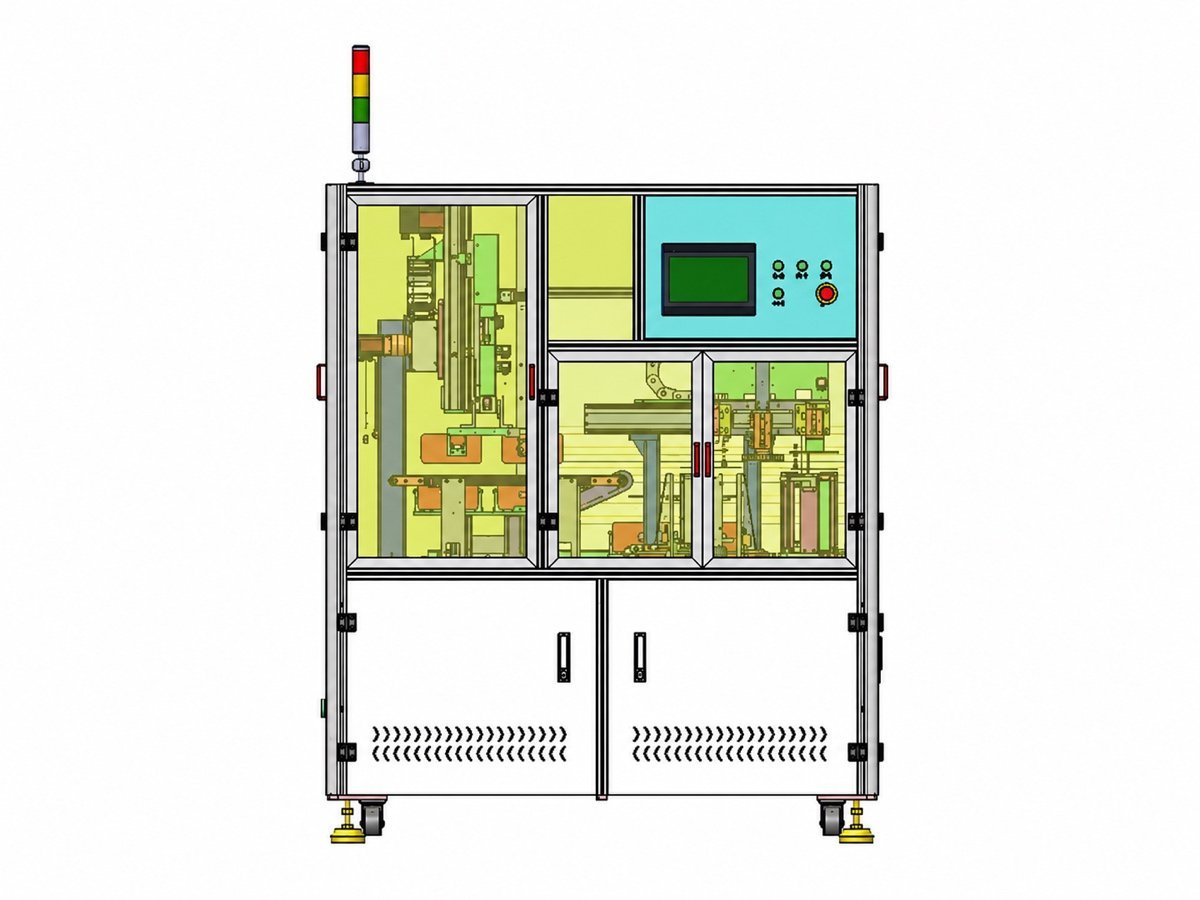
Basket loading, stacking and racking units carry Ø10–20 mm parts between stations at about 2 s a piece, in the same basket and tray formats the machines expect.
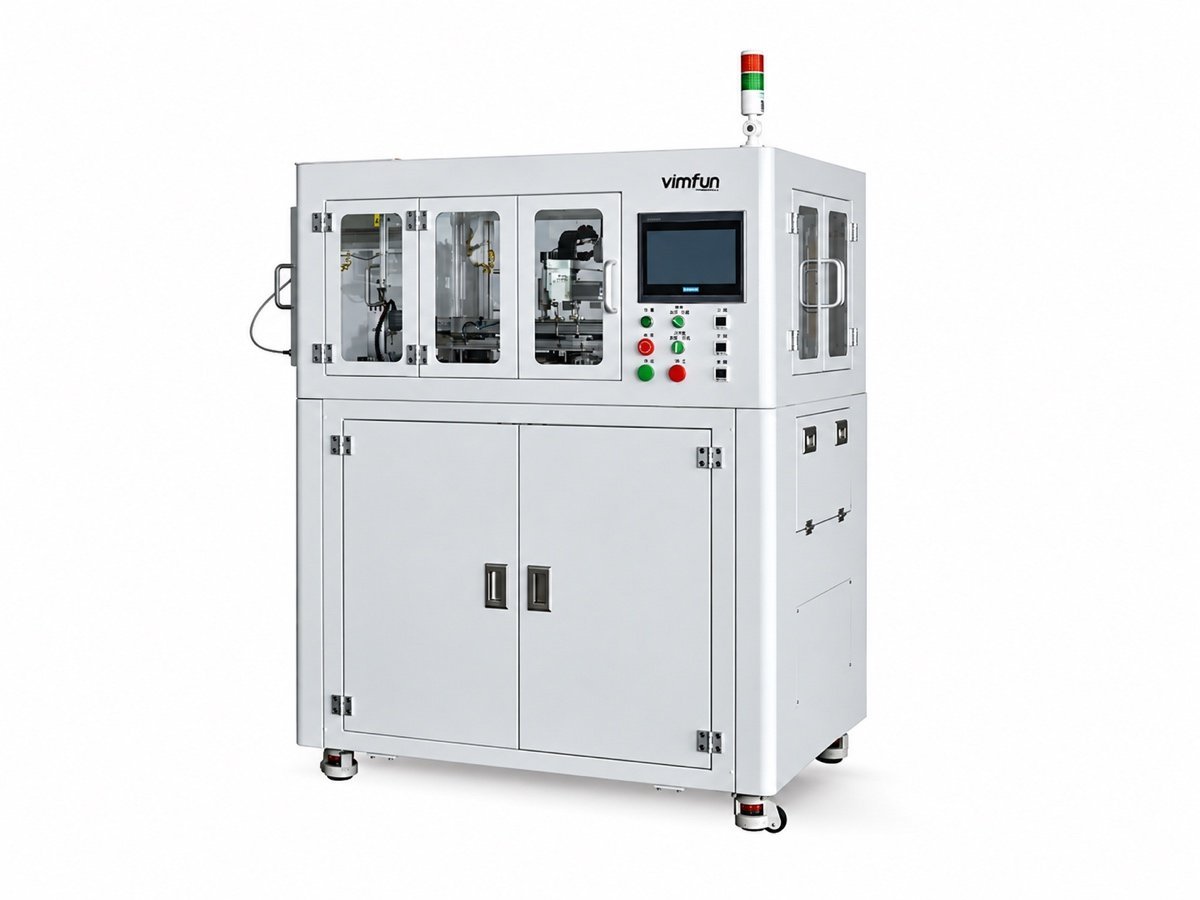
What each station decides — and where it bottlenecks
Every station in optical lens fabrication hands the next one a problem it cannot fix. These are the ones worth knowing before a line is laid out.
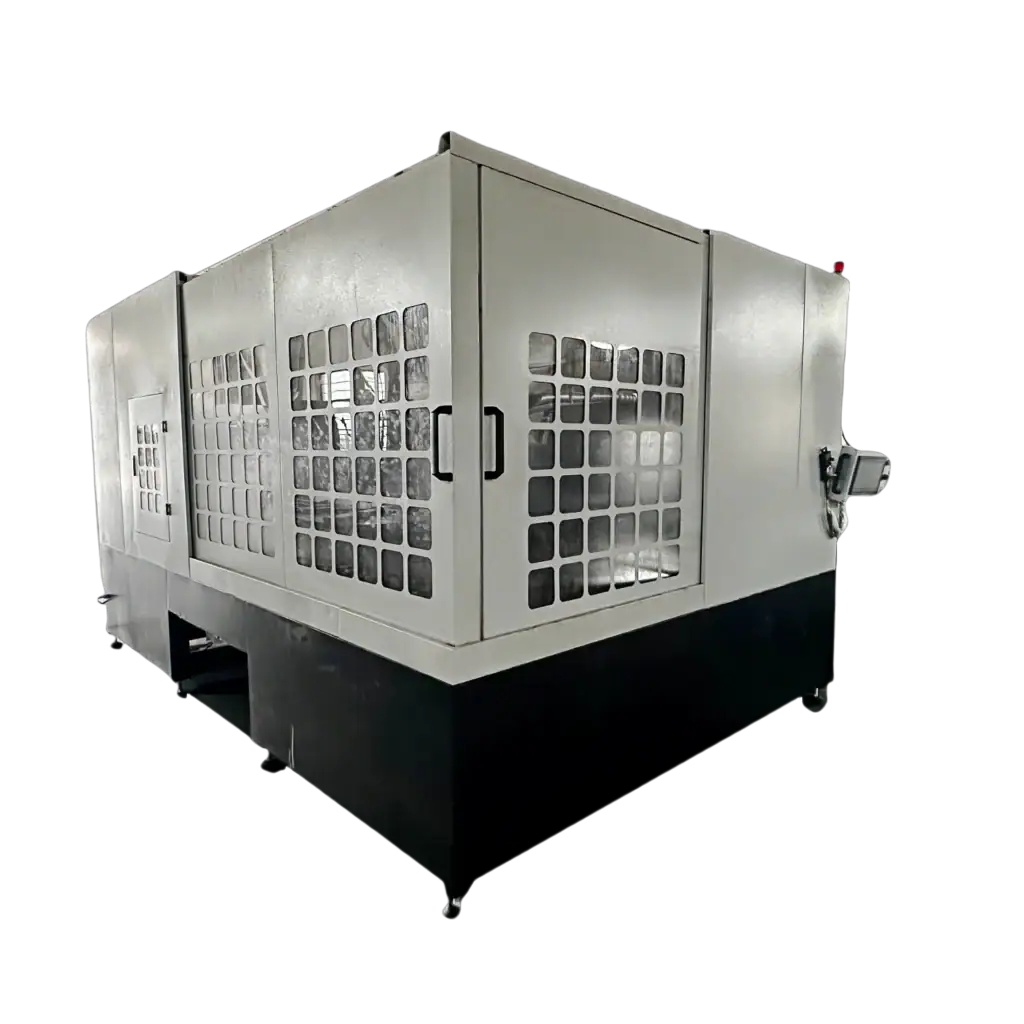
Sawing
Decides kerf loss and how much damage the blank carries. On expensive material this station sets the yield of the whole line before anything else runs.
Generating
Decides the radius and the allowance left for polishing. An uneven allowance here is paid for twice at station 03.
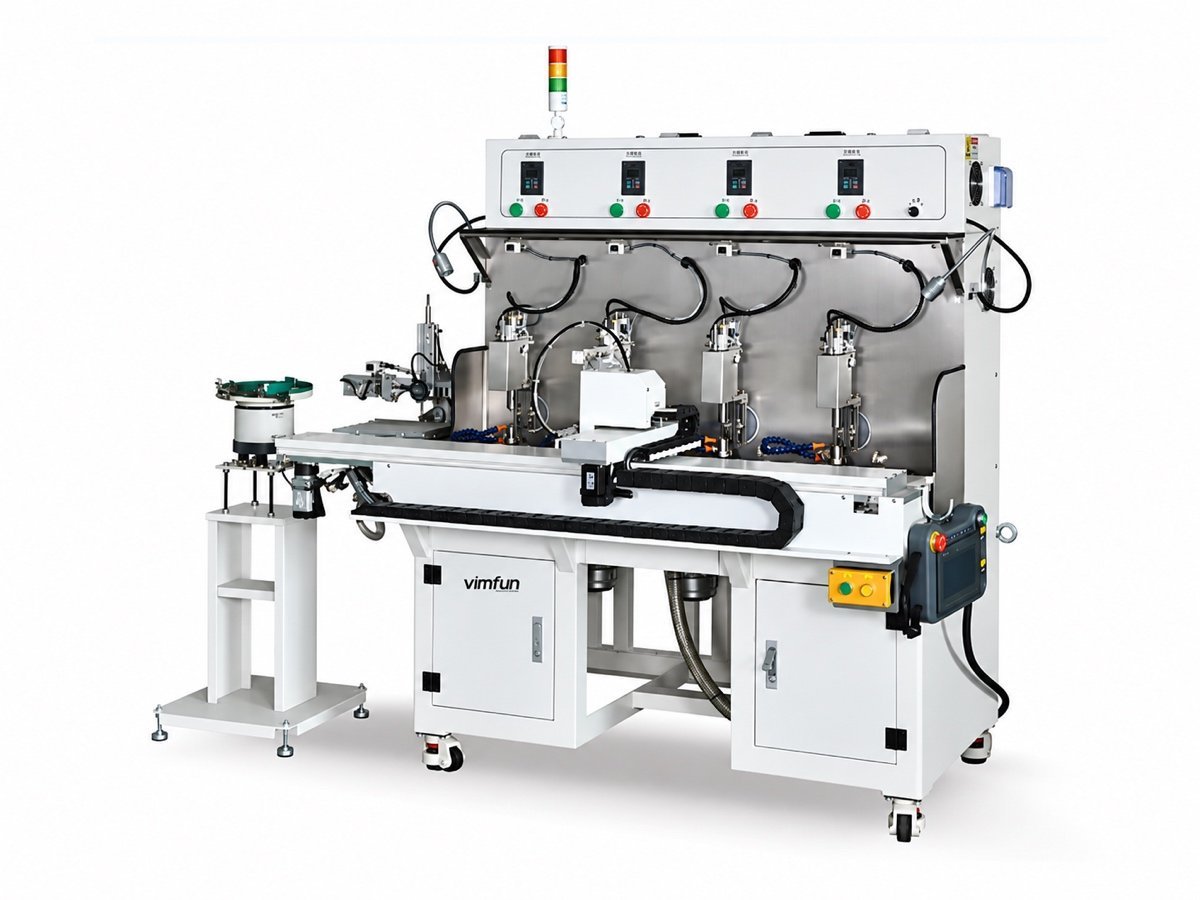
Fine grinding & polishing
Decides figure and finish. Upper swing carries concave work, lower swing convex — a mixed part programme needs both frames, not one compromise.
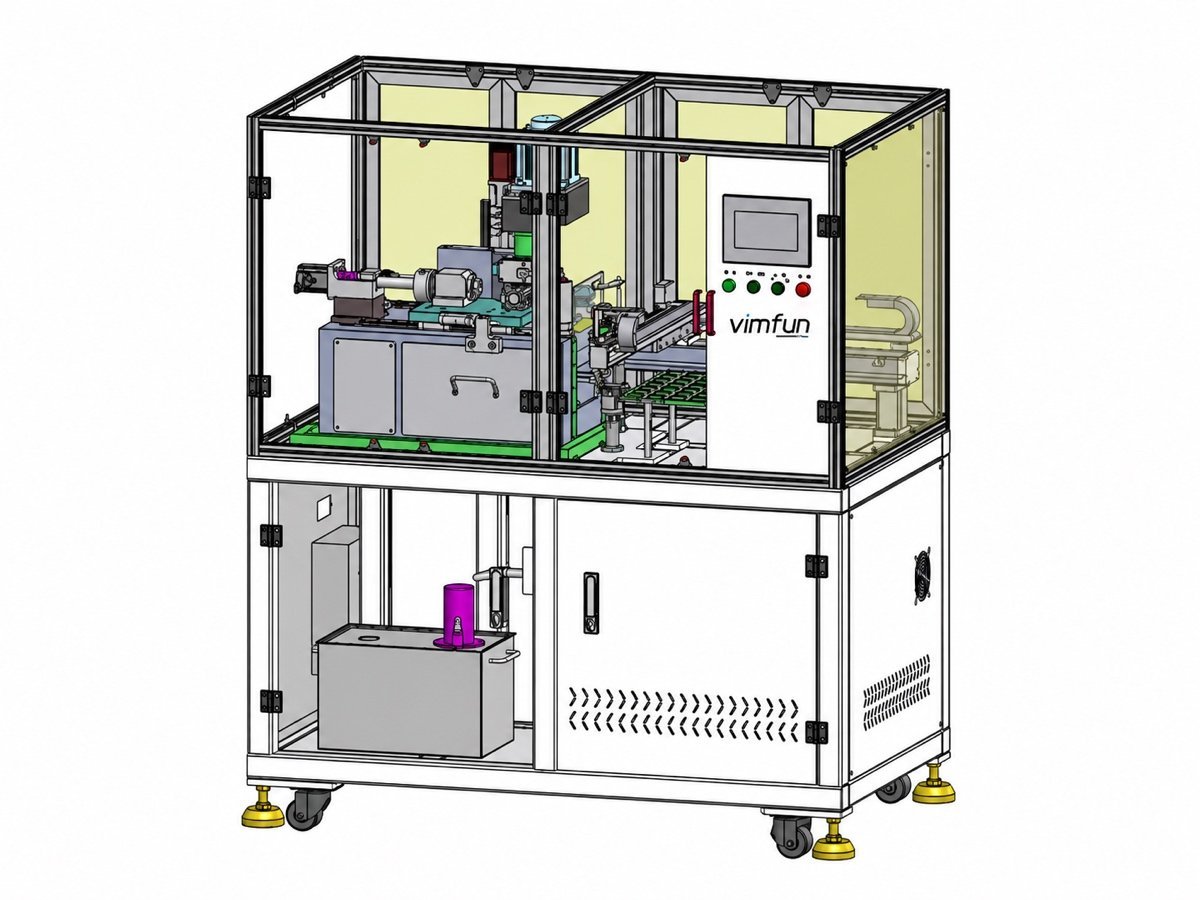
Edging & centering
Decides outside diameter, chamfer and, where specified, the optical axis. It is the cheapest station and the one that exposes errors made upstream.
Inspection
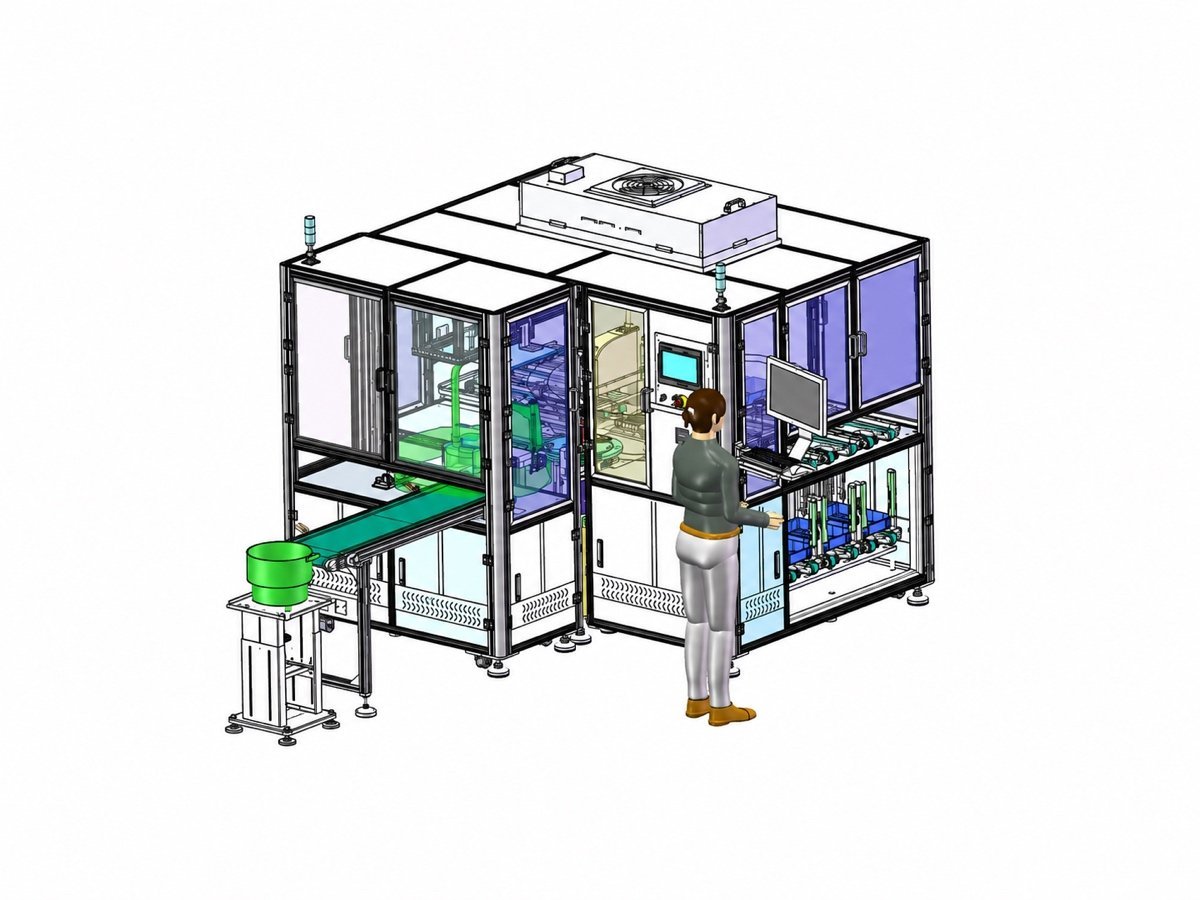
Decides what ships. Curved faces are measured for form; flat parts are gauged for thickness and sorted into bands, over 2000 pieces an hour, changeover under 10 minutes.
Handling
Decides how many people the line needs. Basket loading, stacking and racking units move parts between stations in the formats the machines already use.
Why is the argument about people, not about precision?
Every serious supplier holds figure and finish. What separates optical lens fabrication as a line from a room full of machines is how many hands it needs on a normal Tuesday.
One operator, several machines
Bowl and tray feeding, vacuum pick-and-place and stacked fixtures mean an operator keeps magazines full instead of standing at a spindle. That ratio is the number to compare between quotations.
Changeover in minutes
Fixture and program recall rather than a rebuild — under 10 minutes at the inspection station, comparable elsewhere. Short runs stop being the thing everyone avoids.
Yield you can show a customer
Measured thickness bands and form results, printed and traceable, replace a bench and a pair of eyes. Complaints get answered with a record instead of an argument.
Formats that already match
The stacker's 210 mm stack height matches the edge polisher's 210 mm clamping range. Small coincidences like that are what make a line work — and they only happen when one supplier lays it out.
What does an optical lens fabrication line include?
Two ways to buy the same six stations. The difference is not the machines — it is who owns the gaps between them.
| One supplier, laid out together | Machine by machine | |
|---|---|---|
| Part formats | Baskets and trays matched across all six stations | Re-packed by hand wherever two suppliers disagree |
| Cycle balance | Stations sized against your annual quantity | Each machine fast on its own, queues in between |
| Trial parts | Run through the whole sequence before you order | Proven one station at a time |
| Spares and training | One list, one visit, one contact | Separate per supplier |
| When a part is out of tolerance | One process owner traces it upstream | Each supplier points at the station before theirs |
An optical lens fabrication line from us covers stations 01 to 06 — sawing, generating, fine grinding and polishing, edging and centering, inspection, and the handling units between them. Material behaviour is settled on your own parts rather than argued from tables; published data for sapphire and crystal quartz is where the conversation starts.
Coating, cementing and assembly are not part of it, and neither is a metrology lab beyond the in-line inspection station. We also do not build lines for architectural glass, mirror work or ophthalmic Rx laboratories. If your scope needs those, we will say so before a proposal is written — and we do not make lenses ourselves, so we are not competing with you for your customers.
What do buyers ask about a whole line?
Do we have to buy all six stations at once?
No, and most customers do not. The common route into optical lens fabrication is to buy the bottleneck station first and add the rest over one or two years — which works as long as the formats are agreed at the start, so the later machines drop into place. What you should not do is order three stations from three suppliers in the same quarter and discover at installation that none of them agree on how parts arrive.
How is the line sized?
From the part drawing and the annual quantity. Each station's cycle is estimated, the slowest one sets the line rate, and stations are doubled only where the arithmetic demands it. Sizing optical lens fabrication on a spreadsheet is cheap; discovering the imbalance after installation is not.
Can it be proven before we order?
Yes. Send a drawing and a few blanks of your own material and we run them through the sequence free of charge, returning the parts with a process sheet for each station.
Who installs and trains?
We do, with the machines under a 12-month warranty and an 8-hour response, 24-hour plan, 48-hour resolution commitment during that period. Spare parts stay available for the life of the machine.
What about material we have never run?
Hard, brittle optical materials — optical glass, sapphire, technical ceramics, quartz and crystal — are the range for optical lens fabrication on this equipment. Anything unfamiliar goes through the trial run first, and if it does not work we say so.
Can it be integrated with machines we already own?
Often yes, and the honest answer depends on the formats your existing machines use. Optical lens fabrication is rarely built from nothing — most lines grow around two or three machines that are already earning their keep. Tell us what is already on the floor and the proposal is built around it rather than against it.
Send one drawing — we will lay out the line
One part drawing and an annual quantity is enough to start. You get back a station-by-station optical lens fabrication layout with estimated cycle times, the machines for each station, and the trial parts that prove it.
- 1 · You send — part drawing, material, annual quantity, and what is already on your floor.
- 2 · We lay it out — six stations, machine per station, estimated cycle and line rate.
- 3 · We prove it — free trial run on your own blanks, through the whole sequence.
- 4 · You decide — one quotation covering machines, tooling, freight, installation and training.