
Optical Lens Edge Grinding Machine EG-80
An optical lens edge grinding machine that grinds a lens to its final diameter and shape in one pass. Two wheels rough and finish together, a 1:1 copy former reproduces the outline, and a part is done in 18–40 seconds. Round or shaped, Ø5–80 mm.
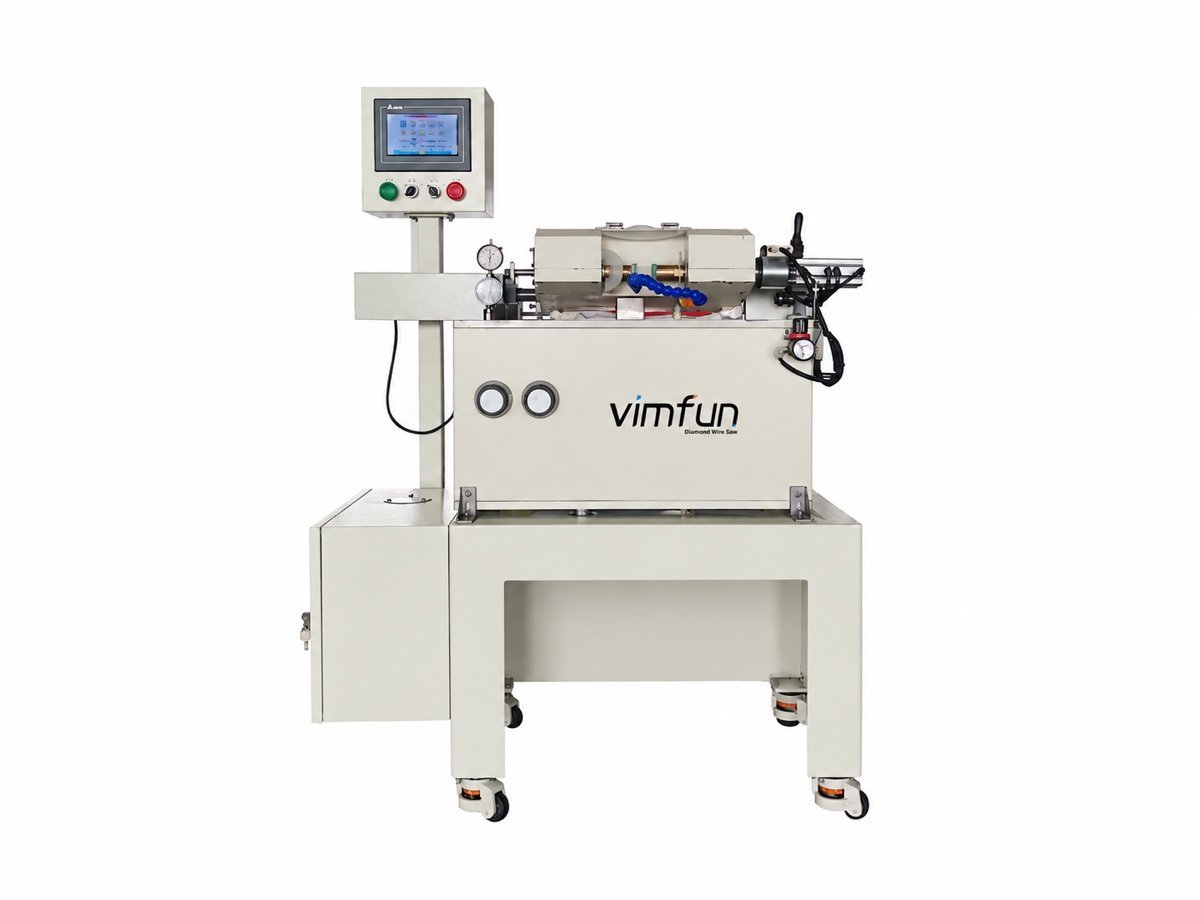
What this machine does, and what happens before and after it
A lens leaves the polishing stage with clear faces but a rough, oversized rim. An optical lens edge grinding machine finishes that rim: it grinds the outer diameter true, brings the part to its drawing size, and shapes the edge — round to a circle, or a non-round part to a profile. It is the edging step, just before centring and coating.
The part arrives with finished faces from the polishing stage and leaves at its final diameter, ready for centring and coating. The EG-80 is the manual, bench-scale edger; where the volume justifies automatic pick-and-place, the automatic version does the same job hands-off.
This machine edges lenses and small optical parts — the outer diameter and the bevel. The peripheral edges of flat 2D / 2.5D panels are a different job, done on the edge polishing machine. And it is a precision optical edger, not a machine for architectural glass or a spectacle-lens (Rx) lab.
How does an optical lens edge grinding machine hold the shape?
It copies. A former the shape of the finished part rides against a follower, and the wheel reproduces that outline on the glass, one to one.
The lens is held on a workpiece spindle turning slowly, up to 19 rpm, and pressed toward the grinding wheel. What decides the finished shape is the former:
- Round parts — an adjustable copy former sets the outer diameter, tuned in fine steps
- Shaped parts — a 1:1 profile former is traced by a follower, and the wheel grinds the lens to that exact outline
- Two wheels, one pass — a rough zone and a fine zone finish the edge together, so roughing and finishing are not two setups
- Pneumatic clamp — an adjustable air clamp holds the part, set gentle enough for thin or brittle glass
Because an optical lens edge grinding machine reproduces a former rather than following a program, it changes shape by changing the former — quick to set for a run of one part, and repeatable across the batch. Runout on both spindles is held under 0.006 mm, which is what keeps the edge concentric with the optical axis.
You are buying the edger and the formers and wheels for your parts. Send us the diameter or the shape, the material and the tolerance you have to hold, and we specify the formers and wheels with the quotation.
What the machine finishes in one pass
An optical lens edge grinding machine like the EG-80 is hand-loaded, one part at a time; the grinding cycle runs on its own once the part is clamped. These are the points that decide the edge.
Rough and fine on one spindle
Two wheel zones — a coarse one and a fine one — work the edge in the same pass, so a part comes off sized and finished without a second station.
Round by adjustable former
For circular lenses the outer diameter is set by a copy former that adjusts in fine steps, so a batch holds one diameter.
Shaped by 1:1 template
For non-round parts a profile former the shape of the finished part is traced one to one, so a D-cut, a rectangle or a free profile comes out to the drawing.
Coolant that stays mixed
The headstock rises and lowers on an air cylinder, and the coolant pump has a stirrer so the slurry does not settle — steady cutting through a shift.
Which lenses and shapes can it edge?
| Item | Capability |
|---|---|
| Process | Edge grinding — outer diameter and profile, single part |
| Shapes | Round (adjustable former) and shaped (1:1 profile former) |
| Diameter | Ø5 – Ø80 mm (shaped parts by diagonal) |
| Cycle | 18 – 40 s a part |
| Wheels | Two zones, rough and fine, Ø160 mm |
| Materials | Glass, ceramic, sapphire, quartz and crystal — send yours for a free trial run |
| Runout | < 0.006 mm on both spindles |
An optical lens edge grinding machine is judged on diameter tolerance, edge concentricity and the accuracy of a shaped profile, so those are the numbers to send. If you are choosing glass, the optical materials data helps, and drawings to the ISO 10110 framework are ideal.
Technical specifications
The EG-80 is the manual optical lens edge grinding machine in the range; the automatic version adds pick-and-place for higher volume.
| Process | Profile edge grinding, single part |
| Shapes | Round and shaped, 1:1 copy former |
| Diameter | Ø5 – Ø80 mm |
| Spindle speed | 0 – 3,700 rpm |
| Workpiece speed | 0 – 19 rpm |
| Cycle time | 18 – 40 s |
| Axis traverse | 40 mm, left and right |
| Wheel diameter | Ø160 mm, rough and fine zones |
| Spindle runout | < 0.006 mm radial and axial |
| Workpiece-spindle runout | < 0.006 mm |
| Clamping | Pneumatic, adjustable |
| Total installed power | 2 kW |
| Overall dimensions (L × W × H) | 1120 × 620 × 1600 mm |
| Total weight | approx. 260 kg |
| Base construction | Headstock and base cast in one piece |
The grinding wheels and the copy formers are process consumables chosen for the material and the part shape. They are quoted separately — tell us your parts and we will specify them.
Main assemblies and what each one is for
This is the vocabulary your operator and our service engineer will share on the shop floor.

| Assembly | Function |
|---|---|
| Grinding wheel | Ø160 mm with a rough zone and a fine zone; edges the lens in one pass, 0–3700 rpm |
| Workpiece spindle | Holds and turns the lens, 0–19 rpm, against the wheel |
| Copy former & follower | Adjustable former for round parts, 1:1 profile former for shaped parts |
| Headstock | Rises and lowers on an air cylinder; cast in one piece with the base |
| Pneumatic clamp | Holds the part with an adjustable air pressure |
| Coolant system | Pump with a stirrer so the slurry stays mixed |
Utilities, environment and safety
Electrical supply, compressed air, coolant, floor loading and the ambient conditions the machine is to run in are confirmed with us for each order, together with the safety and protective arrangement supplied with it. These figures depend on the voltage and frequency of your site, the material you are running and the destination market, so we do not publish a single set of them here.
Send us the site conditions with your enquiry and we will return the utility and environmental requirements in writing, before the order is placed.
The EG-80 is a precision optical edger for lenses and small parts — it is not for architectural or flat display glass, and not a spectacle-lens (Rx) edger for an optician’s lab. It is hand-loaded one part at a time; where the volume needs automatic feed, the automatic version is the better fit. A new part needs its former and wheels proven on trial parts, the reason we ask for your parts before quoting.
What happens after the machine is installed?
The same terms apply to every machine we ship, wherever in the world it goes.
| Warranty period | 12 months from final acceptance |
| Response during warranty | Response within 8 hours · solution proposed within 24 hours · issue resolved within 48 hours, including procurement, installation and commissioning of parts |
| After the warranty period | Service and spare parts available for the life of the machine |
| Certification | CE |
Specifications are subject to change as a result of design upgrades. Minor differences may occur at certain parts. For a binding specification, refer to the order confirmation.
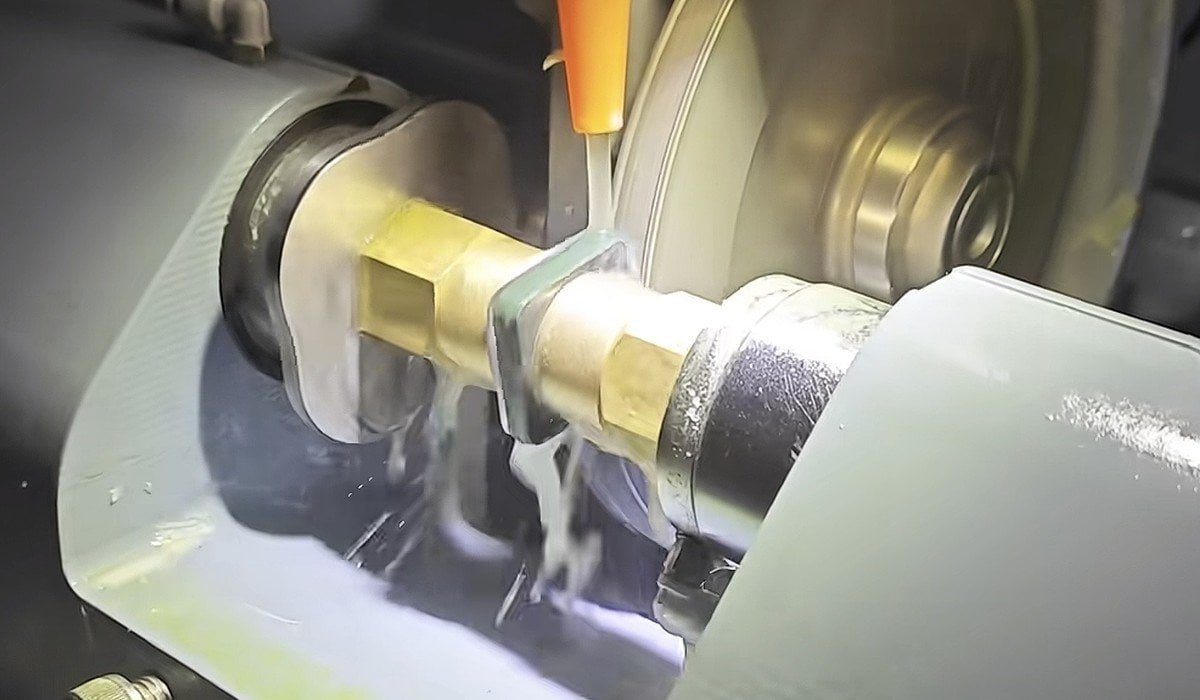
See the machine running
The EG-80 edging a round lens to diameter, and the copy former guiding the wheel around a shaped part.
01 — Round lens to diameter, one pass
02 — 1:1 copy former on a shaped part
Send one drawing and a few lenses
An optical lens edge grinding machine is easy to specify badly from a datasheet. Send us the diameter or the shape, the material and the tolerance you have to hold, with a few of your own lenses. We run them, return them, and send the process sheet with the quotation.
If your volume needs automatic feed, or your parts are flat panels rather than lenses, we will point you to the right member of the family instead of quoting this one.
12-month warranty · free trial run on customer-supplied material
Optics customers include Edmund Optics and Coherent
Related equipment and reading:
- Automatic lens profiling edger Auto-EG-80 — the automatic pick-and-place version
- CNC edge polishing machine EP-220C — for the edges of flat 2D / 2.5D panels
- Convex lens polishing machine FP-4L — the polishing stage upstream
- Optical lens fabrication line — how the stations connect