
CNC Edge Polishing Machine EP-220C
A cnc edge polishing machine that polishes the four edges and the rounded edges of flat 2D and 2.5D hard-brittle panels. It follows a stored CAD outline for shaped parts and generates the path from dimensions for regular ones, Ø30–220 mm.
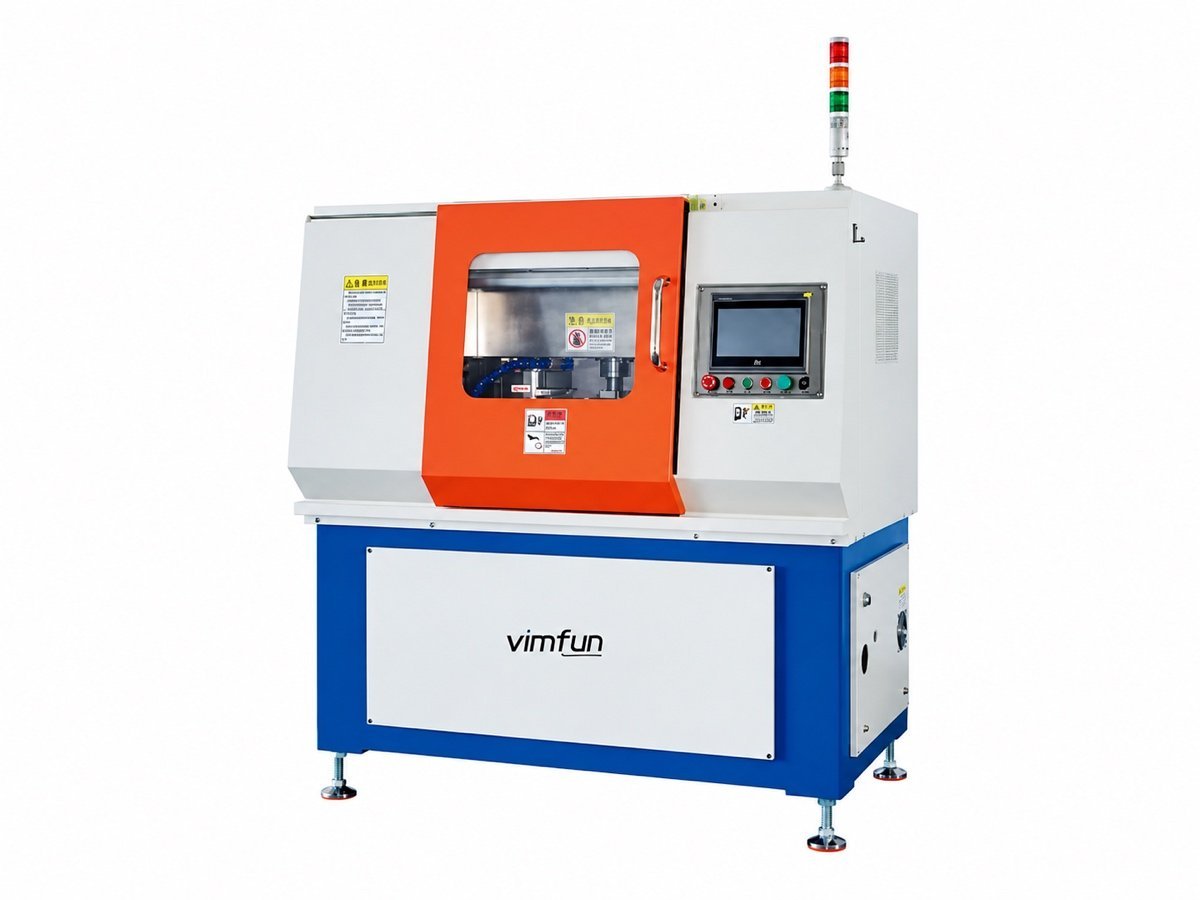
What this machine does, and what it is not for
A flat panel — a smartwatch cover, a small window, a 2.5D glass part — has its faces finished flat, but its perimeter is still sawn-rough. A cnc edge polishing machine finishes that perimeter: it polishes the four straight edges and the rounded corner edges of the part, so the rim is clear and smooth rather than chipped. It is the edge-finishing station for flat panels, and it works to a shape rather than to a single diameter.
The parts arrive cut to shape and leave with a finished edge. Faces are finished elsewhere — on the double-sided lapping machine for flat parts — and this machine does only the perimeter.
This machine polishes the peripheral and arc edges of flat 2D / 2.5D panels. It is not a lens edger: rounding a lens to diameter and cutting its bevel is the job of the profile edge grinding machine. Two different edges, two different machines.
How does a cnc edge polishing machine follow a shaped part?
It works to an outline. The path around the part comes from a CAD drawing or from the part’s dimensions, not from a fixed template.
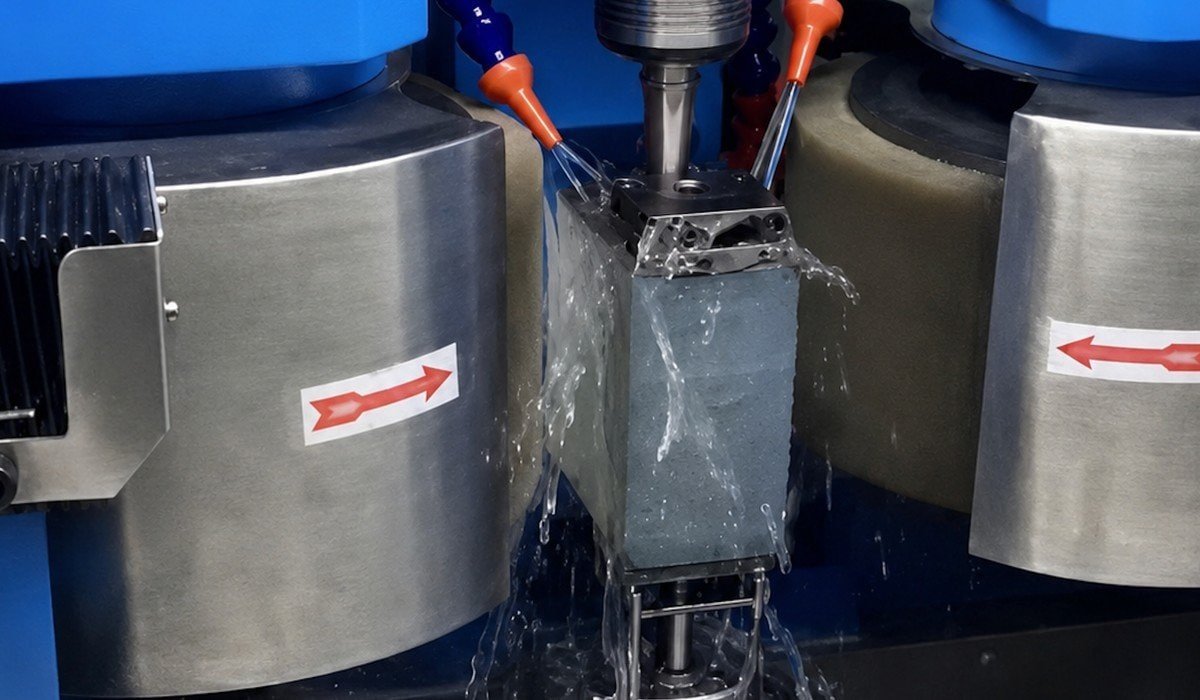
Two polishing wheels do the work, turning up to 1800 rpm, while the part turns slowly at up to 20 rpm and is presented to the wheel edge-on. The machine moves the wheel around the part following an outline, so a rounded 2.5D corner is polished on the same pass as a straight edge.
Where the outline comes from:
- Shaped parts — a CAD outline is imported by USB, and up to 30 shapes are stored in the machine
- Regular parts — enter the dimensions and the path is generated automatically
- Wheels 0–1800 rpm — set for the material and the finish
- Workpiece 0–20 rpm — the part is turned slowly to present each edge
Because a cnc edge polishing machine holds the parts in a multi-piece stacking fixture, a stack of identical panels is polished in one setup, which is what lets one operator keep several machines running.
You are buying a machine that follows your shapes, plus the wheels and the stacking fixture for your parts. Send us the outline, the material and the thickness, and we specify the fixture and wheels with the quotation.
Four things the CNC does for edge work
Loading the fixture is by hand; the polishing runs from the stored path once the door is closed. These are what a cnc edge polishing machine gets right.
Follows a CAD outline
Shaped parts are imported as a CAD outline over USB, and up to 30 shapes are kept in the machine, so a new part is recalled rather than re-taught.
Generates a path from dimensions
For a regular rectangle or disc, entering the size is enough — the machine works out the perimeter path itself, straight edges and arc corners together.
Polishes a stack in one setup
A patented multi-piece fixture stacks identical panels so they are polished together, which is what lets one operator tend several machines at once.
Fully enclosed and washable
The working area is a fully enclosed 304 stainless cabinet, so the slurry stays in and the machine wipes down between jobs.
Which parts and edges can it polish?
| Item | Capability |
|---|---|
| Part type | Flat 2D and 2.5D hard-brittle panels |
| Edges worked | The four peripheral edges and the rounded (arc) edges |
| Workpiece diameter | Ø30 – Ø220 mm |
| Clamp height | Up to 210 mm — multi-piece stacking fixture |
| Typical parts | Smartwatch covers, small windows and viewports |
| Shaped parts | CAD outline by USB, up to 30 stored |
| Materials | Hard-brittle glass and panels — send your material for a free trial run |
A cnc edge polishing machine is judged on edge finish and the accuracy of the rounded corners, so send the outline and the edge grade you have to hold. If you are choosing glass, the optical materials data helps, and drawings to the ISO 10110 framework are ideal.
Technical specifications
The EP-220C polishes edges of flat panels; the lens edger rounds and bevels curved optics — different jobs on different machines.
| Part type | Flat 2D / 2.5D panels |
| Edges worked | Four peripheral edges and arc edges |
| Workpiece diameter | Ø30 – Ø220 mm |
| Clamp height | Up to 210 mm, multi-piece stacking |
| Polishing wheels | 2, Ø220 mm after dressing |
| Wheel speed | 0 – 1,800 rpm |
| Workpiece speed | 0 – 20 rpm |
| Shape storage | CAD outline by USB, 30 shapes |
| Enclosure | Fully enclosed 304 stainless |
| Total installed power | 5.4 kW |
| Overall dimensions (L × W × H) | 1240 × 1100 × 1900 mm |
| Total weight | approx. 1600 kg |
| Certification | CE |
The polishing wheels and the stacking fixtures are process consumables chosen for the material and the part shape. They are quoted separately — tell us your parts and we will specify them.
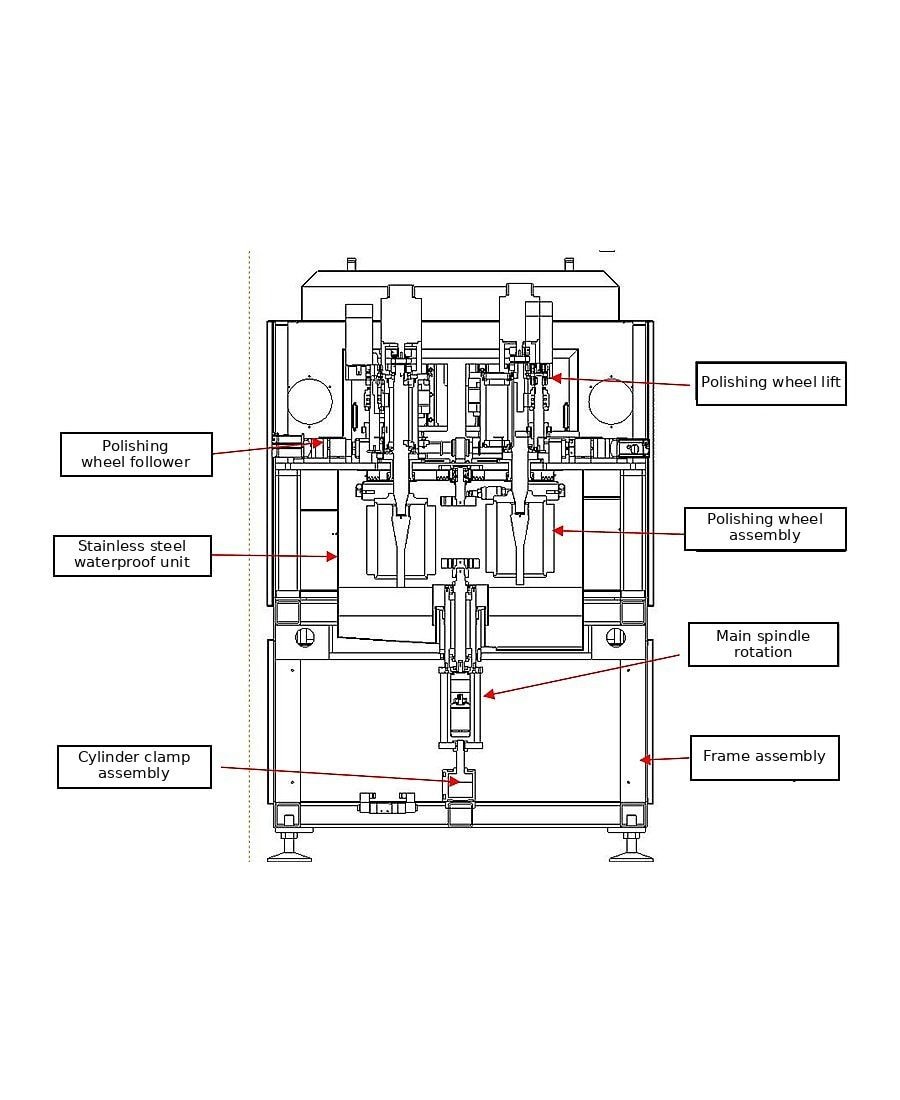
Main assemblies and what each one is for
This is the vocabulary your operator and our service engineer will share on the shop floor.
| Assembly | Function |
|---|---|
| Two polishing wheels | Work the peripheral and arc edges, 0–1800 rpm, Ø220 mm after dressing |
| Workpiece spindle | Turns the part slowly, 0–20 rpm, to present each edge to the wheel |
| Multi-piece stacking fixture | Patented fixture holding a stack of identical panels, up to 210 mm tall |
| CNC control | Runs the perimeter path from a stored CAD outline or entered dimensions |
| Enclosure | Fully enclosed 304 stainless, waterproof and easy to clean |
| Coolant system | Circulating supply to the wheels and the working area |
Utilities, environment and safety
Electrical supply, compressed air, coolant, floor loading and the ambient conditions the machine is to run in are confirmed with us for each order, together with the safety and protective arrangement supplied with it. These figures depend on the voltage and frequency of your site, the material you are running and the destination market, so we do not publish a single set of them here.
Send us the site conditions with your enquiry and we will return the utility and environmental requirements in writing, before the order is placed.
The EP-220C polishes the edges of flat panels — it is not a lens edger and not a face polisher. If your part is a curved lens that needs its diameter and bevel cut, the profile edge grinding machine is the right one; and a new part needs its fixture and wheels proven on trial parts, the reason we ask for your parts before quoting.
What happens after the machine is installed?
The same terms apply to every machine we ship, wherever in the world it goes.
| Warranty period | 12 months from final acceptance |
| Response during warranty | Response within 8 hours · solution proposed within 24 hours · issue resolved within 48 hours, including procurement, installation and commissioning of parts |
| After the warranty period | Service and spare parts available for the life of the machine |
| Certification | CE |
Specifications are subject to change as a result of design upgrades. Minor differences may occur at certain parts. For a binding specification, refer to the order confirmation.
See the machine running
The EP-220C polishing the perimeter of a 2.5D panel, and the wheel following a stored outline around a rounded corner.
01 — Perimeter polishing, one panel
02 — Following a CAD outline round a corner
Send one outline and a few parts
A cnc edge polishing machine is easy to specify badly from a datasheet. Send us the part outline, the material, the thickness and the edge grade you have to hold, with a few of your own parts. We run them, return them, and send the process sheet with the quotation.
If your part is a curved lens rather than a flat panel, we will point you to the lens edger instead of quoting this one.
12-month warranty · free trial run on customer-supplied material
Optics customers include Edmund Optics and Coherent
Related equipment and reading:
- Optical lens edge grinding machine EG-80 — rounds and bevels curved lenses
- Wafer lapping and polishing machine DL-290/395 — finishes the faces of flat parts
- Lens thickness sorting machine AOI-20 — gauges flat parts to the micron
- Optical lens fabrication line — how the stations connect