ZnSe Polishing: Handling Dust, Slurry and Extraction
A polishing machine can keep the optic wet while contaminated residue dries on its door seal, filter housing or collection tray. Those surfaces become a separate exposure source during unloading and maintenance. ZnSe polishing therefore needs a handling plan that follows material from the work zone to the waste container.
The engineering objective is to prevent uncontrolled exposure to particles, mist and residues. A closed enclosure, liquid circulation and personal protective equipment have different roles; none should be treated as proof that the complete process is safe. The material supplier’s current safety data sheet and a competent site-specific assessment must govern the operating procedure.
01 — Start with the actual material and its SDS
ZnSe is zinc selenide; ZnS is zinc sulfide. They are different compounds, and a ZnSe hazard statement must not be copied onto a ZnS process without checking that material’s own documentation. Coatings, polishing additives and cleaning agents can add further hazards.
The Angstrom Sciences ZnSe safety data sheet, revised in 2015 identifies hazardous decomposition products including hydrogen selenide. This older document is an example of hazard information, not a replacement for the current SDS for the purchased grade. It is a reason to review incompatible chemicals and abnormal conditions, not evidence that every normal wet-polishing operation releases that gas. Do not acidify contaminated slurry or improvise chemical treatment.
For ZnSe polishing, retain the SDS for the purchased material, slurry and cleaning products with the approved process instructions. Confirm the product form and revision: an intact finished optic and the fine residue generated during machining present different handling situations.
02 — Map release points in ZnSe polishing
Walk through the entire cycle before selecting controls. Consider loading a damaged blank, opening the enclosure, removing wet parts, changing filters, clearing a blocked drain and cleaning dried residue. Maintenance can expose material that was contained during normal cutting or polishing.
Prepare a simple source map rather than relying on a general statement that the machine is enclosed.
| Process point | Potential release | Design question |
|---|---|---|
| Tool and workpiece contact | Splash and airborne mist | Is the source contained during operation? |
| Door opening and unloading | Residue transfer and retained aerosol | What verified opening and unloading sequence is required? |
| Return lines and tanks | Leaks, splash and sediment | Are connections, access and secondary containment suitable? |
| Filter or sludge removal | Concentrated contaminated solids | Can removal occur without uncontrolled dispersal? |
| Cleaning and maintenance | Dried deposits or contaminated tools | Is the cleaning method compatible and contained? |
Use this map when reviewing ZnSe lens production equipment. Equipment selection and waste handling should be discussed together.
03 — Wet processing does not eliminate the release pathway
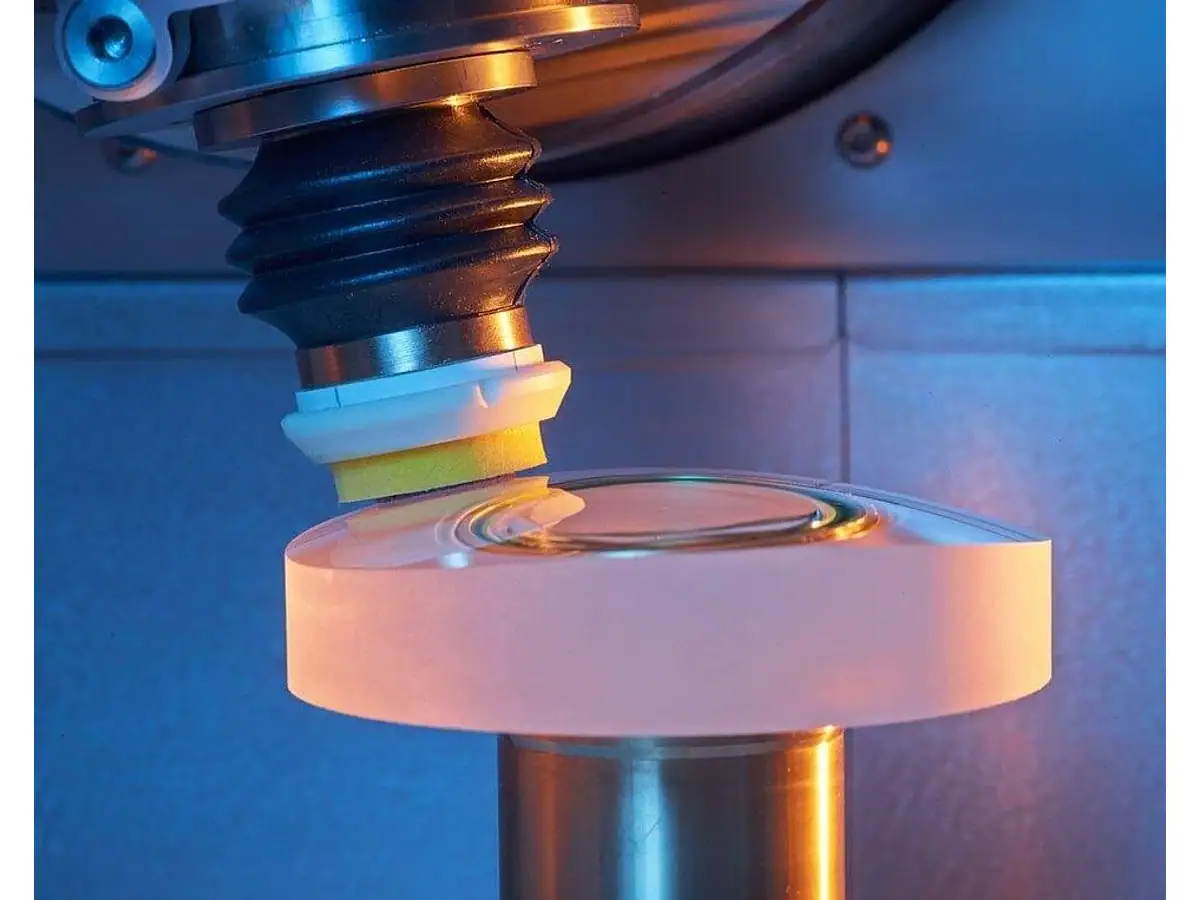
For this application, plan a controlled wet route rather than an unassessed dry-grinding operation. The liquid must reach the contact zone throughout the approved cycle. A pump running is not enough if delivery is blocked, poorly aimed or interrupted as the tool moves.
ZnSe polishing can generate contaminated droplets as well as wet sediment. Returning liquid to a tank does not establish that the air is adequately controlled. Similarly, clear-looking liquid is not evidence that dissolved species or very fine particles have been removed.
Define the response to loss of liquid delivery before production. The operator should know how to place the machine in its approved safe state and who authorizes restart. Do not rely on an improvised top-up while the process continues under an unknown condition.
The ZnSe optics polishing discussion covers the machining route; the containment review must additionally cover the abnormal and maintenance states.
04 — Specify extraction around the source
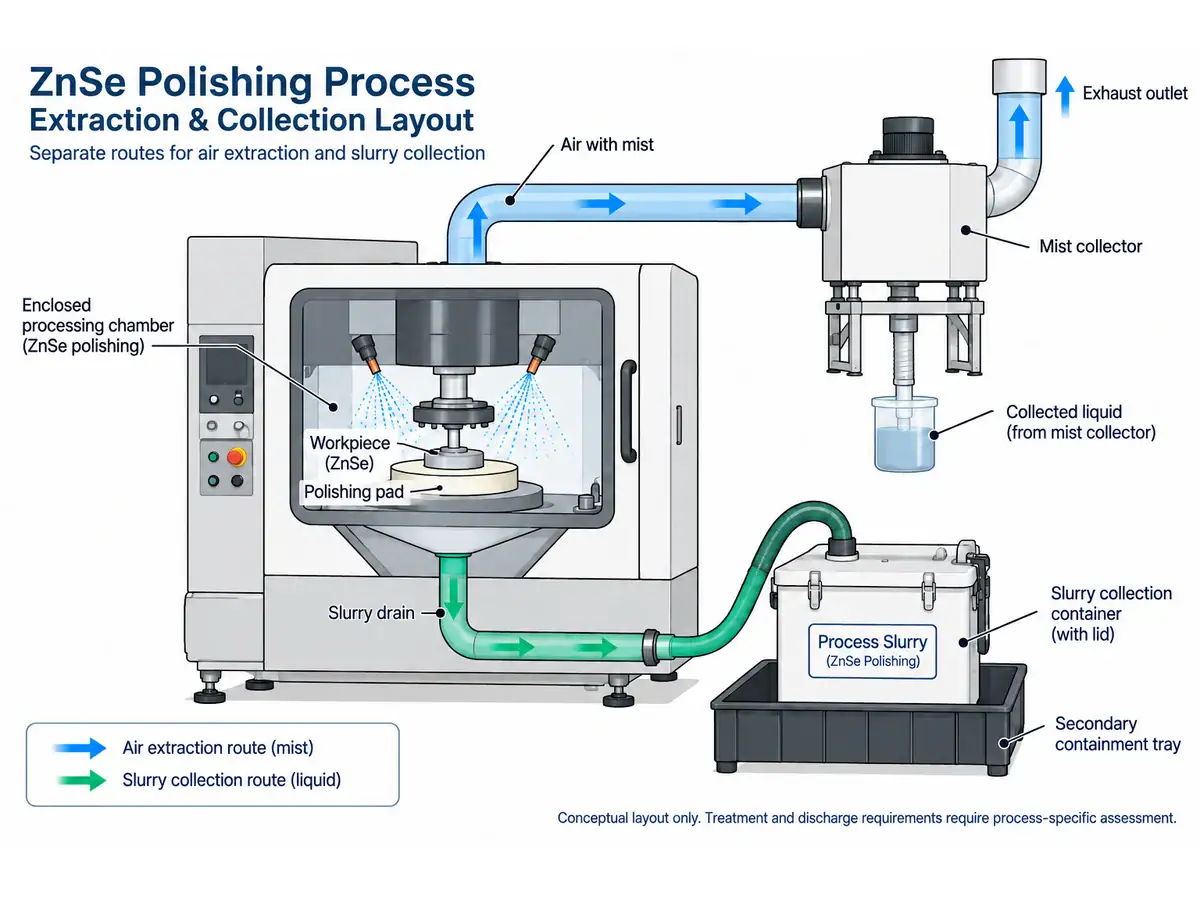
A lid is a physical barrier, not automatically an effective extraction system. Where local exhaust ventilation is required by the assessment, define the contaminant, source behavior, access openings and expected operating conditions before sizing the system.
The HSE guidance on local exhaust ventilation treats source control as an engineered system. Commissioning and checks must establish whether the installed arrangement captures the contaminant under the actual operating conditions. A fan label or nominal airflow alone cannot establish that result.
For ZnSe polishing, ask how mist collection, drainage, filter loading and maintenance affect performance. Do not prescribe a universal negative pressure or air-change number without a design basis. The right arrangement depends on the enclosure, process and site.
Discuss release monitoring and exposure assessment with a qualified occupational hygienist. An absence of visible dust is not a measurement of exposure, and odor is not a reliable release-control method.
05 — Treat slurry and filters as controlled process outputs
Separate process residues from ordinary workshop waste. Use compatible, identified containers and an agreed collection route. Label the material source, relevant process chemistry and collection date so the receiving waste specialist can assess the actual mixture.
Do not mix ZnSe residues with acid cleaning waste. Do not discharge slurry to a drain based only on its appearance or on the fact that the machining process was wet. Waste classification and disposal requirements depend on the mixture and the location of the facility.
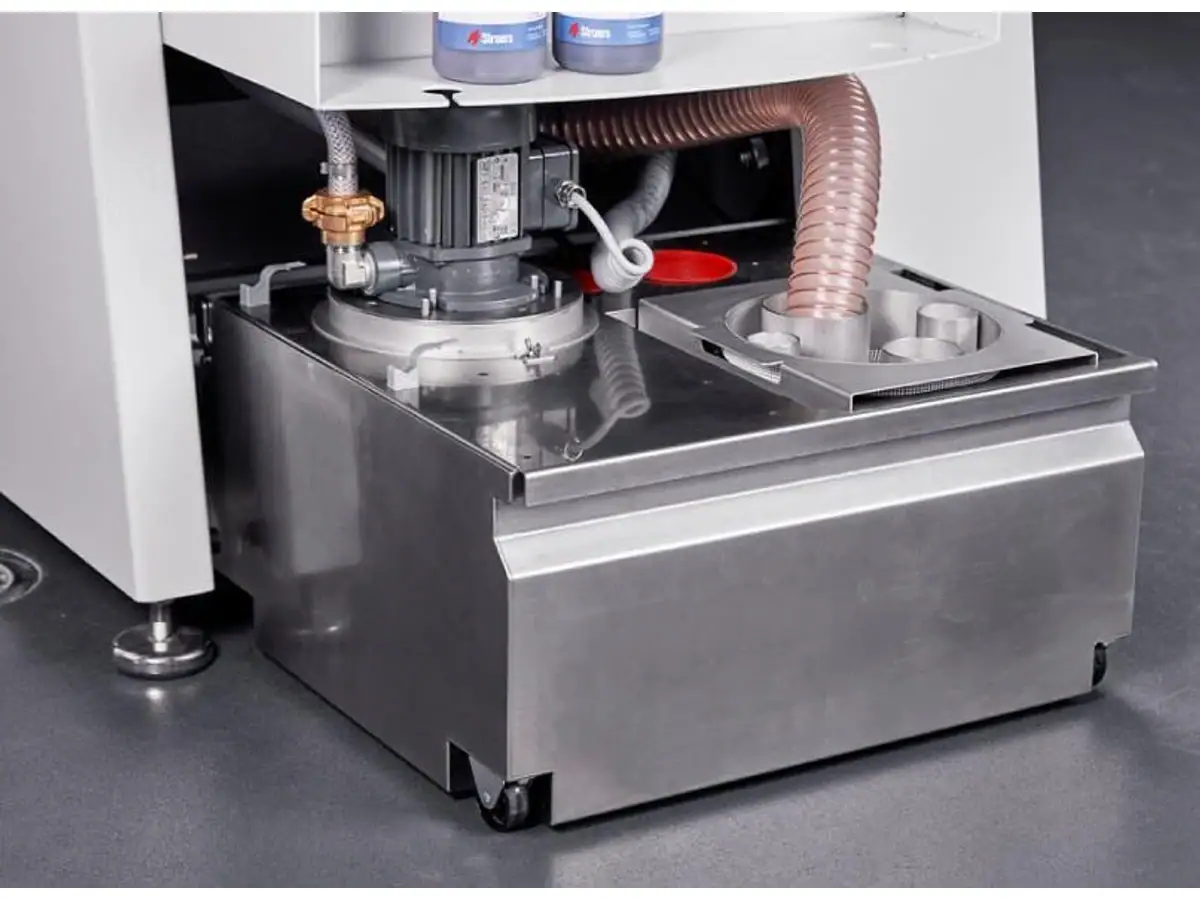
In a ZnSe polishing system, filtration and centrifugation may recover suspended solids, but separation equipment does not automatically detoxify the liquid or make the collected cake harmless. Define the destination of both streams before selecting a recovery unit.
Include access for inspection and controlled removal. A tank that is easy to circulate through but difficult to clean can move the problem from production into maintenance.
06 — Plan cleaning, PPE and workshop boundaries
Avoid routine compressed-air blowdown of contaminated surfaces or clothing. The HSE explanation of compressed-air cleaning shows how it can disperse both dust and liquid mist. Use the assessed cleaning method and equipment suitable for the material instead of a general-purpose vacuum or dry sweeping.
Select gloves, eye protection, protective clothing and any respiratory protection through the assessment. Respirator selection also requires attention to fit, use and maintenance; “wear a mask” is not an adequate instruction.
Separate clean handling areas from contaminated maintenance work. Keep food and drink outside the process area, provide appropriate hygiene arrangements, and control the movement of contaminated tools and clothing.
ZnSe polishing instructions should identify what operators may clean routinely and what requires trained maintenance personnel. Include a response for damaged optics, leaks and suspected loss of containment. Use the site emergency procedure and current SDS rather than improvising spill chemistry.
Record the checks that authorize ZnSe polishing to start: liquid delivery, enclosure condition, collection capacity and the required extraction indication. Assign a response when any check fails. A ZnSe polishing restart after maintenance should include confirmation that drains, covers and collection components have been restored correctly, with the responsible person identified in the shift record.
07 — Translate the review into an equipment enquiry
Ask the supplier to identify what the quoted machine includes: enclosure, liquid delivery, return tank, filtration, extraction connection, interlocks and maintenance access. A connection point is different from a commissioned extraction system.
The ZnSe and ZnS grinding configuration and polishing equipment comparison can help define the mechanical process. Neither page substitutes for the material-specific exposure assessment.
For ZnSe polishing, require a written interface list showing responsibilities between the machine supplier, extraction specialist, facility team and waste contractor. Establish who verifies the completed installation before operators begin production.
Review the full route through the infrared optics manufacturing equipment guide, including part transfer and residue collection. Send the material grade, dimensions, proposed chemistry and production quantity for an application discussion. Confirm engineering provisions and local requirements before ordering; an enclosure description alone is not a compliance claim.