
VIMFUN / KNOWLEDGE CENTER
Optical Manufacturing Knowledge Center
Practical guides to optical cutting, grinding, polishing and inspection—from material selection to process troubleshooting.
Browse by process or material
- Process Technology
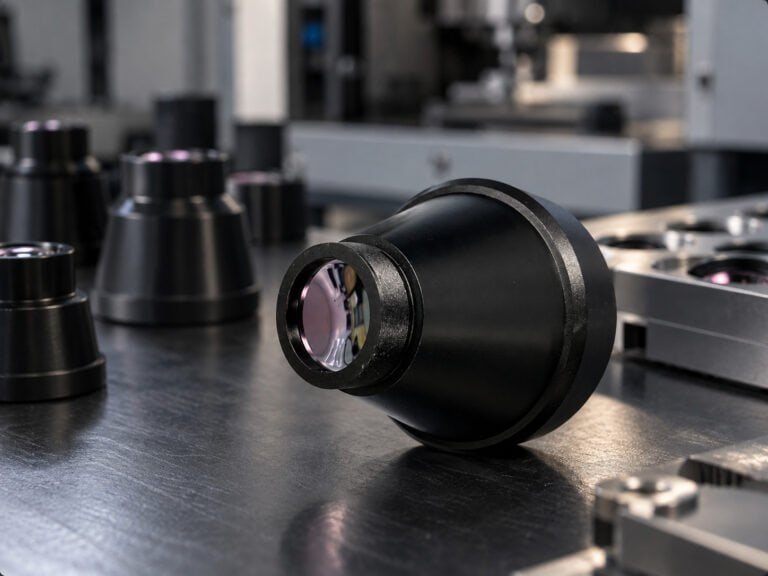
A Φ14 mm germanium blank cut on a conventional coring machine leaves a 5–10 mm kerf ring — that’s often more material wasted than the lens itself weighs.
- levy
- Process Technology
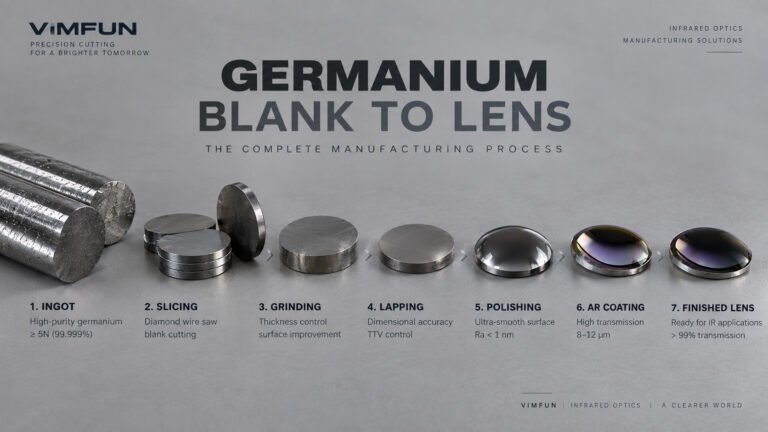
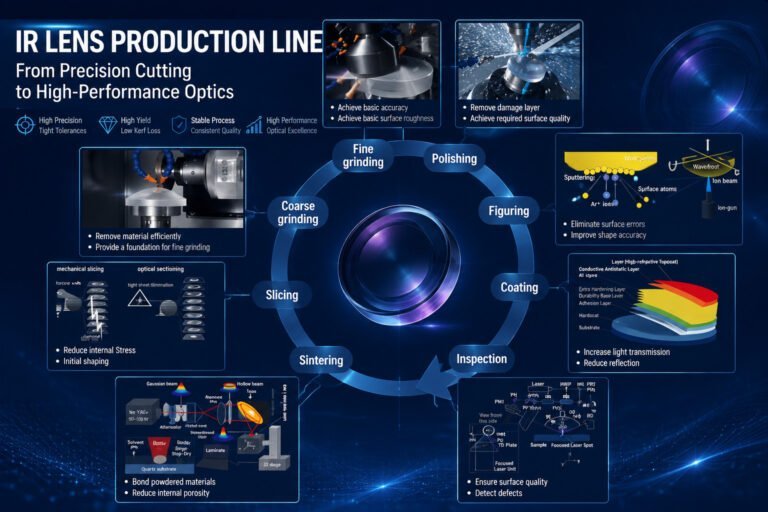
Getting from a raw germanium ingot to a finished IR lens takes eight distinct manufacturing steps — and every one of them has a way to go wrong.
- levy
- Process Technology
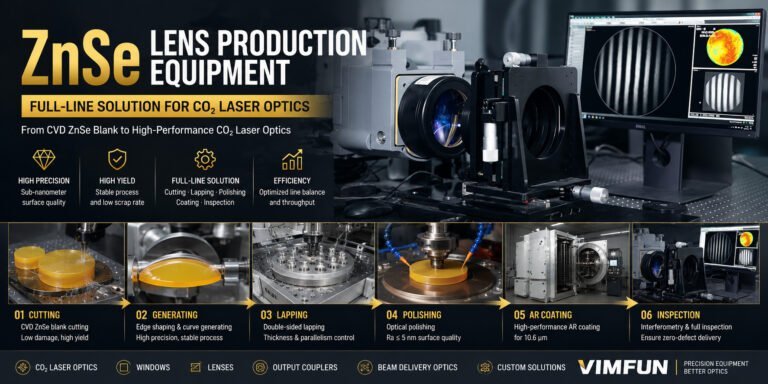
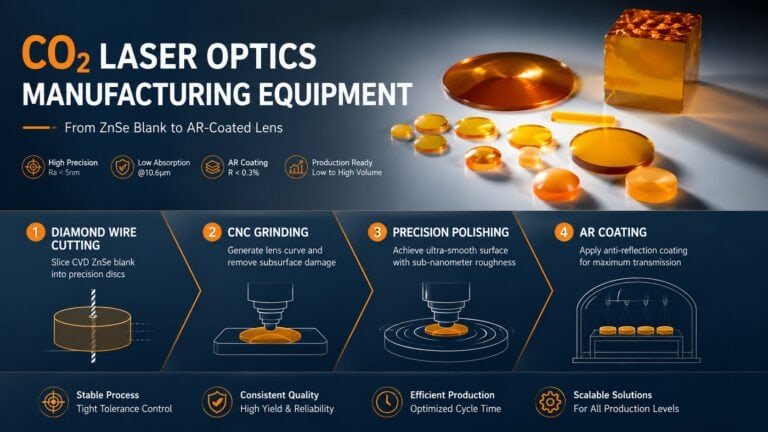
Choosing ZnSe lens production equipment is a full-line decision, not a single-machine decision. A CVD ZnSe boule enters the factory as an expensive, soft, selenium-bearing block; it leaves
- levy
- Process Technology
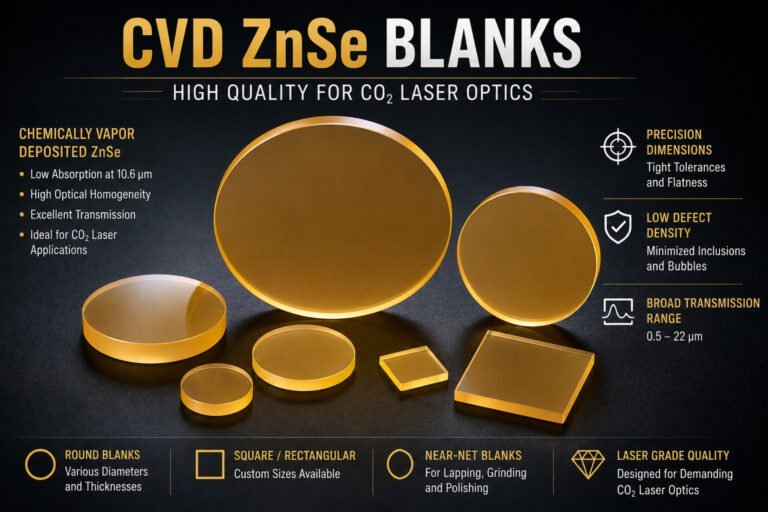
CVD ZnSe blank cutting is the first yield-critical machining step in zinc selenide optics production. Before a CO2 laser lens can be ground, polished, coated, and inspected, the
- levy
- Process Technology
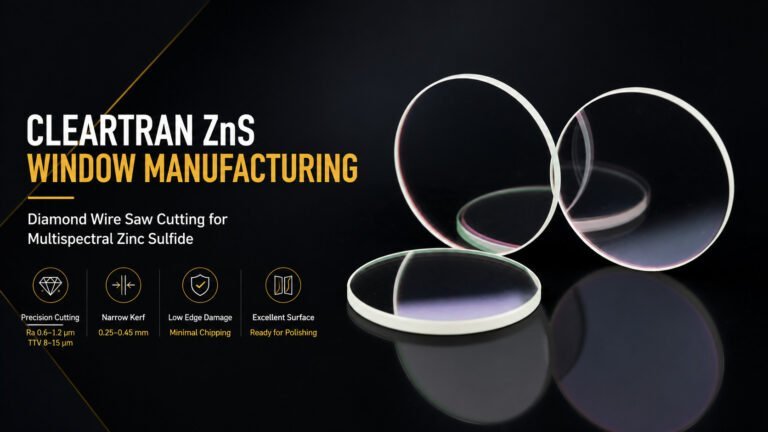
Cleartran ZnS is a denser, tougher grade of zinc sulfide that requires more disciplined cutting control than standard CVD ZnS. Cut it with standard parameters and you get
- levy
- Process Technology
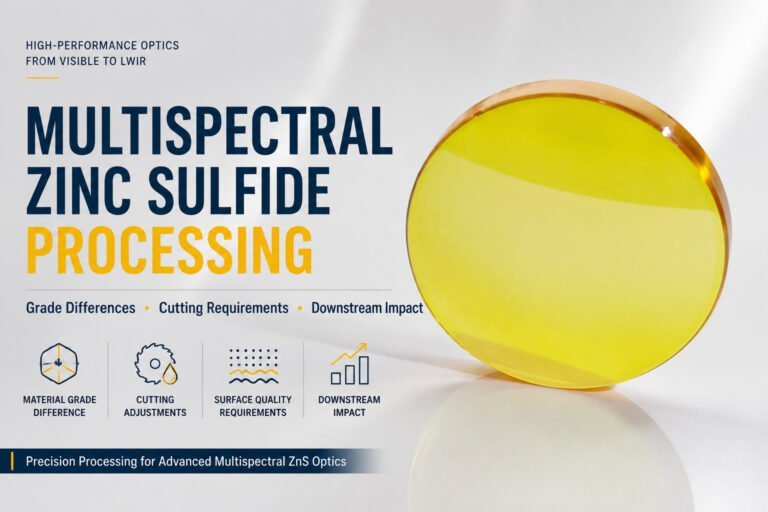
Multispectral zinc sulfide processing behaves differently from standard ZnS processing in three specific ways: the grain structure that emerges after hot isostatic pressing tolerates less cutting force, the
- levy

- Process Technology
Automotive thermal imaging systems require IR lens blanks cut to tighter dimensional tolerances than standard industrial optics — because a lens that passes incoming inspection can still fail
- levy
- Process Technology
A 200 mm germanium ingot costs $6,000–$10,000 at current spot prices. Traditional core-drilling wastes 5–10 mm of material per blank cut; diamond wire saw cutting reduces that kerf
- levy
- Process Technology
Every CO₂ laser cutting head contains a set of zinc selenide optics that the laser beam passes through before hitting the workpiece. Those lenses, windows, and output couplers
- levy
- Process Technology
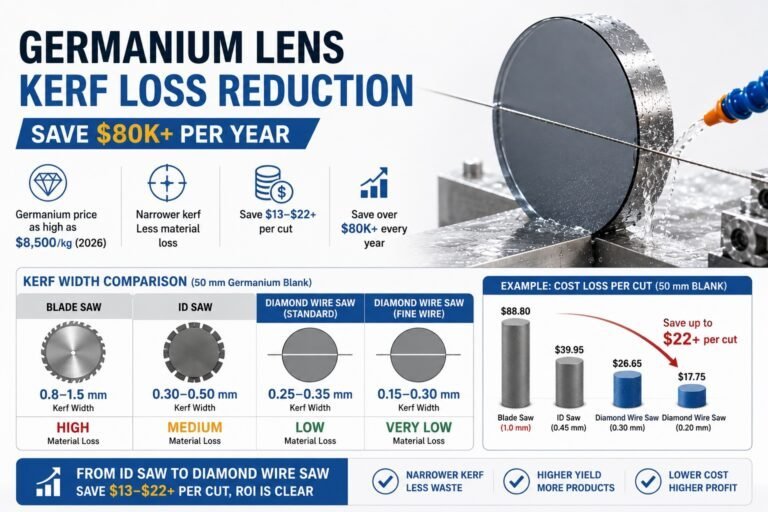
Germanium hit $8,500 per kilogram in mid-2026. That’s more than double the price two years ago. At that rate, every tenth of a millimeter of germanium lens kerf
- levy
- Process Technology
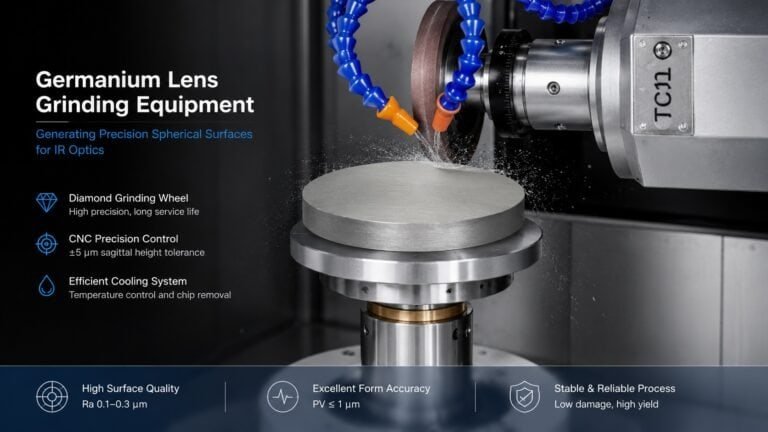
After cutting and centering, a germanium blank is flat — a disc with parallel surfaces, correct diameter, and clean edges. But a flat disc is not a lens.
- levy
- Process Technology
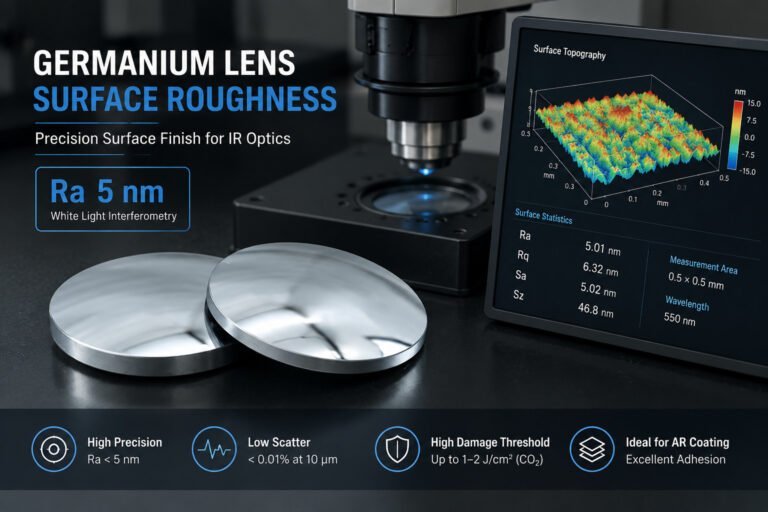
Ra 5 nm is not an exotic number for germanium. It is a class of finish that established polishing chemistry reaches routinely — and that a badly controlled
- levy
Explore equipment by process
Move from a process question to the equipment options for your part.
Need help with your optical process?
Share your material, drawing and required output with our team.
Send a drawing