
Wafer Lapping and Polishing Machine DL-290 / DL-395
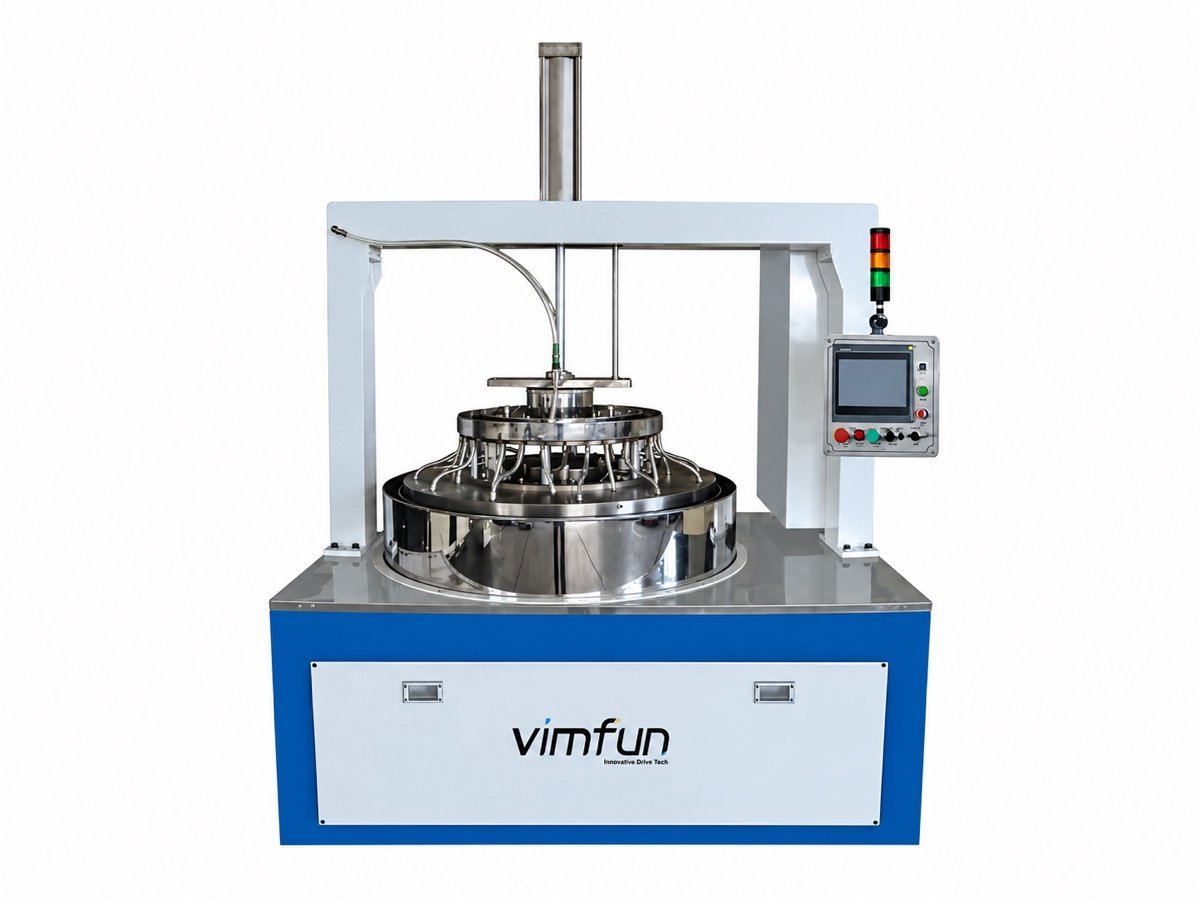
A wafer lapping and polishing machine that works both faces of a flat part at once. Parts ride in planetary carriers between two plates, so silicon, sapphire, ceramic and glass come out flat and parallel — up to Ø290 mm on the DL-290, Ø395 mm on the DL-395.
What this machine does, and where flat parts go
Curved lenses are finished one face at a time on a swinging spindle. Flat parts — wafers, substrates, windows, crystal blanks — are finished differently: both faces together, between two large plates, so the part comes out flat, parallel and the same thickness across its width. A wafer lapping and polishing machine owns that job, and it is the flat-parts counterpart to the lens polishers on the curved side of the line.
The same platform laps with a fixed abrasive or slurry, then polishes with a pad and compound. For measuring the parts it produces, the thickness sorting machine gauges flat parts to the micron; for curved optics, the lens polishers are the right machines instead.
The DL-290 carries six star wheels and takes parts up to Ø290 mm; the DL-395 carries five and takes parts up to Ø395 mm at higher plate pressure. Both share the planetary double-sided design — pick the size by your largest part and your batch.
How does a wafer lapping and polishing machine keep a part flat?
By moving every part along a planetary path between two plates, so no point on the wafer sees more wear than any other.
The parts sit in the openings of star-wheel carriers. Those carriers mesh with a central sun gear and an outer ring gear, so as the plates turn, each carrier both spins and orbits — every part traces a looping path rather than a single circle. That is what averages out the wear and leaves the wafer flat.
What the operator controls:
- Three drives, independent — upper plate, lower plate and the gears run on variable-frequency drives, each with its own speed and direction
- Proportional-valve pressure — plate load is set electrically, up to 400 kg on the DL-290 and 700 kg on the DL-395
- Recipes — eight parameter sets and ten recipes hold the settings for a job so they repeat batch to batch
- Central lubrication — the moving gears are oiled automatically from one point
Because a wafer lapping and polishing machine works both faces between two plates at once, a whole carrier of parts comes out to the same thickness in one run, rather than one face and one part at a time.
You are buying a platform and the plates, carriers and abrasive for your parts — not a fixed recipe. Send us the material, the diameter, the thickness and the flatness you have to hold, and we specify the tooling with the quotation.
Four things that decide the result
Loading and unloading the carriers are by hand; the lapping and polishing runs under the drives once the plates close. These are what a wafer lapping and polishing machine gets right.
Both faces, a whole carrier at once
Every part in the carriers is worked top and bottom together, so a batch comes out flat, parallel and to one thickness in a single run.
Three drives set the motion
Upper plate, lower plate and the gear train each run on their own variable-frequency drive, with independent speed and reversal, so the planetary motion is tuned to the material.
Pressure set by proportional valve
Plate load is controlled electrically through a proportional valve rather than by dead weights, so the down-force a thin or brittle wafer needs is dialled in and held.
Recipes and auto lubrication
Eight parameter sets and ten recipes store the settings for recurring jobs, and central lubrication keeps the gear train fed without a manual round.
Which materials can it lap and polish?
| Item | Capability |
|---|---|
| Part shape | Flat parts — wafers, substrates, windows, blanks |
| Faces worked | Both, simultaneously, between two plates |
| Thickness | 0.3 – 30 mm |
| Maximum workpiece | Ø290 mm (DL-290) · Ø395 mm (DL-395) |
| Semiconductor | Silicon and gallium arsenide wafers |
| Optical & hard-brittle | Optical glass, sapphire, quartz crystal, ceramic substrate |
| Also | Metals and non-metals — send your material for a free trial run |
Because a wafer lapping and polishing machine is judged on flatness, parallelism and thickness spread, those are the numbers to send. If you are choosing glass, the optical materials data helps, and drawings dimensioned to the ISO 10110 framework are ideal.
Technical specifications
Two sizes of the same double-sided platform. The DL-395 is the larger, higher-pressure machine; some DL-290 utility figures are confirmed with the quotation.
| Parameter | DL-290 | DL-395 |
|---|---|---|
| Plate (OD × ID × H) | Ø973 × Ø403 × 50 mm | Ø1165 × Ø377 × 50 mm |
| Star wheels | 6 | 5 |
| Max workpiece | Ø290 mm | Ø395 mm |
| Thickness | 0.3 – 30 mm | 0.3 – 30 mm |
| Plate pressure | 400 kg | 700 kg |
| Installed power | Confirmed on quotation | approx. 18 kW |
| Overall dimensions | Confirmed on quotation | 1850 × 1500 × 2900 mm |
| Faces worked | Both, simultaneously |
| Frame | Gantry frame |
| Drives | Three VFD motors, independent speed and reversal |
| Pressure control | Electric proportional valve |
| Recipes | 8 parameter sets · 10 recipes |
| Lubrication | Automatic, centralised |
| Certification | CE |
The lapping plates, star-wheel carriers, abrasive and polishing pads are process consumables chosen for the material and the flatness target. They are quoted separately.
Main assemblies and what each one is for
This is the vocabulary your operator and our service engineer will share on the shop floor.

| Assembly | Function |
|---|---|
| Upper & lower plates | The two working surfaces the parts are lapped or polished between |
| Star-wheel carriers | Hold the parts and carry them on the planetary path; 6 on the DL-290, 5 on the DL-395 |
| Sun & ring gears | Drive the carriers so each part spins and orbits at once |
| Gantry frame & lift | Carries the upper plate and raises it to load and unload the carriers |
| Three VFD drives | Upper plate, lower plate and gears, each with its own speed and reversal |
| Proportional-valve pressure | Sets the plate load electrically |
| Central lubrication | Feeds oil to the gear train from one point |
Utilities, environment and safety
Electrical supply, coolant or slurry supply, floor loading and the ambient conditions the machine is to run in are confirmed with us for each order, together with the safety and protective arrangement supplied with it. These figures depend on the voltage and frequency of your site, the material you are running and the destination market, so we do not publish a single set of them here — and some DL-290 utility figures are confirmed with the quotation.
Send us the site conditions with your enquiry and we will return the utility and environmental requirements in writing, before the order is placed.
A wafer lapping and polishing machine is for flat parts — wafers, substrates and windows — not curved lenses; those go to the swinging-spindle polishers. Carriers are loaded by hand, and a new material needs its plate, abrasive and pressure proven on trial parts, the reason we ask for your parts before quoting.
What happens after the machine is installed?
The same terms apply to every machine we ship, wherever in the world it goes.
| Warranty period | 12 months from final acceptance |
| Response during warranty | Response within 8 hours · solution proposed within 24 hours · issue resolved within 48 hours, including procurement, installation and commissioning of parts |
| After the warranty period | Service and spare parts available for the life of the machine |
| Certification | CE |
Specifications are subject to change as a result of design upgrades. Minor differences may occur at certain parts. For a binding specification, refer to the order confirmation.
See the machine running
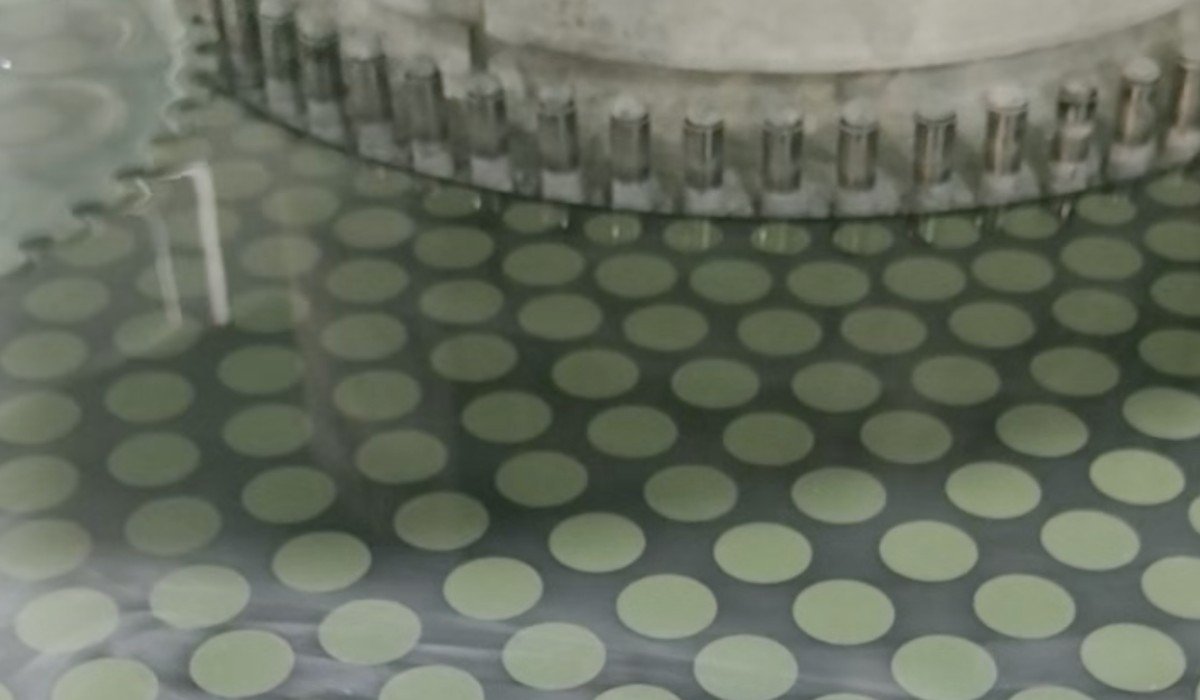
The DL platform lapping a carrier of parts between the two plates, and the star wheels tracing their planetary path.
01 — Double-sided lapping, one carrier of parts
02 — Star wheels on the planetary path
Send one drawing and a few parts
A wafer lapping and polishing machine is easy to specify badly from a datasheet. Send us the material, the diameter, the thickness, and the flatness and parallelism you have to hold, with a few of your own parts. We run them, return them, and send the process sheet with the quotation, along with the size — DL-290 or DL-395 — that fits your batch.
If your parts are curved rather than flat, we will point you to the lens polishers instead of quoting this one.
12-month warranty · free trial run on customer-supplied material
Optics customers include Edmund Optics and Coherent
Related equipment and reading:
- Lens thickness sorting machine AOI-20 — gauges flat parts to the micron
- Convex lens polishing machine FP-4L — the curved-optics side of finishing
- Tilt axis lens polishing machine FP-6X — flat and spherical faces, smaller parts
- Optical lens fabrication line — how the stations connect