
Germanium puck slicing on the SG 20: 42% more throughput, half the operator hours
Thick germanium rods in, thin wafers out — with cut faces smooth enough to shorten the grinding and polishing queue behind them. This file documents where the 42% came from, because almost none of it came from cutting faster.
Why move germanium puck slicing to an endless wire loop?
Germanium puck slicing looks like the simplest job in an optics shop: take a thick rod, section it into thin wafers, send them downstream. The customer in this file — a germanium wafer producer supplying infrared optics manufacturers — was doing exactly that, and losing money on both ends of every cut. On the front end, chipped wafer edges. Single-crystal germanium cleaves readily along its {111} planes, and every chipped rim either scrapped a wafer outright or forced the grinding station to eat deeper into the surface to remove it. On the back end, labor: their existing sawing process needed an operator present through every cut, watching, adjusting, unloading, restarting.
Neither cost shows up on a saw's spec sheet. Both show up in cost per shipped wafer — which is why this case is measured end to end, not blade against wire.
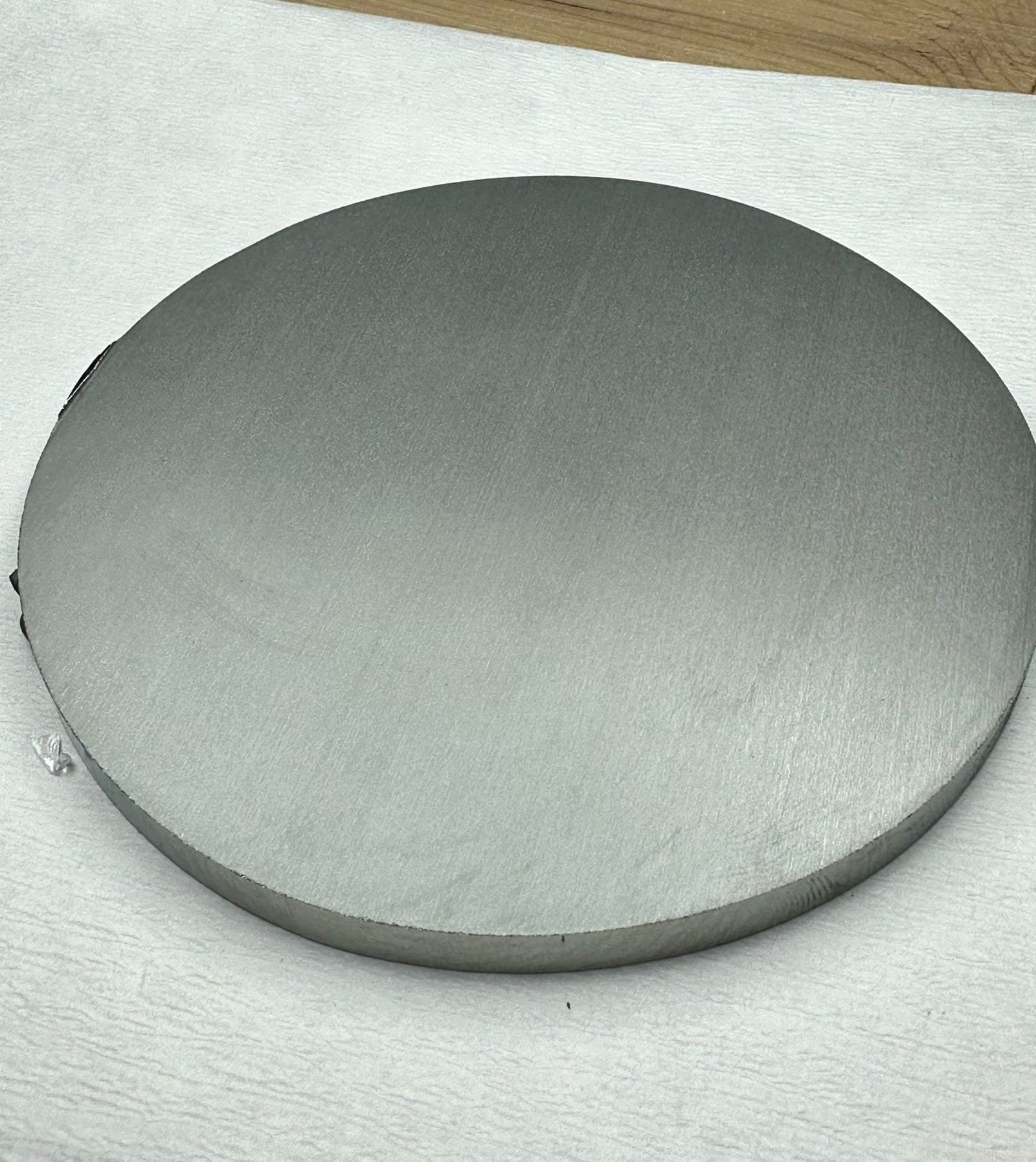
What does the as-cut face look like?
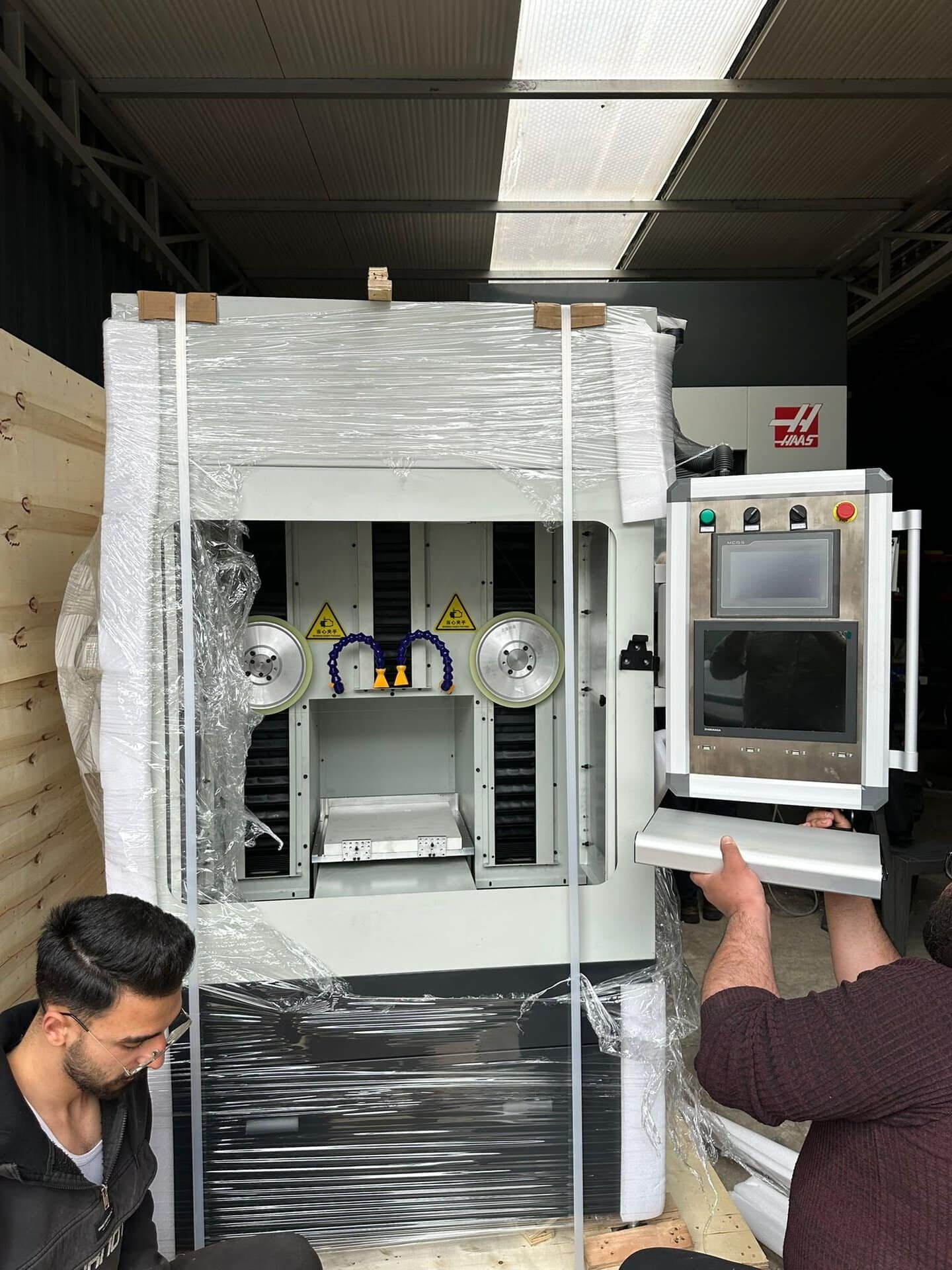
The machine is the SG 20 endless diamond wire saw. A closed loop of electroplated diamond wire circulates in one direction at high speed — no back-and-forth reversal, no rotating blade, no reversal marks. For germanium puck slicing the wire runs straight through the rod diameter at feed rates of 10–20 mm/min, and because the abrasive surface renews continuously as the loop circulates, the cut face stays uniform from the first wafer of a rod to the last.
The result on this customer's rods matched what we see across wire-sliced germanium generally: as-cut surface roughness of Ra 0.6–1.2 μm, total thickness variation of 8–15 μm across a 50 mm wafer, and — the number that mattered most to them — no edge chipping. Their incoming inspection had been sized around finding and mapping chipped rims. After the switch, that inspection step found nothing to map.
Smooth, chip-free faces are not just a quality statistic; they are a schedule. Every micron of subsurface damage the saw leaves is a micron the grinding and polishing line must remove. Wafers off the SG 20 entered grinding with less stock to strip and no chip-repair allowance, and the downstream stations sped up without a single change to the downstream machines.
How does one program cut half the labor?
The control software on the SG 20 is developed in-house at Vimfun, and it was written around how slicing shops actually run, not around a generic motion controller. Three behaviors did the work in this deployment:
- Mixed thicknesses in one program. A single cutting job can hold different wafer thicknesses in sequence — say, a run of 5 mm wafers followed by a run of 8 mm from the same rod. The operator keys in the thickness list and quantity once.
- Unattended execution. Once the program starts, nobody needs to stand at the machine. The saw indexes, cuts, and advances through the full list on its own.
- Auto-stop with alarm. When the last programmed wafer is cut, the machine stops itself and signals completion. No operator hovering to catch the end of a job; no rod cut past the plan.
Before the switch, slicing was a full-attendance station. After it, one operator loads a rod, starts the program, and walks away to run other equipment until the alarm calls them back. Across shifts, the customer's operator requirement for germanium puck slicing fell by roughly half — not through headcount cuts at the machine, but because the machine stopped demanding an audience.
Where did the 42% actually come from?
The customer reports overall efficiency up 42% since moving germanium puck slicing onto the SG 20. It is worth being precise about what that number is, because it is not a wire-speed claim. It is an end-to-end figure across their rod-to-finished-wafer flow, and it stacks from three places:
| Source | Mechanism |
|---|---|
| Downstream time | Largest share. Smooth, chip-free faces with shallow subsurface damage mean less material to grind and polish off every wafer — the queue behind the saw shortened without touching those machines |
| Scrap recovery | Wafers no longer lost to edge chipping ship instead of returning to the melt — capacity gained without cutting anything faster |
| Machine uptime | Unattended runs keep the saw cutting through breaks and task-switching; auto-stop means jobs end exactly on plan, day or night |
Slicing is one system of a two-system platform
The slicing behavior documented here is one of two control systems on the SG/SGI platform. The other cuts programmed contours from CAD drawings — the capability behind our irregular germanium lens cutting case with Sunny Optical, where crescent-shaped lenses with R1 corners came off the same class of wire. A shop that buys the platform for wafers keeps the option of shapes, and vice versa.
Both cases sit at the front of the same toolchain: wire saws feeding centering, spherical grinding, and polishing stations in the germanium lens manufacturing equipment lineup, part of the full infrared optics processing equipment range. Teams sizing a complete rod-to-coated-lens flow should start from the infrared optics production line overview.
Germanium puck slicing is the easiest job to qualify by evidence: send us your rod diameter, length, and target thickness list, and we cut your material on the SG 20 — mixed thicknesses in one program, filmed if you want it, wafers shipped to your metrology.
Send rod dimensions and thickness targets to daria@endlesswiresaw.com for a test-slicing plan.