
광학 렌즈 연마기
7개의 장비, 하나의 결정. 렌즈 폴리싱 장비는 마감해야 하는 표면의 모양에 따라 선택됩니다. — 오목 또는 볼록, 구면 또는 평면 — 그리고 한 번에 몇 개의 부품을 장비에 올리고 싶은지에 따라 결정됩니다.. 사양은 각 모델 페이지에 있습니다. 이 페이지는 선택을 위한 것입니다.
장비 목록이 아닌 표면에서 시작하십시오.
생성 공정은 툴 마크와 표면 손상을 남기는 반경을 만듭니다. 이 단계는 이러한 손상을 제거하고 표면을 최종 형상과 마감으로 가져옵니다. 먼저 결합된 다이아몬드 툴로 정밀 연삭한 다음, 부드러운 툴과 슬러리로 폴리싱합니다. 이 범위에서는 두 작업 모두 동일한 프레임에서 실행됩니다. J 및 P 구성은 툴링과 소모품에서 다르며, 장비 베드에서는 동일합니다.
따라서 렌즈 폴리싱 장비는 스핀들 수가 아닌 부품에서 사양이 결정됩니다. 반경 기호는 스윙 방향을 결정하고, 반경 값은 툴과 스윙 기하학을 결정하며, 배치 크기는 몇 개의 스핀들이 제 역할을 하는지를 결정합니다.
상부 스윙 또는 하부 스윙 — 렌즈 면이 어느 방향을 향해야 합니까?
스윙 방향은 첫 번째 필터이며 선호도가 아닙니다. 상부 스윙은 오목 면을 위해, 하부 스윙은 볼록 면을 위해 제작됩니다. 아래의 모든 렌즈 폴리싱 장비는 해당 분할, 그다음 반경 및 스핀들 수별로 나열됩니다.
| Model | 원칙 | 곡률 | Diameter | 스핀들 | 압력 및 공급 | 선택 시기 |
|---|---|---|---|---|---|---|
| FP-4U | 상부 스윙, 구면 중심 | R1–R20 | ≤ Ø30 mm | 4 | 스프링 압력, 순환 펌프 | 작은 반경의 오목 렌즈 — 제품군 진입점 |
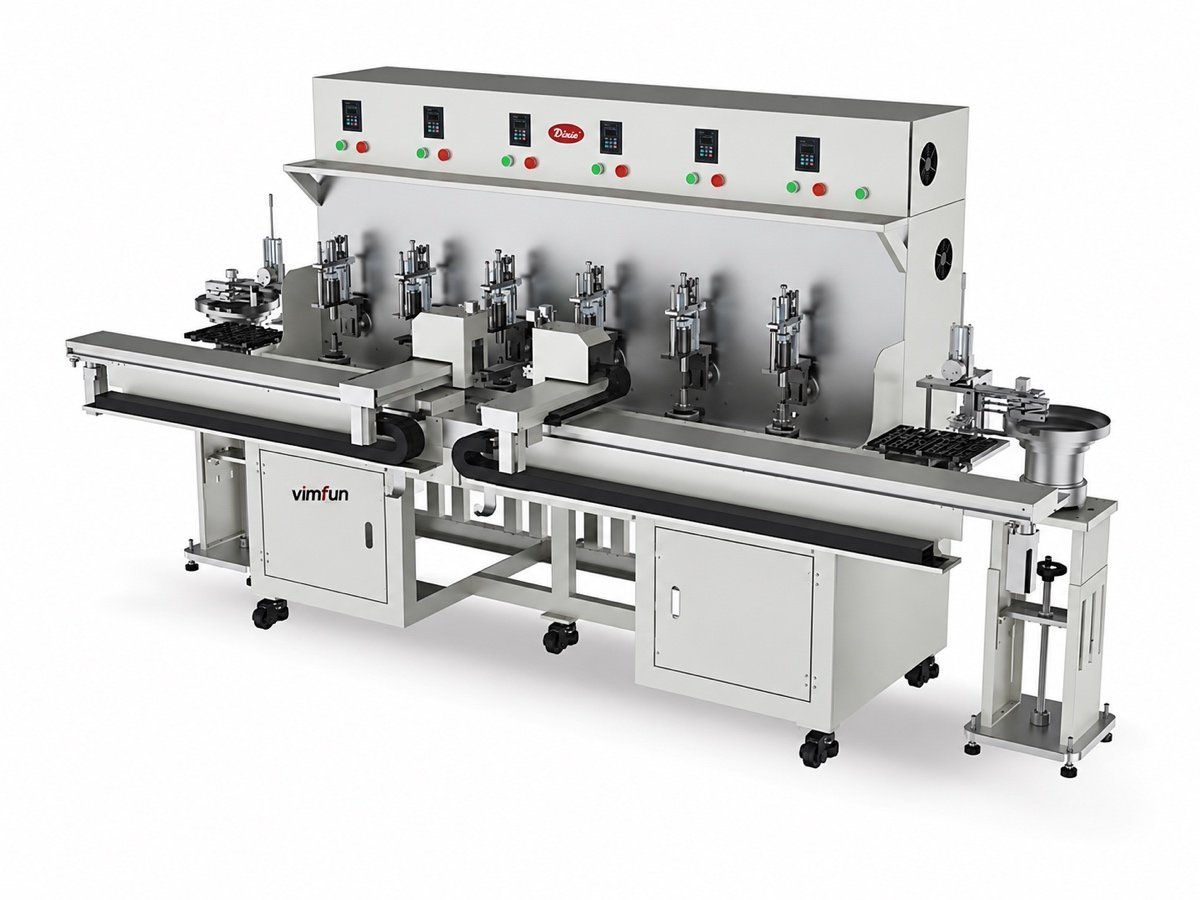
| FP-6U | 상부 스윙, 구면 중심 | R1–R20 | ≤ Ø30 mm | 6 | 공압, 축별 슬러리 공급 | 동일한 오목 렌즈, 더 높은 출력 — 각 축은 다른 축과 독립적으로 작동합니다. |
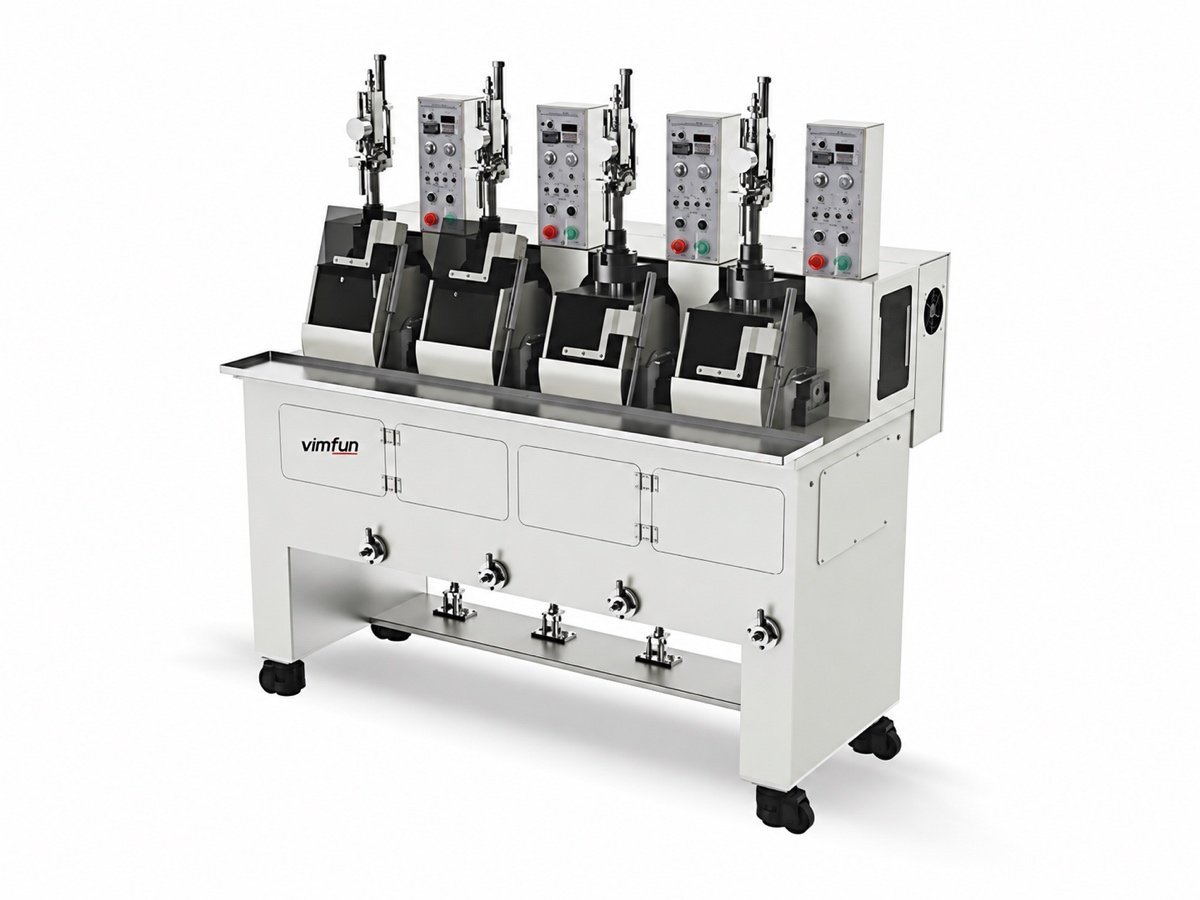
| FP-4L | 하부 스윙, 구면 중심 | ±R1.5–R50 | Ø3–30 mm | 4 | 스프링 압력, 순환 펌프 | 볼록 렌즈 및 스윙 제품군의 가장 긴 반경 |
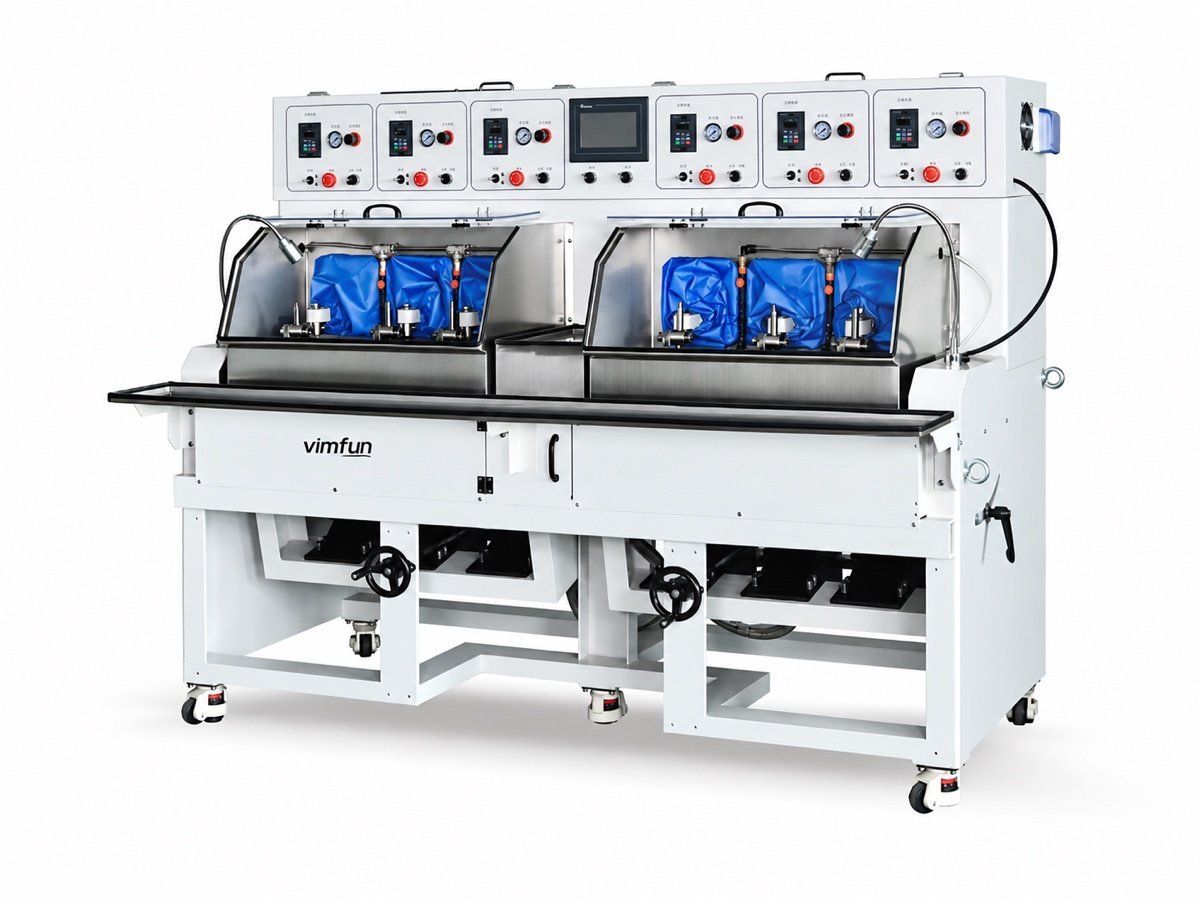
| FP-6X | 틸트 축, −10° ~ +30° | R10 ~ 평면 | Ø10–80 mm | 6 | 공압, 선택 사항으로 연동식 점적 공급 | 더 큰 부품, 평면 및 긴 반경 — 그리고 점적 공급이 중요한 세라믹 또는 사파이어 |
| MF-3 | 인덱싱된 면 및 패싯 | 평면 및 각진 패싯 | ≤ Ø110 mm (직경), ≤ 30 mm (두께) | 2개의 작업 스핀들, 3개의 플레이트 | 결합된 작업, CNC 플레이트 공급 | 프리즘 및 다면체 — 하나의 기계에서 연삭, 정밀 연삭 및 연마 |
| DL-290 DL-395 | 플래너터리, 두 개의 플레이트 | 평면, 양면 동시 | Ø290 / Ø395 워크피스 | 캐리어 내 배치 | 비례 밸브 압력 제어 | 두께 및 평행도는 부품별이 아닌 배치 전체에 걸쳐 유지됨 |
| EP-220C | CNC 윤곽, 두 개의 휠 | 둘레 및 둥근 모서리 | Ø30–220 mm | 2개의 연마 휠 | 스택형 고정구, CAD 윤곽 | 평면 2D 및 2.5D 패널의 모서리, 면이 아님 |
EP-220C는 평면 패널의 둘레를 연마합니다. 챔퍼가 있는 렌즈를 외부 직경으로 연삭하는 것은 다른 기계와 다른 단계입니다. — 참조 센터링 및 에징.
스윙 계열의 반경 범위
하나의 스케일에서 네 개의 스윙 기계. 반경을 찾고, 그에 따라 스윙 방향을 읽으면 광학 렌즈 연마 기계의 짧은 목록이 하나 또는 두 개의 프레임으로 좁혀집니다.
FP-4L은 ± 기호를 가지고 있는데, 이는 하부 스윙이 범위 내에서 곡률의 두 부호를 모두 포함하며, 볼록 가공이 구매 이유이기 때문입니다. 스윙 계열 외부의 광학 렌즈 연마 기계는 이 스케일에 없습니다. MF-3은 평면 및 각진 면을 가공하고, DL은 두 개의 평면을 동시에 연마하며, EP-220C는 둘레를 가공합니다. 이 세 가지는 아래에서 더 자세히 비교됩니다.
기계 제품군 살펴보기
광학 렌즈 연마 기계당 하나의 카드: 용도 및 비사용 용도. 전체 사양은 모델 페이지에 있습니다.
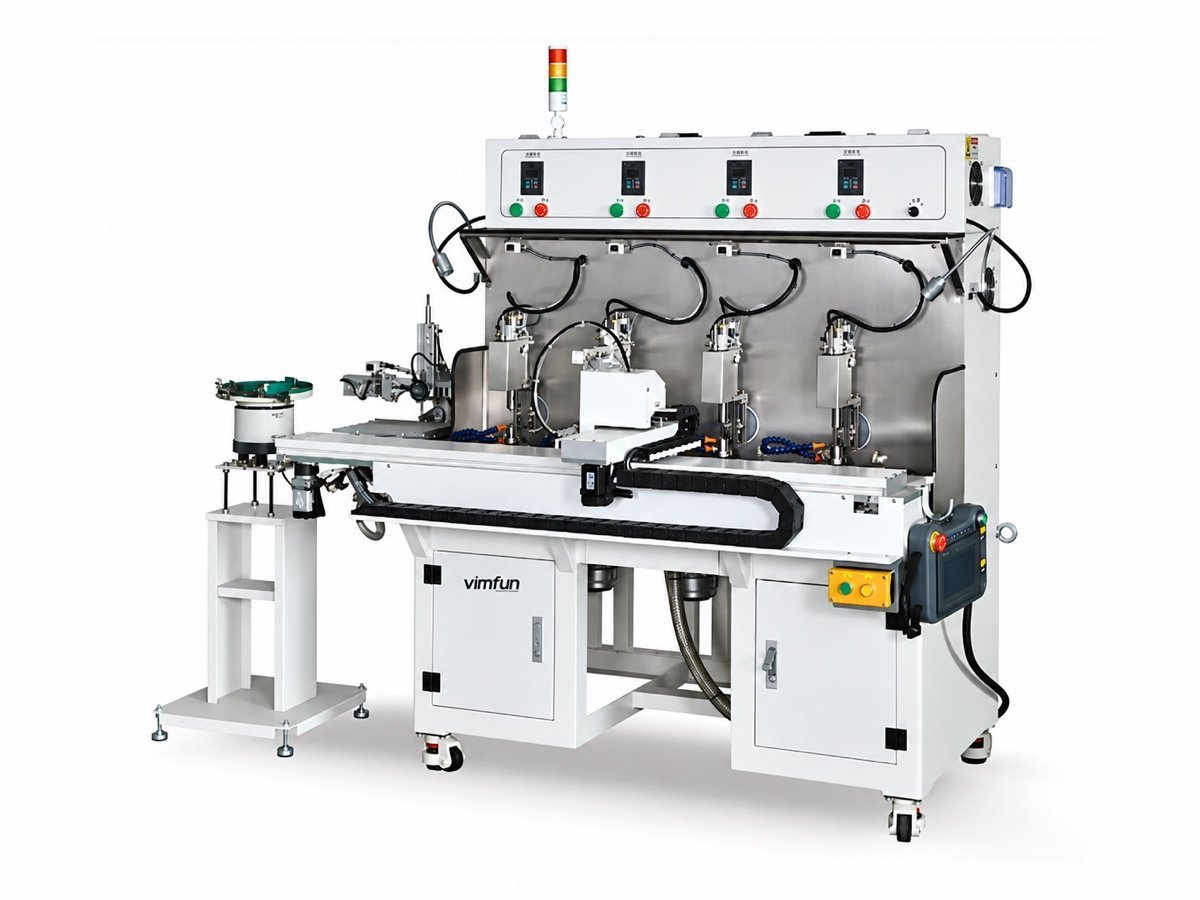
FP-4U
FP-6U
FP-4L
FP-6X
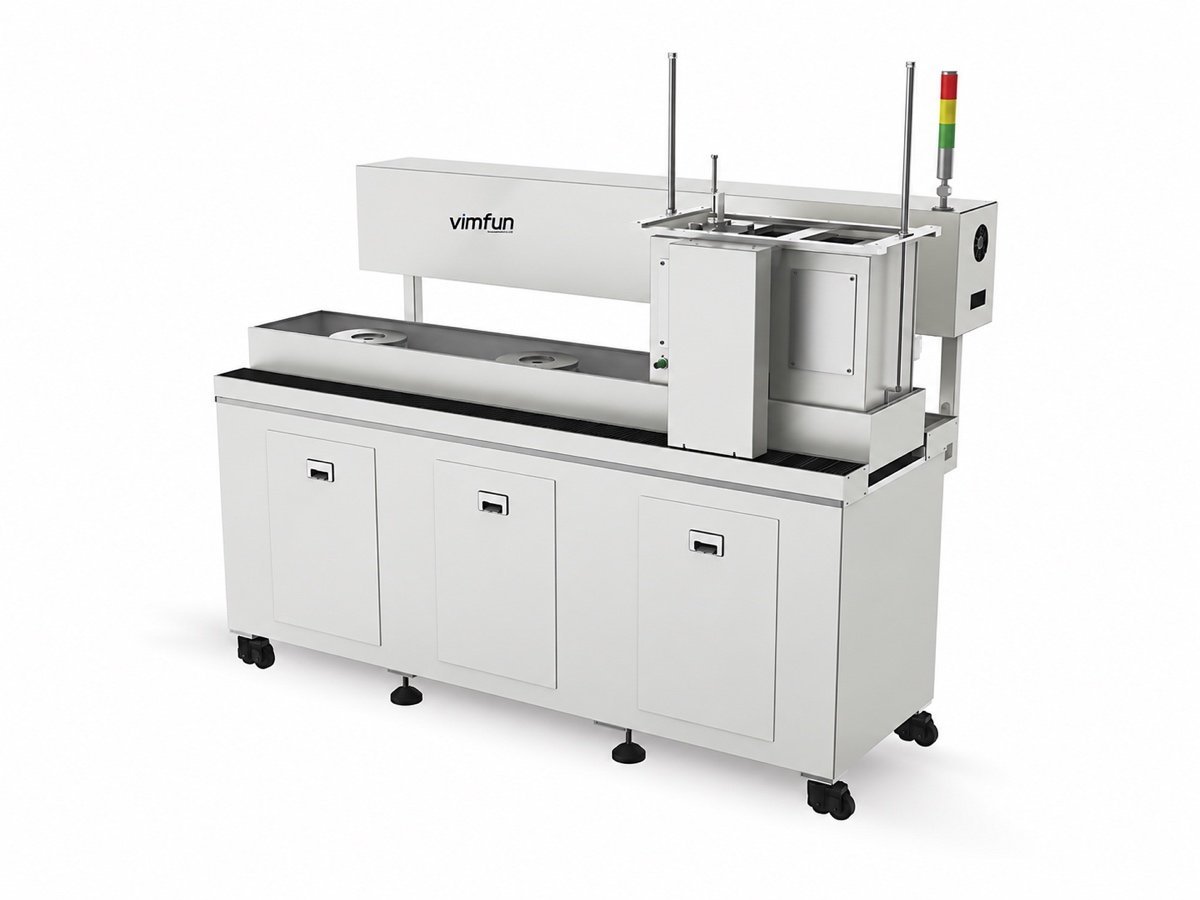
MF-3
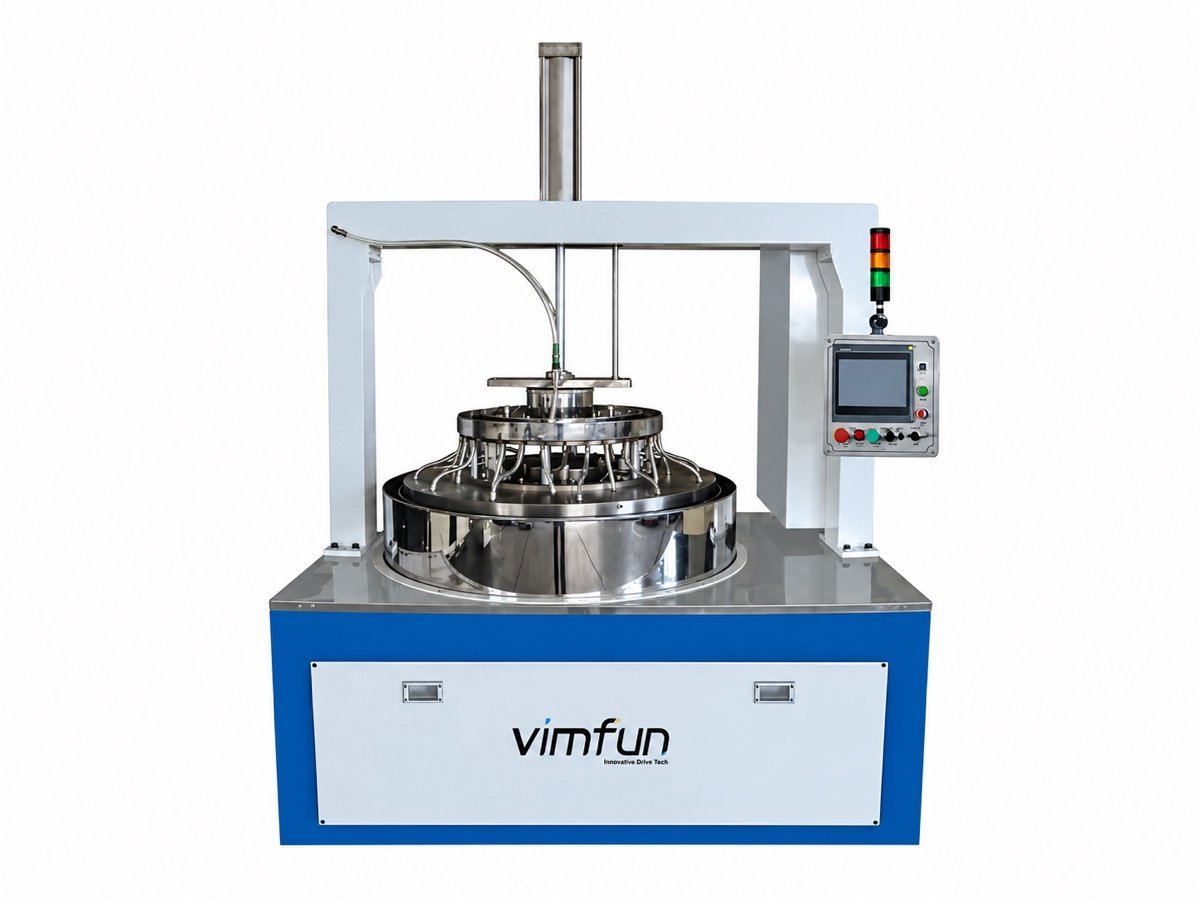
DL-290 · DL-395
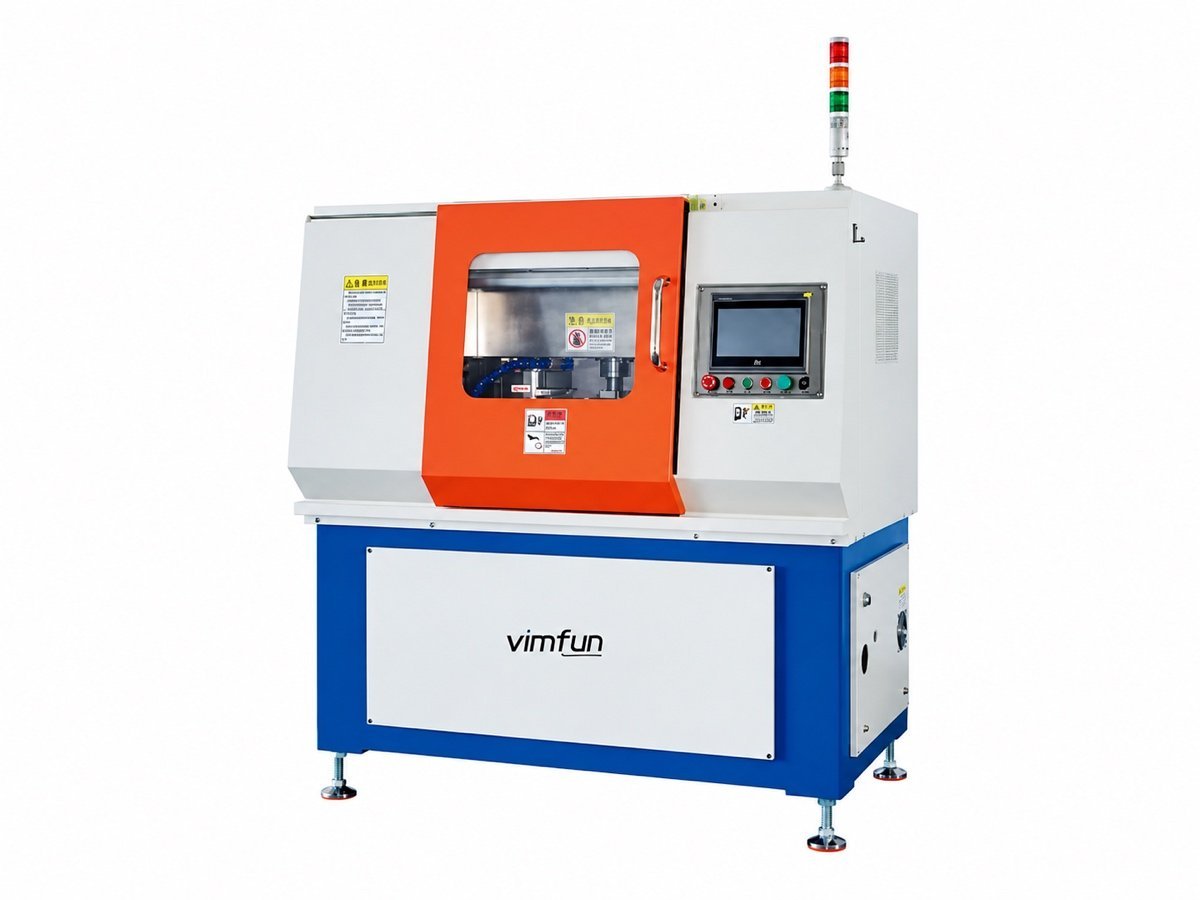
EP-220C
What actually decides the figure?
Four settings do most of the work on an optical lens polishing machine. Competitors quote spindle counts; these are the things that decide whether the surface comes out round.
The swing runs through the centre of the sphere
Work and tool rock about the sphere's own centre, so the contact path sweeps the whole face instead of wearing a zone. This is why the frame, not the tool, sets what radii a machine can hold.
Stroke and swing speed
Swing rate is set independently per machine — up to 60 cycles a minute on the four-spindle frames, up to 40 and 45 on the six-axis ones. Slower and longer flattens the edge; faster and shorter holds the centre.
How the pressure is applied
Spring pressure on the four-spindle machines, pneumatic on the six. Pneumatic holds a set force as the tool wears, which matters most on long cycles and on parts that will not tolerate a rising load.
How the slurry reaches the interface
Glass runs on a circulating pump. Ceramics and sapphire can be run with peristaltic drip feed on the FP-6X — a metered supply instead of a flood, which is the difference between a stable process and a scratched batch.
Which materials and geometries are covered?
Every optical lens polishing machine here is built for hard, brittle optical materials. Where a specification does not name a material, we prove it with a trial part instead of claiming it.
| 재료 | Spherical swing | Flat & tilt axis | Double sided | 에지 연마 |
|---|---|---|---|---|
| Optical glass | 예 | 예 | 예 | 예 |
| 사파이어 | 예 | Yes, drip feed | 예 | 예 |
| Technical and optical ceramics | 요청 시 | Yes, drip feed | 예 | 예 |
| Quartz and crystal | 요청 시 | 예 | 예 | 예 |
How a material polishes is not one number: hardness, cleavage and thermal behaviour all change the slurry, the tool and the pressure. Published data for 사파이어 그리고 crystal quartz is a fair starting point; the process is then settled on real parts.
Send a drawing and a few generated blanks of your own material. We run them on the machine under discussion and return the parts with the process sheet — tool, slurry, pressure, swing setting and cycle time. This applies across the range, not only to the machine you first asked about.
Spheres, facets, flats and edges are four different machines
The swing family is only part of this step. Three other groups finish surfaces a swing frame cannot reach, so "optical lens polishing machine" covers four different geometries here. Picking the wrong group is the most common mis-specification we see.
- Spherical faces — the swing family (FP-4U, FP-6U, FP-4L, FP-6X). The tool rocks about the centre of the sphere; radius and sign decide the frame.
- Facets and angled flats — MF-3 indexes the part layer by layer and face by face, and takes it from rough grinding to polish on three plates in one setup.
- Two parallel flats at once — DL-290 and DL-395 lap and polish both faces of flat parts in planetary carriers, holding thickness across the batch rather than part by part.
- Perimeters — EP-220C polishes the edges and rounded corners of flat panels from a stored outline, fed by stacked fixtures.
This equipment is built for precision optics manufacturing. It is not for ophthalmic Rx laboratories, not a bench tool for polishing spectacle lenses, and not for architectural glass or mirror work. If that is the job, we are the wrong supplier and would rather say so before you send a drawing.
Where an optical lens polishing machine sits in the line
Polishing is one station of six, and it inherits whatever the station before it left behind.
- Before: the radius is cut on a curve generator. Allowance and subsurface damage from that step decide how long fine grinding takes here.
- After: the finished faces go to 센터링 및 에징, where the outside diameter is brought to the optical axis.
- Alongside: the damage story is worth reading in full — see our note on subsurface damage in optical lenses, which is what this step exists to remove.
- All of it together: the complete lens fabrication line, laid out as one proposal with cycle times, or browsed by process step on the equipment overview.
An optical lens polishing machine bought without looking upstream tends to disappoint: if the generator leaves an uneven allowance, the polishing cell spends its cycle correcting damage instead of figure. Tell us both steps and we will balance them.
What do buyers ask before they choose?
Do fine grinding and polishing need two machines?
Not two frames. The same optical lens polishing machine runs both, configured for one or the other — what changes is the tooling and the consumables, so shops with volume often buy two identical frames and dedicate one to each stage.
Can one frame do concave and convex?
No. Upper swing is built for concave, lower swing for convex. A mixed part programme means either two frames, or the tilt-axis machine where the geometry is set differently.
How many lenses per cycle?
Four or six on a swing frame, one per spindle. For flat parts, a double-sided machine runs a whole carrier set at once — which is why an optical lens polishing machine for wafers is specified by plate size, not spindle count.
What about ceramics and sapphire?
They need metered slurry rather than a flood, and pressure that stays put as the tool wears. That is the FP-6X with its drip-feed option; glass work stays on the circulating pump.
What has to be quoted besides the machine?
Tools and fixtures for your radii, the first set of consumables, destination voltage and CE configuration, freight, installation and training, and a spare-parts set. An optical lens polishing machine is a tooling-heavy purchase — budget it as a cell, not a frame.
Can these machines be loaded automatically?
Basket loading units feed the polishing station directly from the generating cell. They are specified with the line so basket and tray formats match at every station, rather than retro-fitted afterwards.
Send the lens — get a machine recommendation
You do not have to land on a model number yourself. Send the drawing, the material and the annual quantity, and you get back a specific machine, a cycle estimate and trial parts to check it against.
- 1 · You send — drawing or sample, material, radius and sign, batch size.
- 2 · We answer — frame, swing direction, tooling and an estimated cycle time.
- 3 · We prove it — free trial run on your own blanks, parts returned with the process sheet.
- 4 · You decide — firm quotation including tooling, consumables, freight, installation and training.