A segmented-coated quartz cutting wire is identified by abrasive-bearing sections separated by intervals along the wire. That description is a starting point for selection, not evidence of a particular cut rate, debris behavior, temperature, kerf or service life. Confirm the actual construction and evaluate it on the intended quartz workpiece and machine.
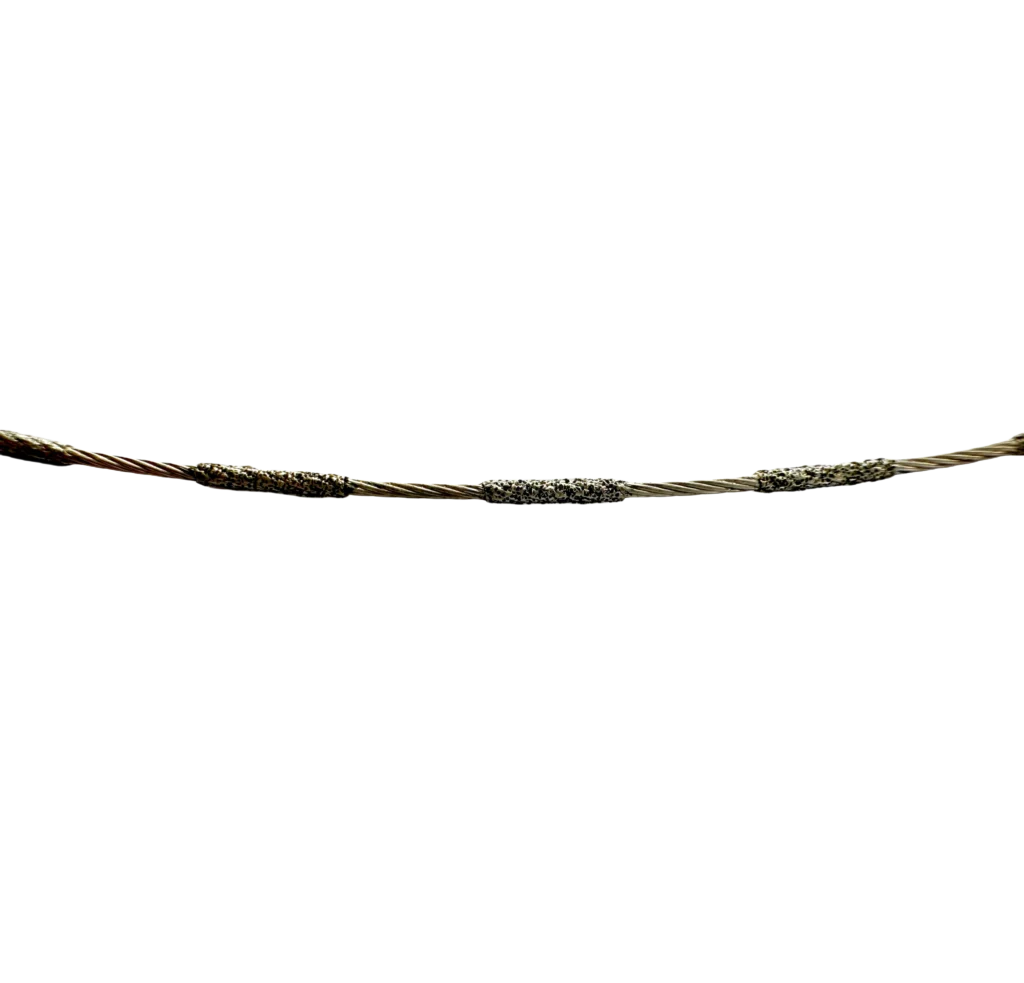
What a segmented coating describes
The visible pattern can help distinguish this construction from a continuously coated wire, but a product name or photograph does not specify the exact segment length, spacing, abrasive grade, bond, core, dimensions or tolerances. Obtain a drawing or written specification for the item being quoted. Do not assume that exposed intervals perform a particular cooling or chip-removal function unless the supplier documents that design and its intended conditions.
Information to confirm before selecting a wire
Describe the part and the planned cut first. Then ask the supplier to confirm the wire details and compatible setup in writing. The review should cover:
- Quartz material or grade, blank dimensions and incoming condition.
- Required cut location, slice geometry, dimensional limits and allowance for downstream grinding or polishing.
- Wire construction, dimensions, abrasive details, segment pattern and tolerances for the supplied item.
- Machine model, wire path, motion, workholding, tensioning method and operating recommendations.
- Coolant or flushing arrangement, cleaning needs, storage guidance and batch identification.
- Inspection criteria for kerf, edge chips, visible cracks, surface condition and dimensional variation.
Plan a representative sample-cut trial
A controlled trial should use a representative workpiece and the intended machine arrangement. Agree on acceptance criteria before cutting, record the actual conditions and keep the sample traceable to the wire batch and setup.
- Record the material, dimensions and starting condition of the blank.
- Record the wire specification, machine, wire path, workholding and process settings.
- Document coolant or flushing conditions and any adjustment made during the run.
- Inspect the cut against the agreed criteria and record both visual and dimensional observations.
- Compare the result with the current process, including any downstream finishing allowance.
Interpret observations without guessing at the cause
A result such as chipping, taper, wire breakage, debris accumulation or dimensional variation can have more than one possible cause. Review the workpiece, mounting, wire condition, machine motion, feed, coolant and measurement method together. Change one variable at a time where practical.
Compare coating descriptions on confirmed attributes
Compare the drawing, documented dimensions, machine compatibility and trial results for the actual products. Avoid general claims that one coating layout is faster, cleaner, cooler or longer-lasting unless comparative evidence uses the same workpiece, machine and inspection method. See the fully coated quartz wire guide и thread-coated quartz slicing guide for the other product descriptions.
Questions to include in a supplier inquiry
Share the material and blank dimensions, required cut geometry, machine and wire path, current process conditions, expected output and inspection criteria. Ask for the exact construction drawing, operating recommendations and batch information. For a new application or tight tolerance, agree on the sample-cut plan and acceptance method before selecting a production quantity. Visit the quartz wire saw product page to discuss a configuration.
Часто задаваемые вопросы
Does a segmented pattern guarantee better debris removal?
No. The pattern alone does not establish debris flow or cutting performance. Check the supplier documentation and observe the behavior under the intended machine and coolant conditions.
Can I infer wire dimensions from a product photo?
No. Request the specification and tolerances for the exact wire. A photo is not a dimensional drawing.
What should I compare with a full-coated wire?
Compare documented construction, compatibility and results from a controlled trial using the same material, cut geometry and inspection criteria.