
レンズバスケットローディングマシン AL-20B
A lens basket loading machine that takes small round lenses out of blister trays and stands them in optical baskets, guided by vision. A four-axis robot places a part as fast as every 2 seconds, so a grinding line stays fed without an operator sorting by hand.
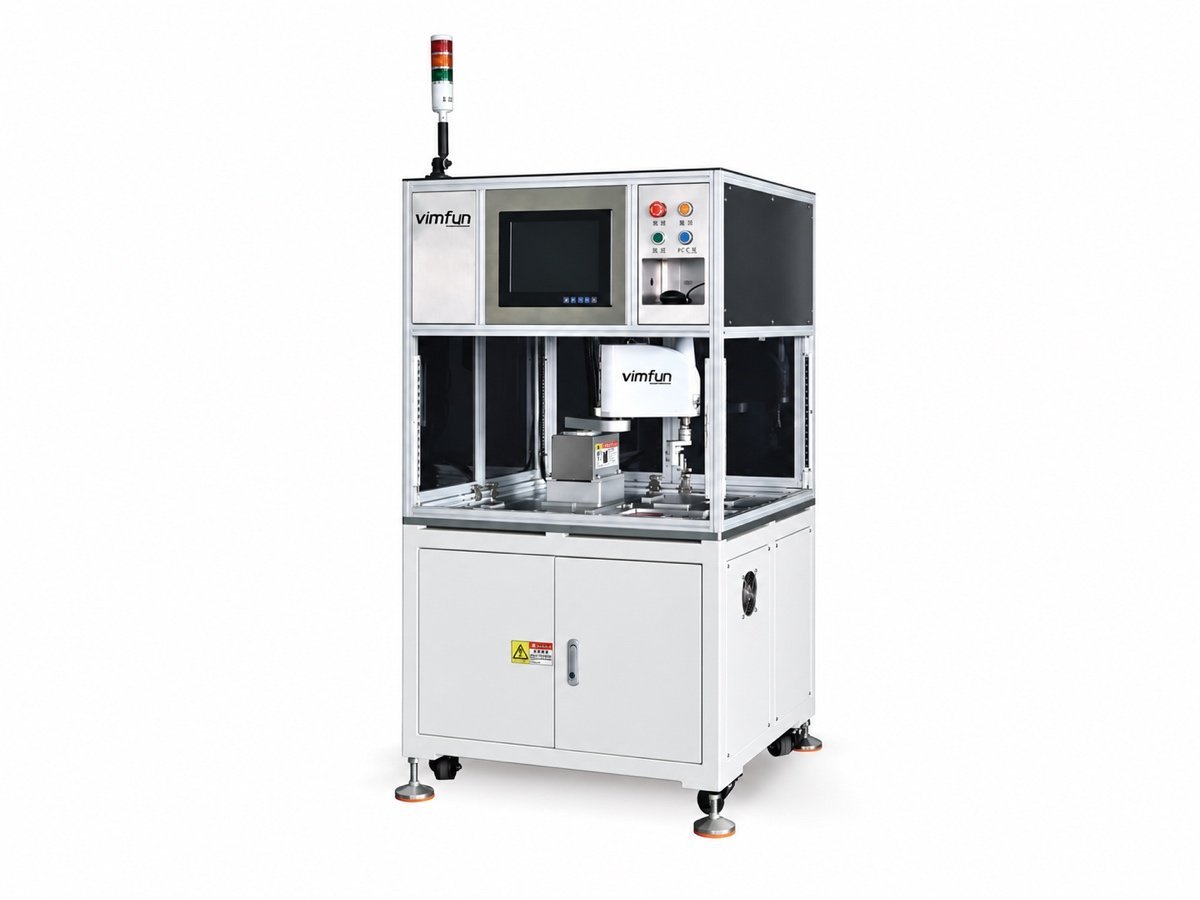
What this machine does, and which machine it feeds
Small round lenses arrive from an upstream step laid loose in blister trays, and the grinding and generating machines want them stood up in baskets, one to a slot. Doing that by hand is slow, and it is where thin parts get chipped. A lens basket loading machine does it automatically: it locates each part by vision, picks it, and stands it in the basket, feeding the generating line at machine pace.
The AL-20B docks to the generating and grinding machines — it fills the baskets those machines run from. Upstream it takes blister trays; downstream it hands off full baskets. It is one of the automation pieces that turn a set of generating machines そして polishers into a line rather than a row of stand-alone stations.
A lens basket loading machine moves parts; it does not cut or polish them. What matters here is not surface accuracy but cycle time, the trays and baskets it fits, and which host machine it feeds — the questions a line builder actually asks.
How does a lens basket loading machine move the glass?
In three moves — see, pick, place — repeated as fast as every two seconds, with the trays reloaded without stopping.
Vision, then robot, then basket — and a second tray layer waiting so the loop never runs dry.
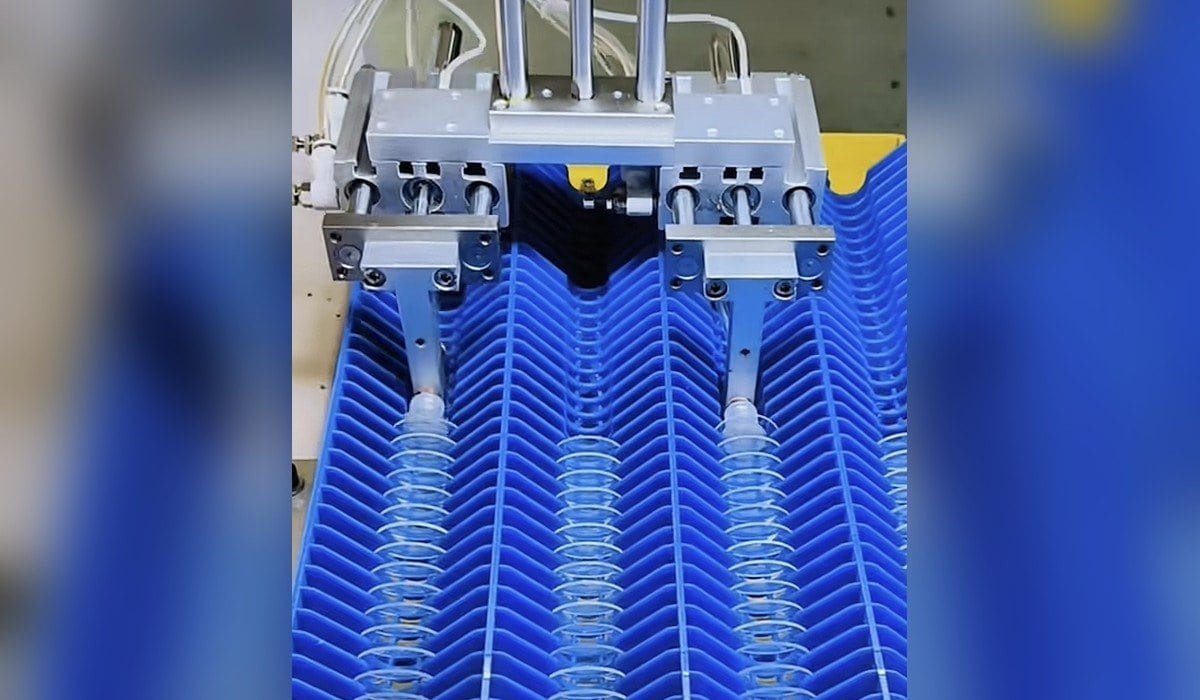
- See — a high-definition camera over an area light locates each lens in the blister tray, so the robot knows exactly where every part is before it moves
- Pick — a four-axis SCARA robot with an air gripper lifts the part; the gripper is set gentle enough for a thin or brittle lens
- Place — the robot stands the lens in the next basket slot, one to a slot, ready for the grinder
- Reload — there are two tray positions, an upper and a lower; when one empties the machine feeds from the other, so loading never stops the line
Because a lens basket loading machine is driven by vision rather than by fixed nests, it adapts to how the parts happen to lie in the tray instead of demanding they be pre-aligned — which is what lets it run from ordinary blister trays at up to a part every two seconds.
The fit is decided by three things: your part diameter, your blister-tray size, and the basket the grinder runs. Send us those and the target rate, and we confirm the AL-20B suits your line with the quotation.
Four things that keep the line fed
The AL-20B runs unattended between reloads; these are what a lens basket loading machine has to get right to earn a place on the line.
Vision, not fixed nests
A CCD camera finds each part where it lies, so parts do not have to be pre-positioned and a change of part is a change of program, not of tooling.
Two tray layers, no stopping
Upper and lower tray positions mean one layer is loaded while the other feeds, so an operator reloads without ever halting the line.
A gentle grip for thin glass
The air gripper on the SCARA arm is set to the part, so small Ø10–20 mm lenses are handled without the chipping hand-sorting causes.
Set from a PC screen
An industrial PC holds the parameters, so a new part or a new basket layout is set on screen and recalled, not re-taught by hand each time.
Which parts and baskets does it fit?
| アイテム | Fit |
|---|---|
| Glass diameter | Ø10 – Ø20 mm, small round lenses |
| Fastest cycle | 2 s a part |
| Infeed | Blister trays, up to 235 × 210 mm |
| Basket | Optical-industry standard baskets |
| Tray positions | Two layers, auto changeover |
| Docks to | The generating and grinding machines |
| Vision | HD camera and area light, CCD located |
The lenses a lens basket loading machine feeds are made to optical drawings — dimensioned to the ISO 10110 フレームワーク and cut from the glasses in the 光学材料データ — but what the machine itself needs from you is the tray and basket geometry, not the optical spec. Send those and we confirm the fit.
技術仕様
The AL-20B feeds the generating line; for stacking flat panels ahead of edge polishing, the stacking machine is the automation piece instead.
| Function | Vision-guided basket loading of round lenses |
| Glass diameter | Ø10 – Ø20 mm |
| Fastest cycle | 2 s a part |
| Infeed tray size | up to 235 × 210 mm |
| Basket | Optical-industry standard |
| Robot | Four-axis SCARA with air gripper |
| Vision | HD camera, lens and area light |
| Control | Industrial PC, on-screen parameters |
| 電源 | 220 V, 50 Hz |
| 電力 | 1 kW |
| Air pressure | 5 – 7 kg/cm² |
| Air consumption | 1.4 L per cycle |
| 全体寸法(長さ×幅×高さ) | 900 × 900 × 1700 mm |
| 総重量 | approx. 400 kg |
| 認証 | CE |
The grippers and any part nests are chosen for your lens diameter and basket, and are confirmed with the quotation.
主要なアセンブリとその機能
これは、オペレーターとサービスエンジニアが現場で共有する語彙です。.

| アセンブリ | Function |
|---|---|
| ビジョンユニット | HD camera, lens and area light; locates each lens in the tray |
| SCARA robot | Four-axis arm with an air gripper; picks and places the part |
| Tray positions | Upper and lower blister-tray layers with automatic changeover |
| Basket station | Holds the optical basket the parts are stood into |
| Control unit | Industrial PC with an on-screen parameter interface |
| 空圧機器 | Air supply for the gripper, 5–7 kg/cm² |
ユーティリティ、環境、および安全性
Electrical supply, compressed air, floor space and the ambient conditions the machine is to run in are confirmed with us for each order, together with the safety and protective arrangement supplied with it. These figures depend on the voltage and frequency of your site and the destination market, so we do not publish a single set of them here.
Send us the site conditions and the host machine with your enquiry and we will return the utility and environmental requirements in writing, before the order is placed.
The AL-20B loads small round lenses Ø10–20 mm into baskets — it is a handler for the generating line, not a machine that grinds or polishes. Parts larger than that, or flat panels, need a different automation piece. The fit turns on your trays and baskets, so we confirm those before quoting.
機械が設置された後はどうなりますか?
世界中のどこにでも出荷されるすべての機械に同じ条件が適用されます。.
| 保証期間 | 最終受入後12ヶ月 |
| 保証期間中の対応 | 8時間以内の応答・24時間以内のソリューション提案・48時間以内の問題解決(部品の調達、設置、試運転を含む) |
| 保証期間終了後 | 機械寿命期間中のサービスおよびスペアパーツ提供 |
| 認証 | CE |
仕様は設計改良により変更される場合があります。一部の部品に若干の違いが生じる場合があります。正式な仕様については、注文確認書を参照してください。.
機械の稼働状況を見る
The AL-20B locating lenses in a blister tray, and the SCARA arm standing them into a basket.
01 — Vision locate, pick and place
02 — Two-layer tray changeover, no stopping
Tell us your trays, baskets and rate
A lens basket loading machine is specified from the line it joins, not from a datasheet. Tell us the lens diameter, the blister-tray size, the basket the grinder runs and the rate you need, and which host machine it feeds. We confirm the fit and send the quotation.
If your parts are flat panels for edge polishing rather than round lenses, the stacking machine is the automation piece — we will point you to it.
8-hour response · service and spare parts for the life of the machine
Line automation for optics makers worldwide
関連機器および資料:
- Automatic glass stacking machine AL-7S — stacks flat panels ahead of edge polishing
- を参照してください。これは、サジッタを測定し、送り量を補正し、部品を反転させ、トレイから自分でロードします。SG-80はセットアップ作業、短納期、プロトタイピング用の機械です。Auto-SG-50は大量生産用の機械です。 — the generating machine it feeds
- 小型レンズ生成機 Auto-SG-20V — for the small round parts it handles
- 光学レンズ製造ライン ・ステーションの接続方法