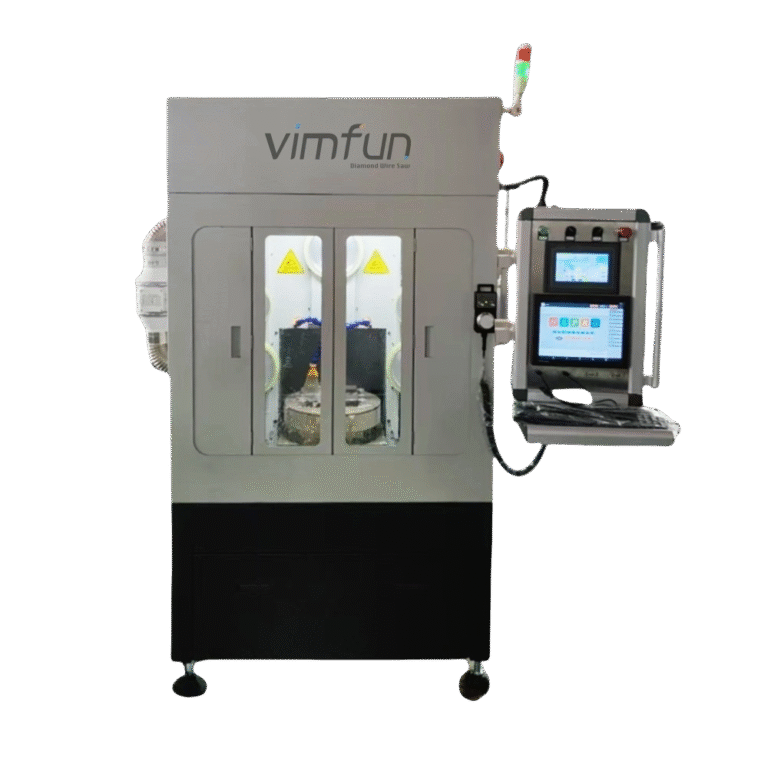
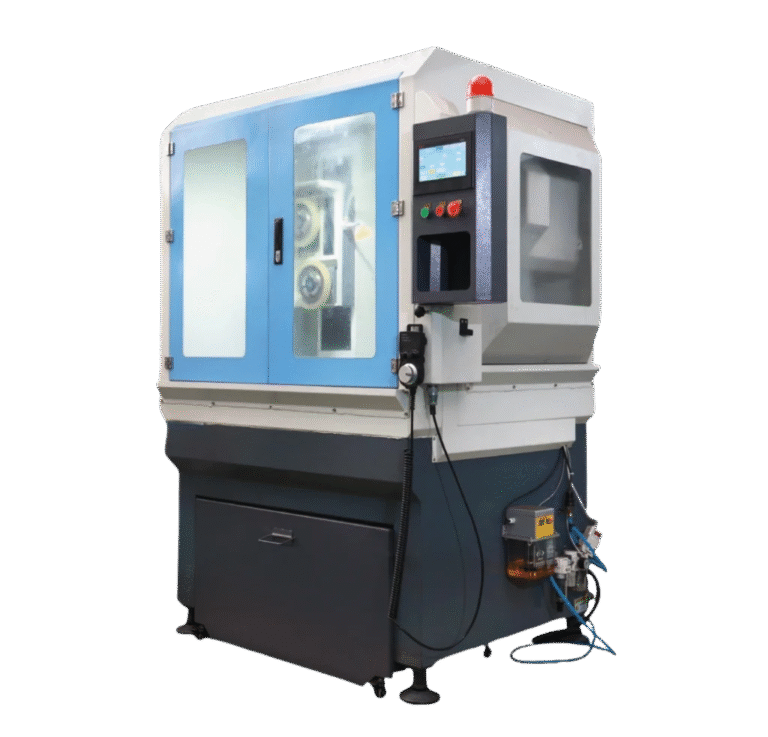
How Can Polymer-on-Glass Diffusers Be Cut Without Damage?
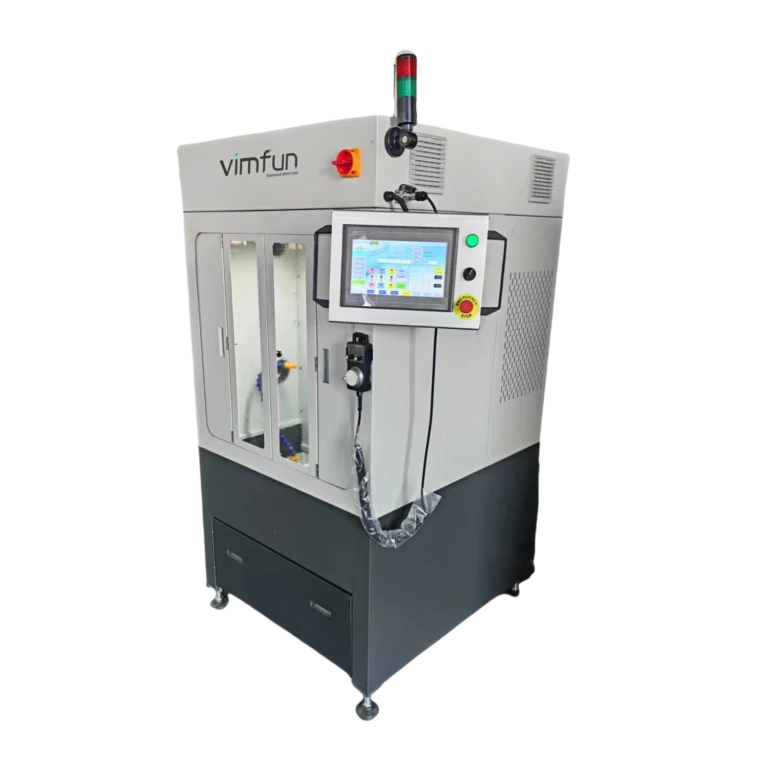
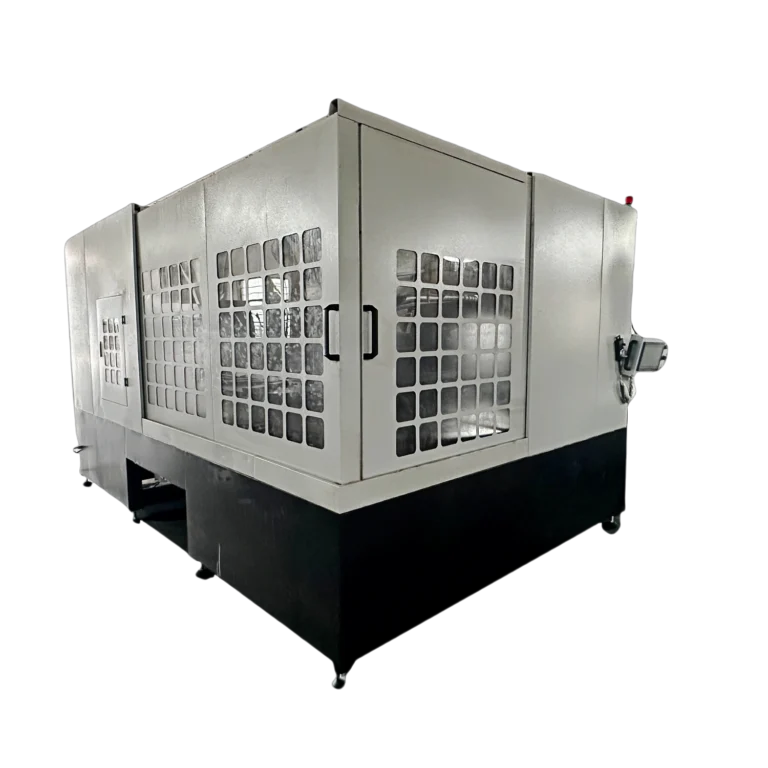
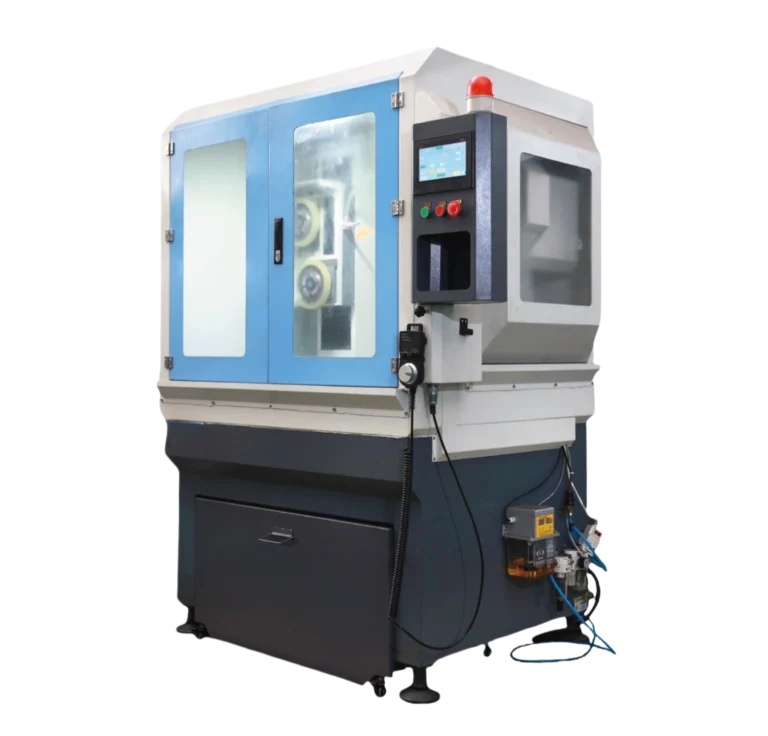
Understanding the Challenges and Why Endless Diamond Wire Is the Right Solution 1. What Makes Polymer-on-Glass Diffusers Difficult to Cut? Polymer-on-glass diffusers are complex composite optics combining two very different materials: The polymer layer, typically 20–200 µm thick, is replicated with 3-D microlens arrays. These features are fragile and thermally sensitive. Any mechanical pressure or local heating above 40 °C can distort the microstructure and permanently change its optical pattern. Traditional cutting tools—such as diamond dicing blades, saw wires with reciprocating motion, or laser cutters—generate frictional heat and vibration, which easily damage the coating or cause delamination between glass and polymer. 2. Why Conventional Methods Fail Cutting Method Common Problem Blade dicing Generates edge chipping and micro-cracks in glass. Reciprocating wire saws Direction reversal causes vibration; poor surface finish. Laser cutting Local heating exceeds polymer softening point, leading to surface haze or bubble formation. Water-jet or abrasive jet High fluid