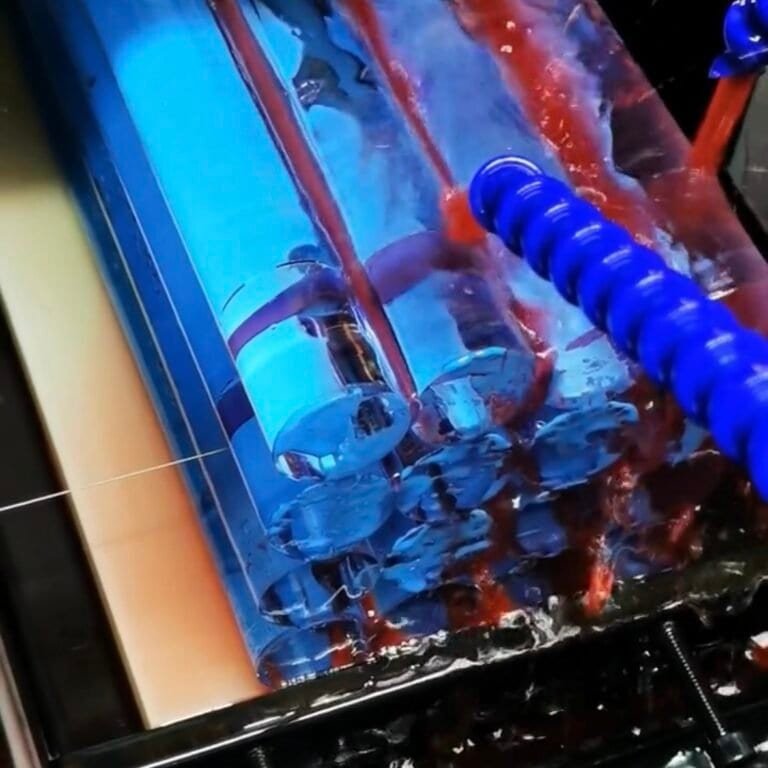
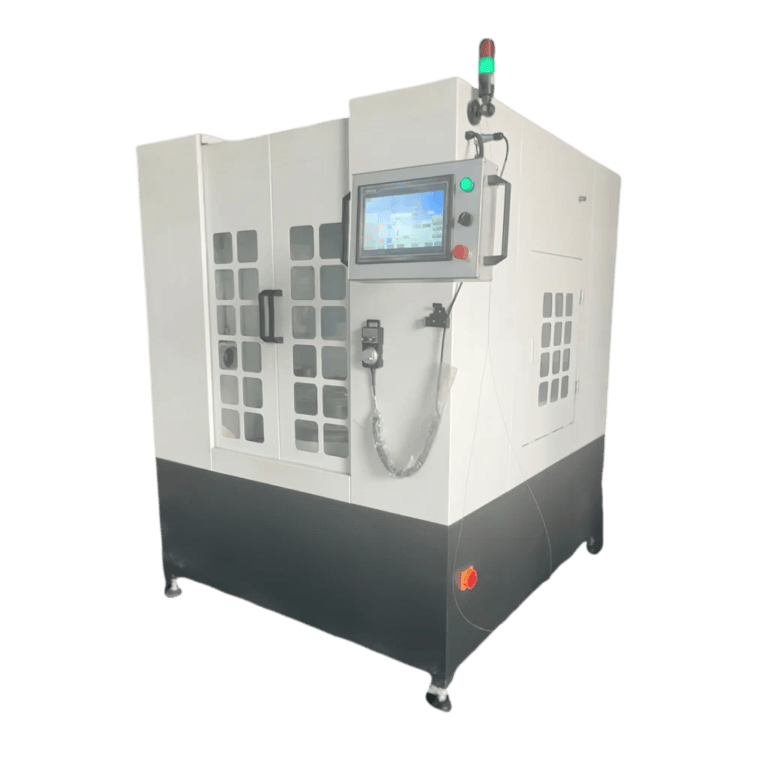
In optical lens manufacturing, controlling material waste is essential for reducing production costs and improving profitability. Among all manufacturing factors, kerf loss optical cutting — the material removed during the slicing process — plays a decisive role. For high-value optical materials such as K9 glass, Corning® optical glass, and germanium, even slight increases in kerf width can result in substantial financial loss.
While equipment price often dominates procurement discussions, engineering and cost analysis demonstrate that cutting method selection and kerf optimization have a far greater influence on long-term cost efficiency. This article explores the five key impacts of kerf loss optical cutting on material cost and explains why cutting technique and process control matter more than capital expenditure on machines.
What Is Kerf Loss?
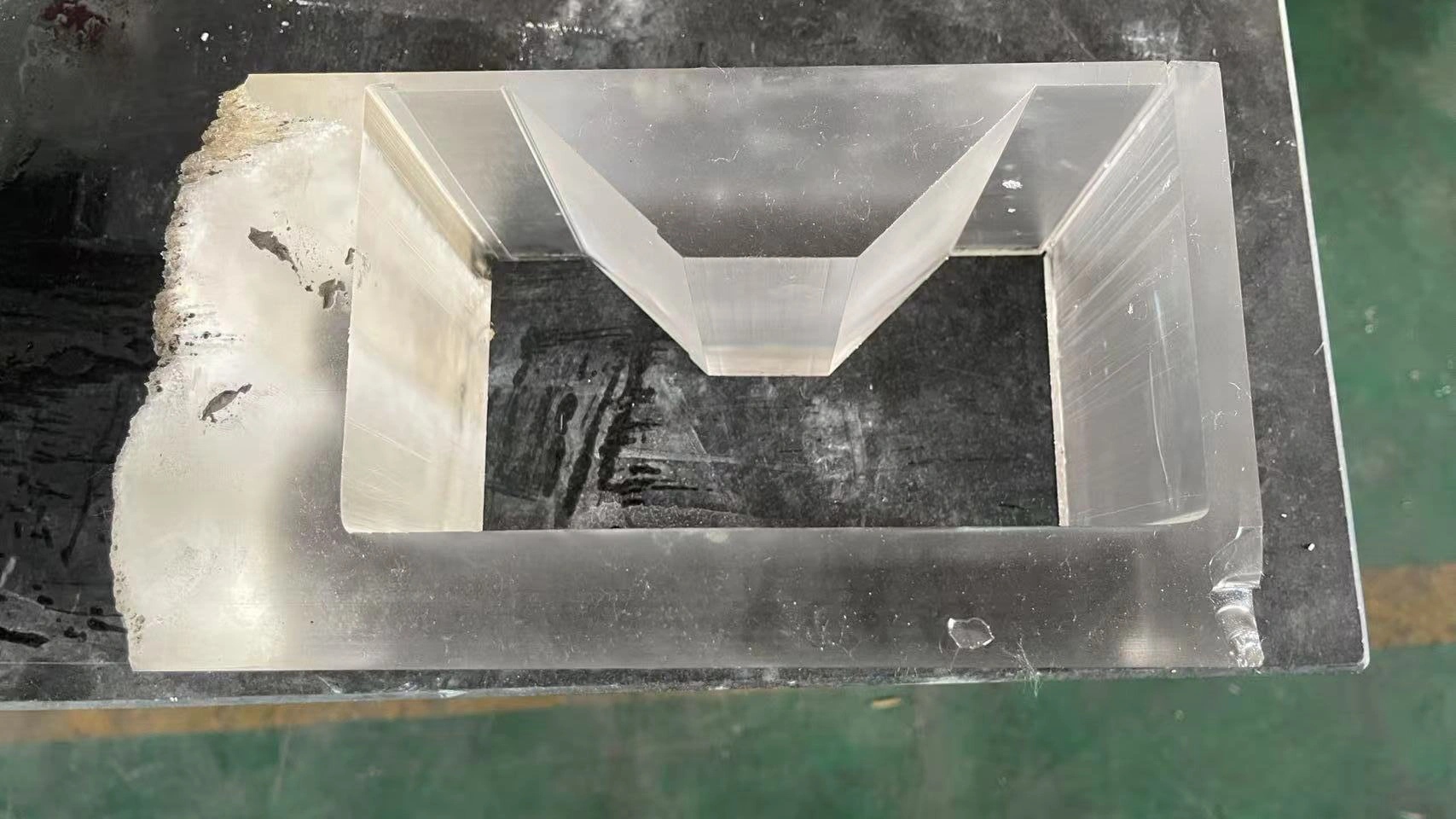
In manufacturing, the term kerf refers to the width of material removed by a cutting tool or wire. Kerf loss is the volume of material lost to the cutting path itself. In optical lens production, using precision continuous diamond wire cutting machines typically results in a kerf width of approximately 0.4 mm.
Key Engineering Concepts
- Kerf width: The thickness of material removed during cutting.
- Material loss: Directly proportional to kerf width and the number of cuts.
- Surface integrity: Narrower kerf minimizes subsurface damage and stress in brittle materials.
For high-value optical materials, minimizing kerf is not merely an incremental improvement — it materially impacts cost and yield, especially when cutting large blanks into multiple lenses.
1. Material Cost Scales Directly With Kerf Width
The simplest way to quantify kerf loss is through geometric calculation:Material Loss (mm³)=Kerf Width (mm)×Cut Length (mm)×Blank Width (mm) Material Cost ($)=Material Loss (mm³)×Material Unit Price ($/mm³)
Engineering example:
- Wire speed: up to 80 m/s
- Wire tension: 150–250 N
- Typical kerf width: ~0.4 mm
By reducing kerf width from 0.5 mm to 0.4 mm on a 200 mm lens blank, roughly 20 mm³ of material is conserved. For premium optical glass priced at tens to hundreds of dollars per kilogram, this reduction translates to significant per-piece savings. Across hundreds or thousands of parts, material cost reduction becomes one of the largest contributors to manufacturing profitability.
Reference:
- American Society for Quality (ASQ), Metrology Handbook: https://asq.org/quality-press/quality-handbook
2. High-Value Optical Materials Amplify Cost Impact
In high-value optical manufacturing, small kerf reductions amplify overall cost savings because:
- Material price sensitivity: Specialty optical materials may cost hundreds of dollars per kilogram. Even minor kerf differences significantly affect per-lens cost.
- Brittle material behavior: Narrower kerf reduces mechanical stress, chipping, and micro crack propagation.
- Yield improvement: Optimized kerf width increases usable output, decreasing scrap and rework.
Reference:
- ASM International, Fracture and Fatigue Control in Materials: https://www.asminternational.org/materials-resources/complex-materials-handbook
This second-order effect highlights why kerf loss optical cutting is more impactful than machine acquisition cost alone.
3. Cutting Method Determines Long-Term Cost Efficiency
In optical manufacturing, the cutting method often has a greater influence on lifecycle cost than the upfront price of the cutting machine. Key reasons include:
- Process efficiency: Continuous low-kerf wire cutting maintains consistent throughput compared to intermittent batch machining.
- Material conservation: Diamond wire cutting removes less material than blade sawing or conventional milling.
- Surface quality: Higher initial surface integrity reduces downstream finishing costs such as polishing and quality rework.
Switching from a conventional blade saw to a continuous diamond wire saw can reduce kerf width by 20–30%, resulting in:
✔ Lower material usage
✔ Fewer defective parts
✔ Shorter total processing time per unit
Reference:
- ISO 22514: Statistical methods for process performance evaluation: https://www.iso.org/standard/62167.html
4. Optimized Kerf Improves Surface Integrity and Lens Quality
Effective kerf control not only saves material, it also safeguards the surface integrity that is crucial for optical performance.
Benefits of optimized kerf control include:
- Minimized edge chipping and subsurface damage
- Improved dimensional accuracy and tolerance control
- Reduced defect rates during lapping/polishing
Achieving narrow kerf while maintaining surface quality requires careful control of process parameters:
- Wire speed — higher speeds reduce heat buildup but demand precise tension control.
- Wire tension — typically 150–250 N for stable cutting without vibration.
- Feed rate — optimized based on material hardness and brittleness.
Industrial signals such as tool wear rate and process capability indicators (Cpk, Cp) should be monitored to ensure quality goals are met. Properly controlled kerf leads to fewer rejected parts and significant cost savings over time.
5. Industrial Applications Across Multiple Sectors
The benefits of kerf optimization and advanced cutting methods extend across many optical manufacturing applications:
- Precision lenses: K9, BK7, Corning optical glass
- Infrared optics: Germanium, zinc selenide
- High-volume optics: Camera lenses, smartphone optics, laser optics
- Aerospace & defense: Specialty optical components requiring exacting tolerances
In all these contexts, engineered kerf loss optical cutting reduces waste, increases yield, and supports high surface quality requirements, especially for brittle and expensive optical substrates.
Conclusion
Key takeaways:
- Kerf width directly affects material cost in high-value optical lens manufacturing.
- Cutting method selection is more impactful for long-term cost efficiency than equipment price alone.
- Optimized kerf control improves yield, reduces waste, and ensures surface integrity in brittle materials.
- Continuous diamond wire cutting with controlled wire speed, tension, and kerf width delivers economic and quality advantages.
- In high-value materials, even small kerf reductions have amplified cost benefits, underscoring the importance of precision cutting techniques.
FAQ
What is the ideal kerf width for optical lens cutting?
For most high-value optical glasses, 0.4 mm provides an effective balance between minimal material loss and stable surface quality.
How does kerf loss affect production cost?
Material loss accumulates with every cut. In high-value optical materials, even small reductions in kerf width can yield significant cost savings over large production volumes.
Why is cutting method more important than equipment price?
Cutting method determines kerf width, stress on brittle materials, yield rates, and overall material utilization, whereas equipment price is a one-time expenditure.