A 50 mm germanium blank costs somewhere around $120–$180 at current market pricing. Cut it incorrectly — excessive kerf width, micro-cracks that propagate during grinding, or edge chipping caused by unstable feed rates — and that blank becomes scrap. With germanium prices reaching nearly $8,500/kg in 2026, material waste is no longer a minor processing issue. The germanium lens cutting machine you select directly affects yield, optical quality, and production economics.
We’ve spent years cutting germanium for thermal imaging lens manufacturers and infrared optics companies. After hundreds of cutting trials and production runs, several practical lessons stand out.
Why Germanium Requires a Dedicated Cutting Process
Germanium is unlike conventional optical materials.
Its combination of high refractive index, brittleness, and thermal sensitivity makes machining much less forgiving than standard optical glass.
High refractive index (n≈4.0)
Germanium has one of the highest refractive indices among common infrared materials. This is why thermal imaging optics can use compact lens designs. However, any surface damage introduced during cutting becomes optically magnified during later processing.
Crystal brittleness
Germanium fracture toughness is approximately:
0.6 MPa·m^0.5
This is roughly half of standard optical glass.
The material cleaves along crystal planes, meaning vibration, uneven force, or unstable cutting conditions can create fractures that may not appear until polishing.
Infrared transmission range
Germanium transmits:
2–14 μm
covering both MWIR and LWIR applications.
This makes germanium the preferred material for:
- Thermal cameras
- FLIR systems
- Industrial pyrometers
- Military IR optics
- Night vision systems
Because suitable substitutes remain limited, material cost remains high.
Heat sensitivity
Germanium optical transmission decreases significantly when temperatures rise.
Traditional abrasive blade cutting often generates localized heating.
That heat can create surface damage requiring additional grinding stock removal later.
For precision infrared optics, cold cutting methods are preferred.
What Makes a Germanium Lens Cutting Machine Different?
Technically, almost any diamond saw can cut germanium.
Producing an optically usable blank is much harder.
Kerf Width Below 0.35 mm
Kerf width directly affects production cost.
Typical values:
| Method | Kerf |
|---|---|
| Abrasive blade | 0.8–1.5 mm |
| ID saw | 0.30–0.50 mm |
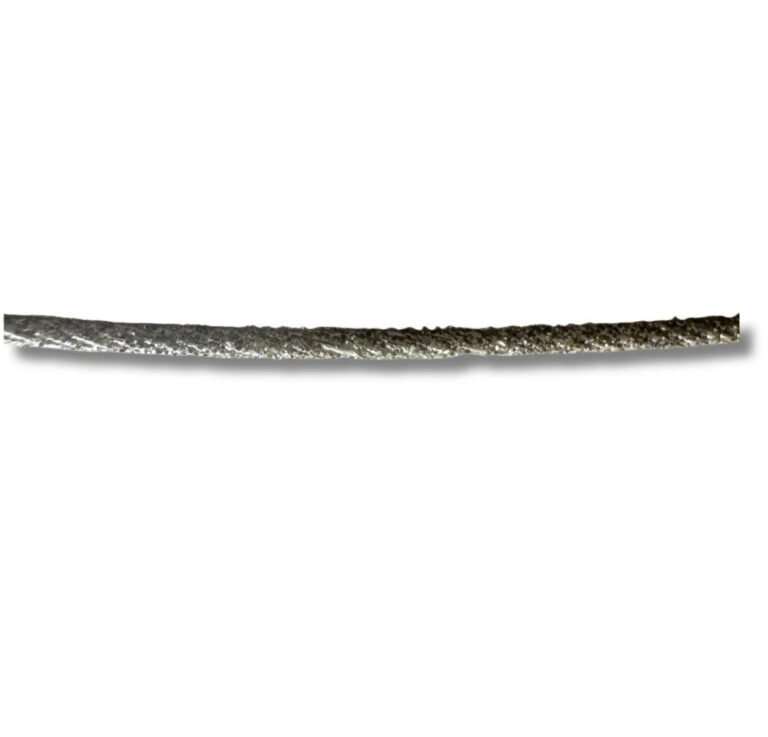
| エンドレスダイヤモンドワイヤーソー | 0.25–0.35 mm |
On a 100 mm germanium ingot sliced into 3 mm lens blanks:
A wire saw may recover approximately six additional blanks versus blade cutting.
That can represent over $700 worth of material from a single ingot.
Vibration Control Matters
Germanium cleavage makes vibration extremely dangerous.
The machine should include:
- Rigid cast frame construction
- Precision linear guides
- Stable wire guidance
- Low-backlash motion systems
- Balanced guide wheels
During early cutting trials, we observed cleavage marks on exit surfaces caused by only:
0.02 mm lateral wire movement.
After switching to heavier machine frames and hardened guide systems, the problem disappeared.
Feed Rate Control: 5–10 mm/min
Feed rate control significantly affects germanium surface quality.
Moving too slowly unnecessarily increases cycle time.
Moving too fast risks chipping and subsurface damage.
Typical feed ranges:
| Blank Diameter | Recommended Feed Rate | 備考 |
|---|---|---|
| <25 mm | 8–10 mm/min | Small blanks tolerate faster feed |
| 25–50 mm | 6–8 mm/min | Standard thermal lens production |
| 50–100 mm | 5–6 mm/min | Requires more stability |
| >100 mm | 3–5 mm/min | Large aperture optics |
Smooth control matters.
Sudden feed changes during cutting can create visible marks and increase grinding requirements.

Cold Cutting Capability
Germanium benefits from cold cutting processes.
In endless diamond wire cutting:
Only a narrow cutting zone contacts the workpiece.
Coolant removes heat almost immediately.
Typical coolant options:
- White mineral oil
- Water-based fluid
Flow rate:
2–4 L/min
The germanium blank remains close to ambient temperature.
This reduces:
- Thermal damage
- Surface stress
- Transmission degradation
Compared with abrasive wheel cutting, cold-cut samples often require substantially less grinding stock removal.
Germanium Lens Cutting Parameters
These parameters are based on validated production testing.
| パラメータ | Range | 備考 |
|---|---|---|
| ワイヤー直径 | 0.25–0.35 mm | Standard: 0.30 mm |
| Wire speed | 30–55 m/s | Start at 35 m/s |
| Wire tension | 100–140 N | Typically 110N |
| 送り速度 | 5–10 mm/min | Depends on part size |
| Coolant | Oil or water-based | Oil gives cleaner surfaces |
| Flow rate | 2–4 L/min | Cover both entry and exit |
| Cutting accuracy | ±0.03 mm | Production verified |
Interestingly, increasing wire speed above:
45 m/s
did not significantly improve cutting efficiency.
Higher speed mainly increased edge chipping risk.
The practical operating window remains:
35–45 m/s
Machine Comparison for Germanium Production
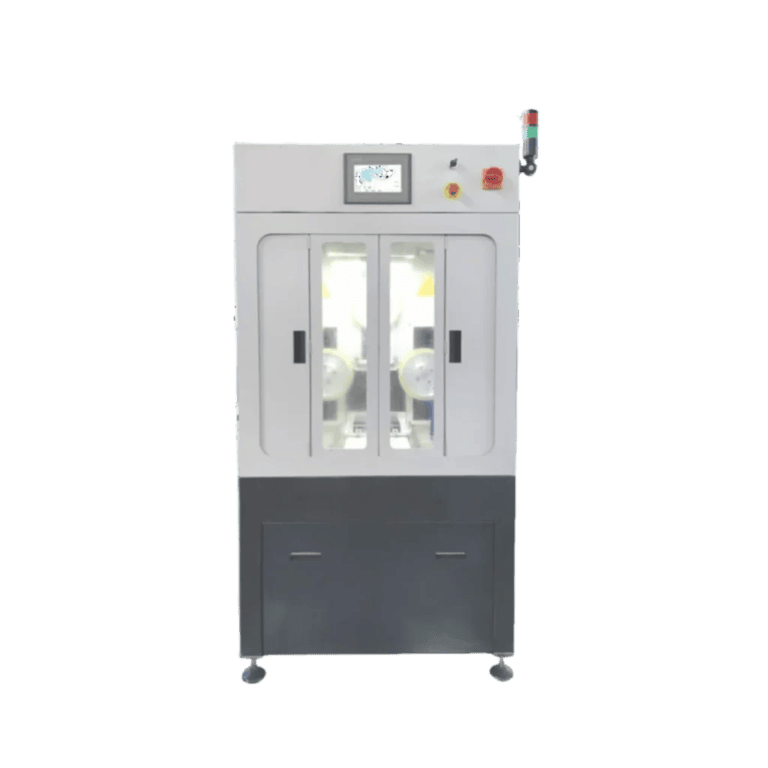
エンドレス ダイヤモンド ワイヤーソー
利点:
- Narrowest kerf
- コールドカット
- Low vibration
- Surface finish typically below Ra 1 μm
- Small footprint
制限:
- Single-cut operation
- Wire replacement required
Best for:
- Lens blanks
- Mixed production
- R&D
- Thermal optics
ID Saw
利点:
- Mature technology
- High-volume production
制限:
- Blade wear changes kerf
- Higher vibration
- Less flexibility
Best for:
Large batches of identical dimensions.
Multi-Wire Saw
利点:
- Very high throughput
制限:
- High equipment cost
- Less suitable for varied production
Best for:
Germanium wafer manufacturing
Major Applications Driving Germanium Lens Demand
Main markets include:
Thermal imaging
Lens diameter:
15–75 mm
Automotive night vision
Rapidly expanding ADAS applications.
Defense optics
Large aperture systems:
50–200 mm
Industrial pyrometers
Smaller lower-cost lenses.
Infrared windows
Flat optical components requiring tight TTV tolerances.
How to Choose a Germanium Lens Cutting Machine
Step 1: Determine production volume
Under 50 blanks/day:
Desktop systems
50–200/day:
Production systems
Above 200/day:
Multiple machines or multi-wire evaluation
Step 2: Determine blank size range
Mixed sizes favor wire saws.
Fixed dimensions may justify alternative equipment.
Step 3: Calculate kerf cost
Formula:
Kerf volume × germanium density × material price
The material savings alone often justify equipment upgrades.
Step 4: Evaluate total ownership cost
Consider:
- Wire consumption
- メンテナンス
- Coolant
- Labor
- Downtime
Step 5: Perform sample cutting
Real samples reveal more than machine specifications.
Most buying decisions ultimately come from actual cut quality.