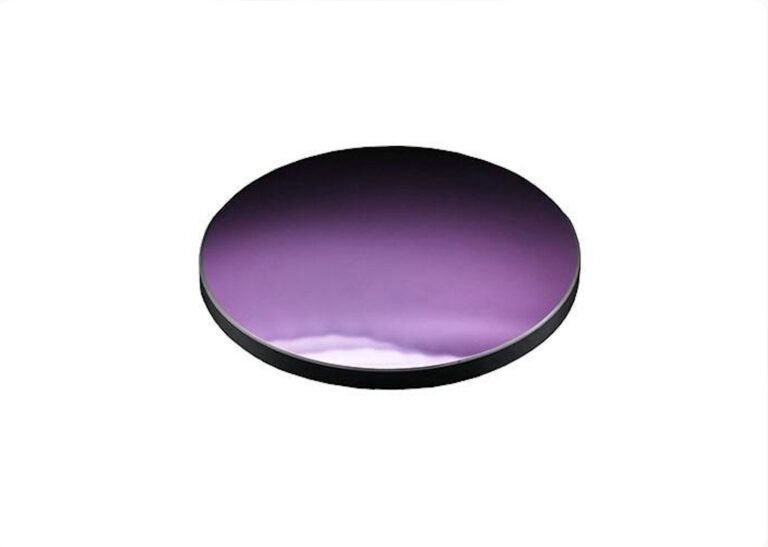
A germanium lens can pass every upstream check — correct radius, right thickness, clean edges — and still get rejected at final inspection. The reason is almost always surface finish. If the polished surface doesn’t reach Ra < 5 nm, IR transmission drops at 8–12 μm, and for thermal imaging applications, that means a rejected lens and wasted processing time.
The germanium optics polishing machine handles the last precision step before AR coating. It’s also the step where raw material value converts to optical value — a polished germanium lens is worth 5–10x the cost of the raw blank.
Where Germanium Optics Polishing Fits in the Production Line
Polishing is stage 5 in the infrared optics manufacturing workflow. Every upstream stage directly affects polishing quality and cycle time:
| Etapa | Equipo | What It Does | Impact on Polishing |
|---|---|---|---|
| 1 | Wire saw (SGI 40) — contour cutting | Extracts preform from ingot | Subsurface damage from cutting adds polishing time |
| 2 | Wire saw (SGI 40) — slicing | Cuts preform into blanks | Cut surface at Ra 0.6–1.2 μm sets starting point |
| 3 | Centering machine (C-120L) | Edges and centers the blank | Off-center blanks cause uneven polishing |
| 4 | Spherical grinder (G-100) | Generates lens curvature | Grinding quality determines starting Ra for polishing |
| 5 | Polishing machine | Final surface finish | Target: Ra < 5 nm |
| 6 | AR coating chamber | Applies anti-reflection coating | Coating quality depends entirely on polish quality |
The relationship between stages is multiplicative, not linear. A well-cut, well-ground lens polishes faster and produces consistent results. A poorly cut lens with subsurface damage takes much longer and may still produce figure errors. This is why manufacturers who control the entire chain — from corte de alambre through polishing — get better yields than those who buy blanks externally.
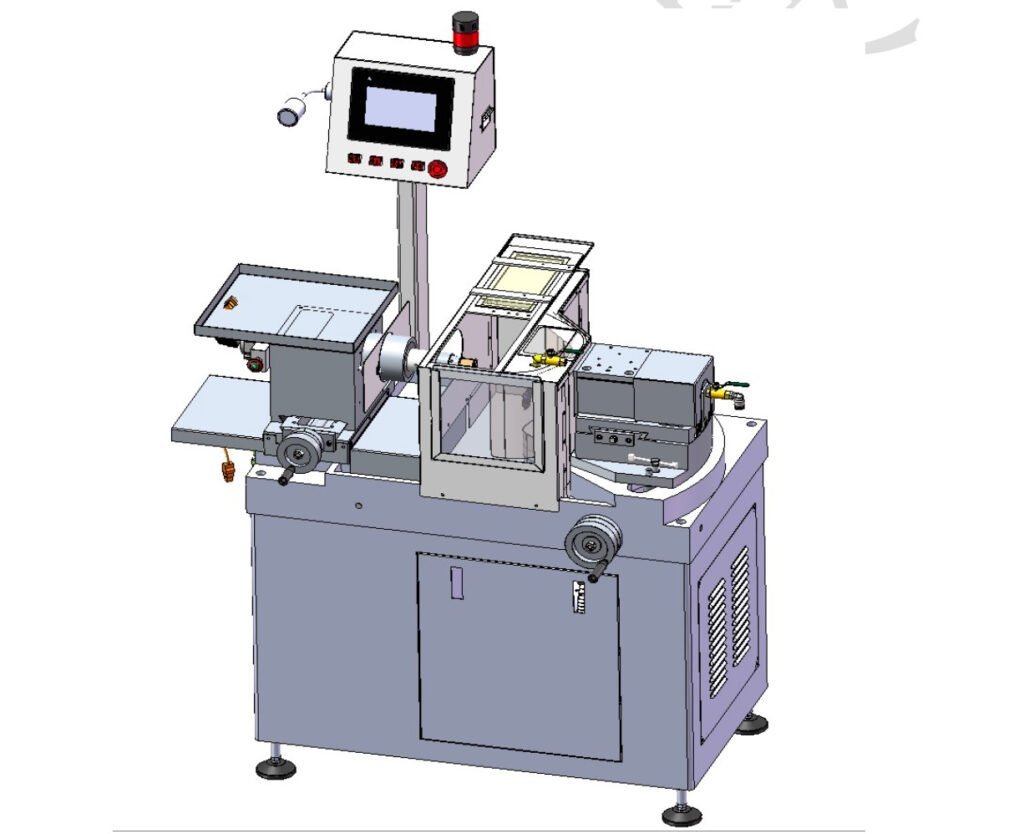
Cycle Time Reference (Φ50 mm Double-Convex Lens)
| Process Step | Equipo | Time |
|---|---|---|
| Contour extraction | SGI 40 | ~26 min |
| Corte en rodajas | SGI 40 | ~5 min |
| Edge grinding + chamfer | C-120L | 1–3 min |
| Spherical generation (face 1) | G-100 | ~5 min |
| Spherical generation (face 2) | G-100 | ~5 min |
| Polishing (face 1) | Pulidora asférica | ~3 min |
| Polishing (face 2) | Pulidora asférica | ~3 min |
| Total (excluding coating) | ~50 min |
Polishing takes only ~6 minutes per lens — the fastest stage — but it has the tightest process window. The margin between “not done” and “overdone” is much narrower on germanium than on standard optical glass.
Why Germanium Is Harder to Polish Than Glass
Germanium’s single-crystal structure creates two challenges that don’t exist with amorphous optical glass:
Subsurface damage propagation. A glass lens with minor subsurface scratches from grinding can often be polished past them — the amorphous structure absorbs the damage locally. Germanium can’t. Its crystal lattice propagates damage rather than absorbing it. If the cutting stage introduces micro-cracks, those cracks will telegraph through the polished surface no matter how careful the polishing process is.
Narrow process window. Germanium is softer than most optical glasses, so it polishes faster. That sounds like an advantage, but in practice it means over-polishing happens quickly. The difference between a perfect surface and an over-polished one with figure errors can be a matter of seconds.
This is why upstream quality matters so much. A germanium blank cut with diamond wire at Ra 0.6–1.2 μm and edge chipping < 0.1 mm needs minimal stock removal during grinding and polishing. Less material removal = less risk of introducing new defects.
What to Look for in a Germanium Optics Polishing Machine
Pressure Control Precision
Germanium polishing runs at lower pressures than glass polishing. The machine needs smooth, consistent pressure throughout the cycle — a sudden pressure change leaves a visible zone of different surface quality that’s extremely difficult to fix.
Machines with pneumatic or servo-controlled pressure maintain constant force as the lens shape changes during polishing. Avoid machines that rely only on deadweight loading for germanium work — the inconsistency shows up in the finished surface.
Slurry Delivery
The polishing slurry does the actual material removal. For germanium, the key requirement is controlled, consistent delivery — not flood cooling. Excess slurry causes hydroplaning between the lens and the polishing lap, which distorts the surface figure.
One thing we learned early: using the same slurry concentration for germanium as for glass removes material too fast. Germanium is softer, so the same particle loading produces much more aggressive cutting. Reducing the concentration gave us significantly more controllable results.
Speed Control
Stepless speed adjustment is essential. A sudden speed change mid-polish leaves a visible transition zone on the germanium surface. The machine needs smooth acceleration and deceleration, with the ability to run at lower speeds than typical glass polishing.
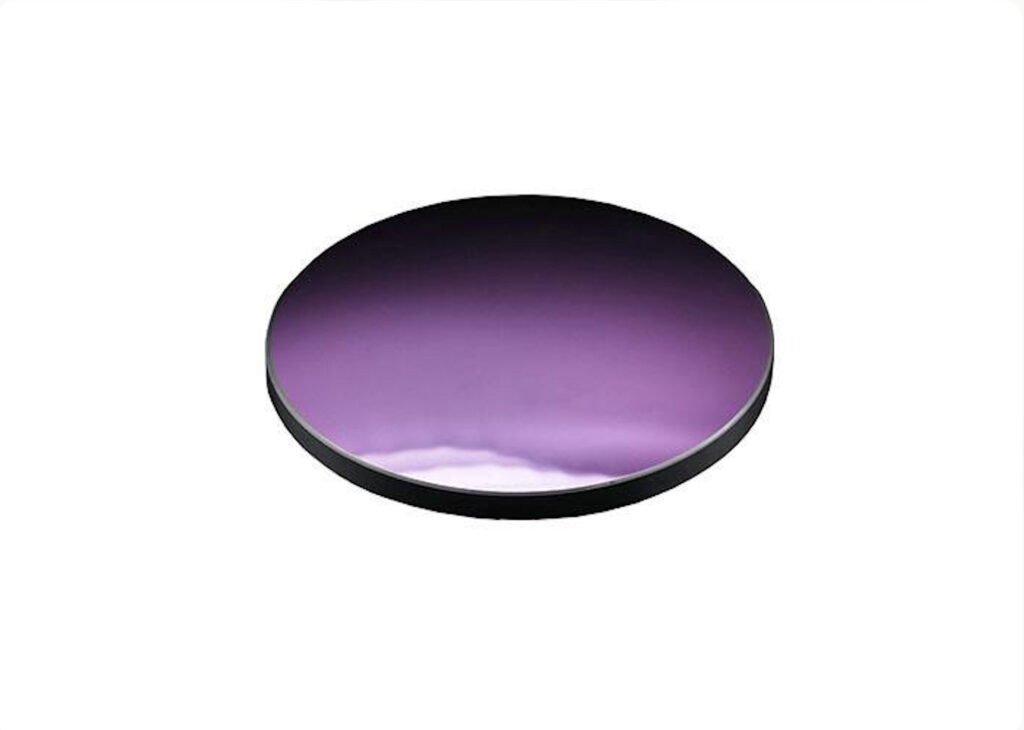
Quality Specifications After Polishing
These are the verified quality targets for germanium lenses after polishing:
| Inspection Item | Especificación |
|---|---|
| Rugosidad de la superficie | Ra < 5 nm |
| Centering accuracy | ≤ 5 μm roundness |
| Decentration | ≤ 30 arcseconds |
| Sagittal height tolerance | ±5 μm |
| AR transmission (8–12 μm) | Single surface > 95% |
These specifications apply to standard thermal imaging lenses. The polished surface must be clean enough for direct AR coating — any contamination or subsurface defects will cause coating adhesion failures and reduce transmission.
The Economics: Why Polishing Quality Drives Profitability
At current germanium prices ($1,800–$2,400/kg), a single Φ50 mm lens blank costs roughly $120–$180 in raw material alone. A polishing defect at this stage — a scratch, figure error, or contamination — scraps that blank and all the upstream processing time that went into it.
This is why the germanium optics polishing machine deserves the same careful selection as the cutting equipment. A bad polishing process destroys more value per defect than any other stage in the line.
Reference customer case: Sunny Optical operates 30+ Vimfun cutting machines in their germanium lens production line. Their yield improvement of ~30% came partly from better upstream cutting quality — which reduced polishing cycle time and reject rate by giving the polishing stage cleaner starting surfaces.
Choosing the Right Germanium Optics Polishing Machine for Your Line
If you’re building a new germanium lens line: Consider the polishing machine as part of the complete equipment package. When cutting, centering, grinding, and polishing equipment come from suppliers who understand each other’s process requirements, the overall line yield is significantly higher than a patchwork of equipment from different vendors.
If you’re upgrading an existing line: Start by measuring your current polishing reject rate. If it’s above 3–5%, the problem may not be the polishing machine itself — it may be upstream. Poor cutting quality shows up as polishing defects. Before replacing the polisher, check whether upgrading the equipos de corte would solve the root cause.
If you’re evaluating throughput: At ~3 minutes per face, a single polishing machine can process 60–80 lenses per 8-hour shift on Φ50 mm lenses. For higher volumes, adding a second polisher is straightforward — the upstream cutting and grinding stages are typically the bottleneck, not polishing.
For the complete range of equipment designed for germanium and other IR materials — from blank cutting through final polishing — see our fabricación de óptica infrarroja overview.