1. Introduction: The Challenge of Cutting 3D‑Coated Optical Glass
In modern optical manufacturing the demand for components with functional coatings on glass is growing rapidly. The process of 3D‑coated optical glass cutting introduces significant challenges. Multilayer coatings such as SiO₂, MgF₂, ITO or polymer films are typically bonded to a glass substrate with disparate mechanical and thermal properties. When conventional cutting methods are used, the mismatch in modulus, the presence of residual stress and the thermal input can all lead to coating delamination, micro‑cracks or partial peeling. The key challenge in 3D‑coated optical glass cutting lies in avoiding damage to the coating while achieving precise, clean separation of the glass substrate.
2. Failure Mechanisms in Conventional Methods
When performing 3D‑coated optical glass cutting using laser or blade methods several failure mechanisms occur:
- Thermal load during laser cutting raises local temperature significantly, causing polymer film bubbling or hard‑coating micro‑fracture.
- Mechanical blade or reciprocating wire cutting introduces high point stresses and vibrations, producing chipping at the coating‑substrate interface.
- Waterjet cutting may reduce heat but introduces fluid intrusion, turbulence and can undermine the fine structure of micro‑coatings.
These mechanisms compromise both surface quality and functional integrity of the coated optics.
3. How Endless Diamond Wire Solves These Problems
The use of an 끝없는 다이아몬드 와이어 in 3D‑coated optical glass cutting addresses key issues through three main technical features:
- Low tension slicing: The continuous loop design applies a distributed, stable tensile load rather than localized high forces, which reduces shear stress on the coating‑substrate interface.
- Uniform linear speed: Because the wire does not reverse direction, speed fluctuations are minimal. This stability removes micro‑shock events that can trigger delamination during 3D‑coated optical glass cutting.
- Cold cutting environment: A closed‑loop diamond wire system uses coolant (often de‑ionized water) to remove heat rapidly. The result is that the temperature rise in the multi‑coat stack remains negligible, preserving film adhesion and microstructure.
Together these factors allow 3D‑coated optical glass cutting with minimal damage to coatings, minimal chipping at edges and minimal post‑processing for finish.
4. Observed Outcomes in Practice
In actual production of 3D‑coated optical glass cutting using endless diamond wire saws, the following outcomes are evident:
- Coating layer remains intact around the cut edge, with no visible delamination or peeling under optical microscopy.
- Surface roughness (Ra) of the glass after cut falls below 0.15 µm, reducing or eliminating subsequent polishing steps.
- Edge chipping reduces dramatically; many clients report sub‑1 % edge breakage compared to double‑digit percentages with conventional methods.
- Reduced kerf loss and minimal heat‑affected zone allow high yield and predictable throughput in 3D‑coated optical glass cutting operations.
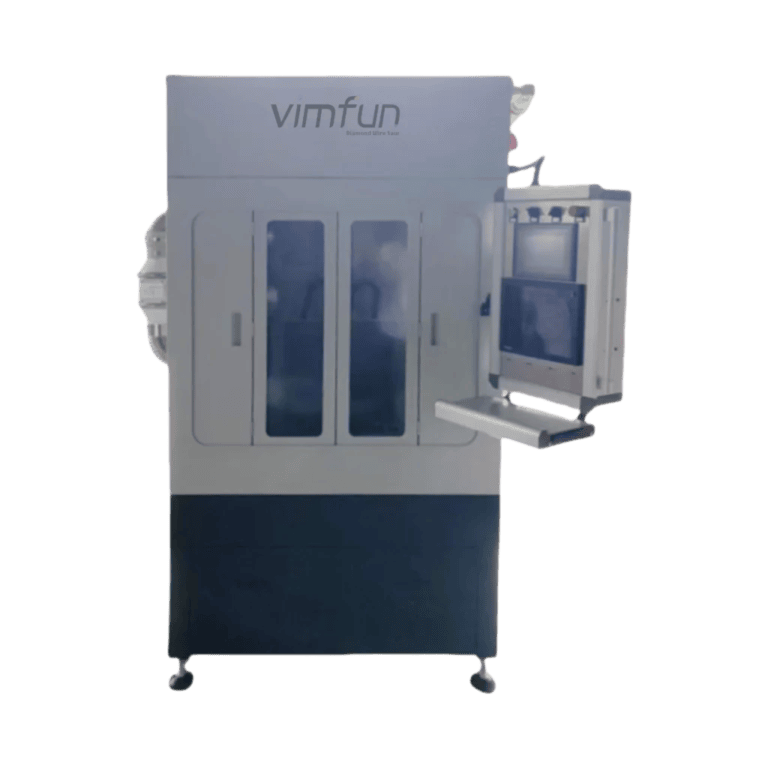
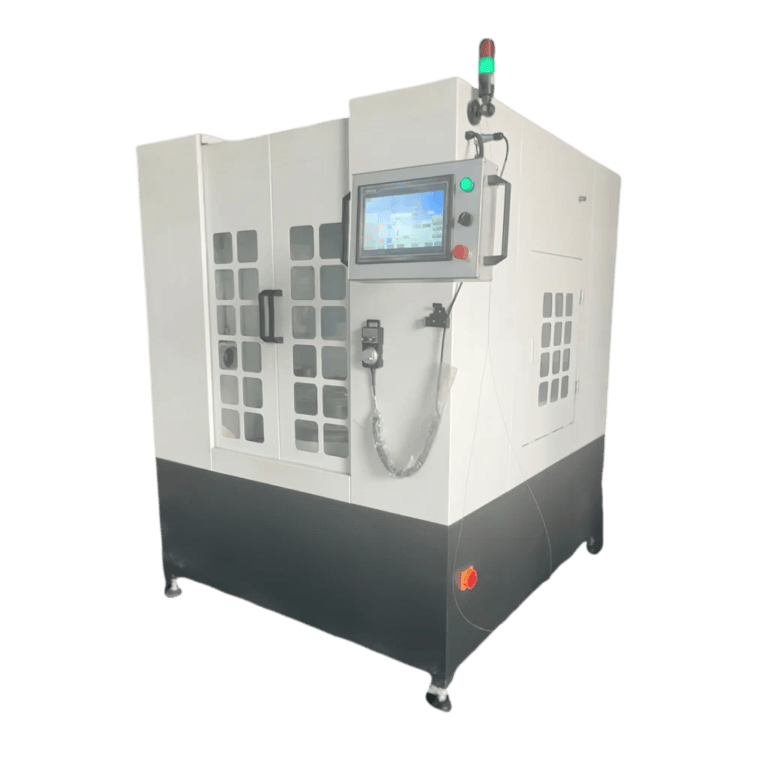
5. Recommended Model: SGRI 20 for Advanced 3D‑Coated Optical Glass Cutting

For manufacturers seeking versatility in 3D‑coated optical glass cutting에서 SGRI 20 stands out as the optimal solution. This multi-function endless diamond wire saw supports:
- High‑precision slicing of coated optical wafers
- Profile cutting for structured or shaped optical components
- Rotational cutting of prisms and multi-faceted parts
Its integrated workpiece rotation axis enables complex geometries to be cut in a single setup—ideal for advanced optical designs where alignment and coating preservation are critical. Combined with programmable wire tension, speed control, and dynamic fixture stabilization, the SGRI 20 delivers unmatched flexibility and cutting integrity for 3D‑coated materials.
6.Conclusion
For high‑value optical components where the interface between substrate glass and functional coatings is critical, 3D‑coated optical glass cutting by means of endless diamond wire presents a robust solution. It avoids the key failure modes of traditional cutting methods—thermal damage, coating delamination and chipping—and leads to clean edges, high yield and lower downstream processing. Manufacturers aiming to maintain coating integrity and achieve precision finishes should consider adopting an endless diamond wire slicing strategy.