
Équipement de fabrication de lentilles IR
Vimfun Équipement de fabrication de lentilles IR couvre ce qui rend une lentille plus dure qu'une fenêtre — génération sphérique et asphérique, décentrement sub-arc-seconde, flux de tolérance multi-éléments athermique. Inter-matériaux (Ge, ZnSe, Si, saphir) ; spécifique à l'élément de lentille, pas spécifique au matériau.
Qu'est-ce qui différencie la fabrication de lentilles de celle de fenêtres ou de prismes ?
Les fenêtres et les prismes sont des problèmes de géométrie à faces planes. Les lentilles ajoutent des surfaces courbes, la précision des bords et l'alignement de l'axe optique — trois contraintes que les fenêtres n'ont pas à satisfaire.
La plateforme d'équipement de fabrication de lentilles IR Vimfun est dimensionnée autour de trois contraintes que les optiques planes ne partagent pas. Premièrement, les surfaces des lentilles sont courbes — sphériques, asphériques ou parfois de forme libre — et la courbure doit respecter une tolérance de forme sub-micron sur toute l'ouverture. Générer une surface sphérique de 100 mm plane à mieux que 1 λ à 633 nm de référence est un problème d'équipement différent de celui du meulage d'une face de fenêtre de 100 mm plane à la même tolérance, car la courbure modifie la relation cinématique entre la meule et la pièce à chaque micron du cycle.
Deuxièmement, les lentilles ont un axe optique. L'axe optique est une ligne physique passant par le centre de courbure des deux faces ; le décentrement est le déplacement angulaire de cette ligne par rapport à l'axe mécanique défini par le bord cylindrique. Un décentrement de 20 secondes d'arc sur une lentille d'imagerie thermique signifie que le plan focal dérive d'environ 1 pixel sur le détecteur — petit en termes absolus, mais suffisant pour échouer à une qualification d'assemblage athermique. Les fenêtres n'ont pas ce problème ; les prismes ont une précision d'angle à la place, ce qui est un problème d'équipement différent.
Troisièmement, les lentilles IR sont souvent livrées en groupes multi-éléments où le décentrement de chaque élément et le budget d'épaisseur des bords contribuent à la performance globale du groupe. La tolérance de l'élément unique représente la moitié de la discussion ; la tolérance cumulative de l'assemblage en est l'autre moitié. Les stations de centrage et de meulage de la ligne sont dimensionnées pour maintenir chaque élément dans le budget par élément du groupe, et pas seulement le chiffre de la spécification.
Quelles stations sont les plus importantes pour la géométrie des lentilles IR ?
Les cinq stations d'une ligne d'équipement de fabrication de lentilles IR Vimfun contribuent, mais deux portent le poids spécifique des lentilles : le centrage (Station 2) établit la référence de l'axe optique ; le meulage (Station 3) génère la courbe. Le polissage (Station 4) affine la surface ; la découpe et le revêtement encadrent la ligne.
- Station 1 — Découpe (préparation du brut) Une scie à fil en boucle fermée produit le brut de lentille. La spécification d'écaillage des bords détermine la marge de centrage en aval. Trois options de géométrie de brut : Rond SG40, Multi-forme SGR40, SGI 40 forme libre.
- Station 2 — Centre (station critique pour l'objectif) Centrage mécanique + vérification de l'axe optique au centroscop. Désalignement ≤ 20 secondes d'arc. C-120L pour Ø ≤ 120 mm, C-185L pour Ø ≤ 185 mm. Cette étape existe spécifiquement dans les lignes d'objectifs ; les fenêtres l'ignorent.
- Station 3 — Rectification (génération de forme) Génération de surface sphérique ou asphérique. G-100 pour optiques d'imagerie thermique de petite taille Ø 10–100 mm; G-250 pour optiques à grande ouverture Ø 80–250 mm. Forme maintenue à ±0,005 mm à cette station ; forme finale par polissage.
- Station 4 — Polissage (finition de surface) Polisseuse asphérique jusqu'à Ø 300 mm, une broche pour asphérique / sphérique / plat. Ra < 5 nm ; forme < 1 λ @ 633 nm. La génération de forme finale a lieu ici pour le travail asphérique.
- Station 5 — Revêtement (AR + durabilité) DLC pour les éléments exposés (ADAS, portables), BBAR pour les éléments internes protégés. Standard 8–12 µm LWIR, personnalisé SWIR / MWIR.
Pour la perspective d'approvisionnement sur la ligne complète de 5 stations (bon de commande unique, propriétaire technique unique, préparation du site), voir le hub de la chaîne de production. Pour l'angle de l'économie des matériaux sur la production d'objectifs spécifiques au germanium, voir le hub d'équipement de fabrication de lentilles en germanium.
Équipement de fabrication de lentilles IR Vimfun — par station
Cinq stations pertinentes pour les lentilles. La découpe et le meulage sont proposés comme pages de produits autonomes ; le centrage, le polissage et le revêtement sont proposés dans le cadre de la construction de la ligne de lentilles.
| Machine | Station | Plage | Rôle spécifique à la lentille |
|---|---|---|---|
| SG40 | 1 — Coupe | Ø ≤ 200 mm | Ébauches de lentilles rondes, faible ébréchage des bords |
| SGR40 | 1 — Coupe | Ø ≤ 200 mm | Ébauches indexées rotatives multi-formes |
| SGI 40 | 1 — Coupe | Ø ≤ 185 × L 400 mm | Ébauches de lentilles free-form (hors axe, croissant) |
| C-120L | 2 — Centre | Ø ≤ 120 mm | Décentrement de petites lentilles ≤ 20″ |
| C-185L | 2 — Centre | Ø ≤ 185 mm | Décentrement de grandes lentilles ≤ 20″ |
| G-100 | 3 — Rectification | Ø 10–100 mm | Sphérique / convexe / concave / plat — une broche |
| G-250 | 3 — Rectification | Ø 80–250 mm | Sphérique à grande ouverture, compatible chalcogénures |
| Polisseuse asphérique | 4 — Polissage | Ø ≤ 300 mm | Asph / sph / plat sur une broche |
| Chambres DLC + BBAR | 5 — Revêtement | Lot 50+ / chargement | AR pour éléments de lentilles LWIR / SWIR / MWIR |
Quel équipement Vimfun convient à quel type de lentille IR ?
Quatre types courants d'éléments de lentilles en optique IR, chacun avec une configuration Vimfun recommandée. La plupart des mélanges de produits combinent deux ou trois de ces types.
Lentilles simples sphériques (lentilles d'imagerie à un élément)
Le type de lentille le plus simple — un élément, deux surfaces sphériques. La plupart des lunettes thermiques portables et des caméras de surveillance commencent ici. Configuration : découpe de plaquettes rondes SG40 → centrage C-120L → génération sphérique G-100 → polisseuse asphérique (configurée pour le sphérique uniquement). Temps de cycle par lentille finie : environ 30 à 45 minutes par face combinée.
Lentilles simples asphériques (imagerie haute performance ou ADAS)
Un élément, au moins une surface asphérique. Utilisé lorsque les exigences d'emballage ou de performance d'imagerie excluent une conception sphérique multi-éléments. Configuration : mêmes stations d'entrée, mais la polisseuse asphérique fonctionne en mode asphérique pour 2 à 3 fois le cycle d'un équivalent sphérique. Le contrôle de forme après le meulage devient critique car le polissage asphérique ne peut pas compenser les erreurs de forme importantes.
Lentilles ménisques (éléments concaves-convexes)
Convexe d'un côté, concave de l'autre. Courant dans les conceptions multi-éléments athermiques comme éléments intermédiaires. Configuration : mêmes stations d'entrée + meulage ; le polissage effectue les deux faces en séquence sur la même broche. Le budget de décentrement se resserre ici car la courbure concave-convexe aggrave la sensibilité à l'inclinaison.
Groupes de lentilles athermiques multi-éléments (défense, ADAS)
2 à 4 éléments assemblés en un groupe de lentilles compensées en température. L'équipement de fabrication de lentilles IR Vimfun produit chaque élément selon les spécifications ; l'assemblage a lieu dans la salle blanche du client. Un décentrement par élément ≤ 20″ alloue un budget cumulé ≤ 60–80″ sur le groupe, ce qui est ce dont les conceptions athermiques ont généralement besoin.
Pour les lentilles d'imagerie thermique avec des contours non circulaires (géométrie en croissant / hors axe typique des modules ADAS compacts), la fraiseuse de contour SGI 40 DXF gère l'étape du brut. Lentille d'imagerie thermique en croissant de Sunny Optical est la référence de production pour ce motif.
Comment le décentrement se propage-t-il dans la chaîne de fabrication des lentilles ?
Le chiffre le plus important dans une chaîne d'équipement de fabrication de lentilles IR est le décentrement — le déplacement angulaire de l'axe optique par rapport à l'axe mécanique. Il est introduit à plusieurs stations et s'accumule si le flux de tolérance n'est pas unifié entre elles.
- Coupe Ébréchage des bords ≤ 0,1 mm. Devient la référence géométrique pour le centrage — les gros éclats obligent l'opérateur de centrage à compenser, consommant le budget de décentrement.
- Centrage Vérifié par centroscope ≤ 20 secondes d'arc. Le chiffre de décentrement le plus serré de la ligne — tout ce qui suit hérite de cette base.
- Rectification Maintient l'axe centré pendant la génération de la courbe. La vibration de la broche ≤ ±3 µm est importante ici car une vibration plus importante déplace la position de la meule par rapport à la pièce centrée.
- Polissage La meule de polissage se positionne sur le bord cylindrique — si le centrage était bon, le polissage l'hérite proprement. Si le centrage était bâclé, le polissage a une capacité limitée à récupérer.
- Coating N'affecte pas le décentrement ; dépend de la qualité de la surface polie.
Le flux de tolérance unifié par normes de dessin optique ISO 10110 sur les cinq stations est ce qui permet au budget de décentrement de 20″ d'être réellement respecté, du lingot brut à la lentille finie. Dans les achats multi-fournisseurs, la spécification de chaque station est réconciliée sur le banc de l'intégrateur, et le chiffre cumulé dérive. Les lignes à fournisseur unique respectent le budget par conception.
Où les lignes de lentilles IR Vimfun sont réellement expédiées en production
Quatre applications axées sur les lentilles où l'équipement de fabrication de lentilles IR Vimfun s'installe. La géométrie de la lentille (pas le matériau) détermine la configuration de l'équipement ici.
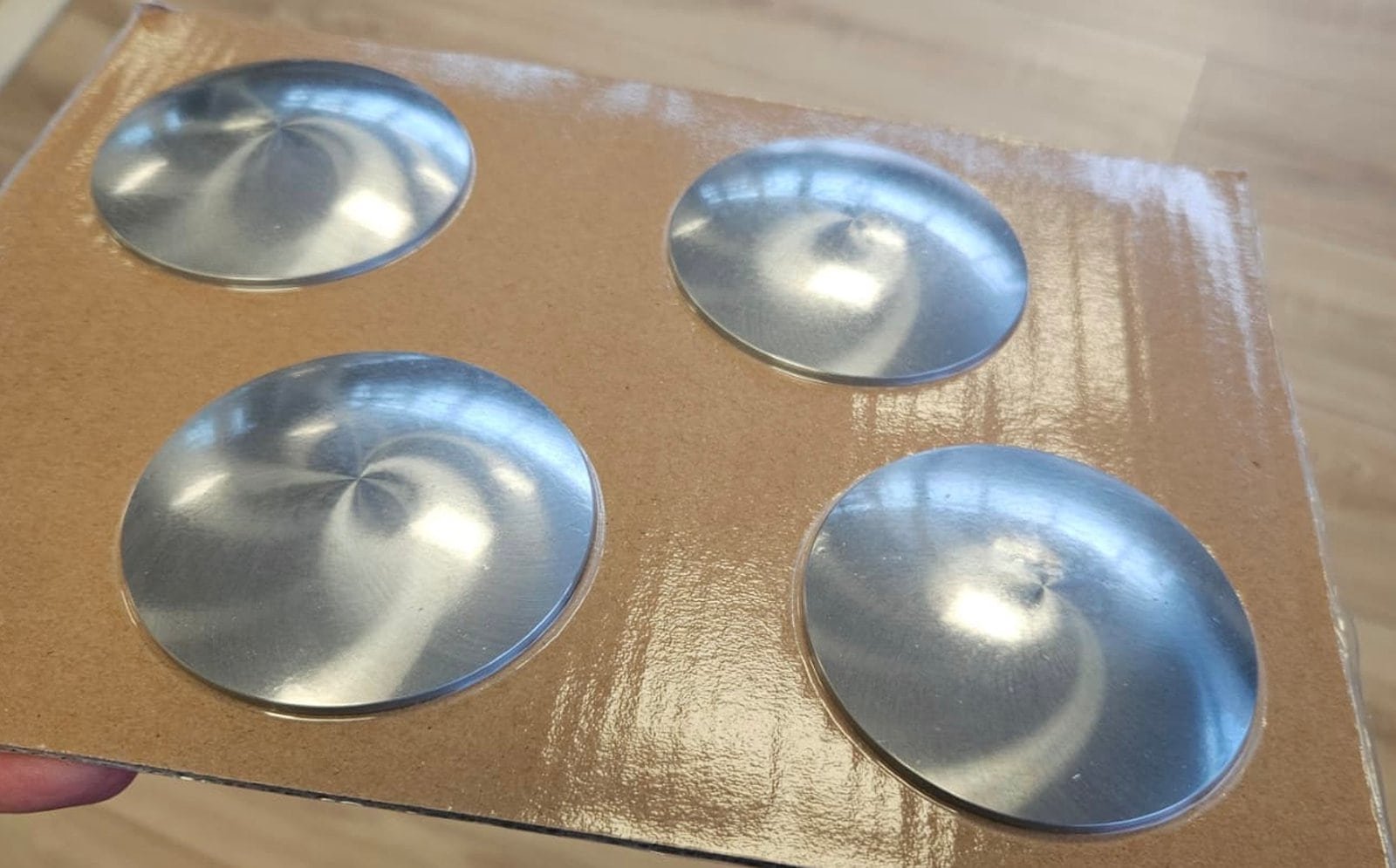
Lentilles de lunette à élément unique
Lunettes thermiques portables, viseurs d'armes, caméras de pompiers. Singlets sphériques Ge de Ø 20–50 mm. Configuration : SG40 + C-120L + G-100 + polisseuse. Volume modéré (50–300/mois par OEM).
Groupes de lentilles d'imagerie thermique ADAS
Vision nocturne automobile, modules à boîtier étanche. Groupes athermaliques Ge à 2 éléments ou Ge+chalcogénure hybrides. Gros volumes (1K–10K+/mois). Revêtement DLC obligatoire pour exposition routière.
Objectifs IR de défense
Viseurs thermiques de véhicules, IRST d'avions, autodirecteurs de missiles. Groupes athermaliques multi-éléments avec optiques primaires larges (Ø 60–200 mm). Revêtement MIL-C-48497A. Forme libre parfois requise.
Lentilles de focalisation laser CO₂ (ménisques ZnSe)
Têtes de découpe laser CO₂ industrielles. Lentilles simples ménisques ZnSe de Ø 25–50 mm, parfois hybrides ZnSe+Ge. Surcouche DLC pour durabilité en environnement industriel.
Quel est le coût d'une lentille IR en volume de production ?
Le coût par lentille sur une ligne d'équipement de fabrication de lentilles IR se décompose en trois composantes : matière (le flan de lentille), main-d'œuvre (temps opérateur sur les postes) et amortissement de l'équipement. Pour une lentille sphérique simple en Ge de Ø 30 mm typique, le coût de la lentille finie se situe dans la gamme de 100 $ à 200 $ en volume moyen — la matière représente 80 $ à 150 $ de ce montant.
Trois leviers influencent le coût par lentille. Rendement matière (économies de trait de scie grâce à la découpe en boucle fermée) : le fil en boucle fermée avec un trait de scie d'environ 0,5 mm permet d'économiser environ 10 $ à 15 $ de germanium par lentille de 30 mm par rapport aux méthodes de perçage. Temps de cycle au meulage et au polissage : 5 minutes par face sur une sphère G-100 signifie environ 96 lentilles/poste ; un cycle de polissage de 3 minutes par face signifie un débit de polisseuse similaire. Rendement sur la ligne : une amélioration de 30 % en aval sur les flans découpés Vimfun (chiffre rapporté par Sunny Optical) multiplie directement le rendement par lentille.
Au volume ADAS (5K+ lentilles/mois), le levier dominant est le temps de cycle — chaque minute économisée se compose. En faible volume de défense (10–50/mois), le levier dominant est le coût matière par lentille sur du Ge coûteux ou des chalcogénures spéciaux. En volume moyen pour appareils portables (100–500/mois), les deux comptent à peu près de manière égale. Le retour sur investissement combiné de la ligne au volume de production typique de lentilles s'exécute 12–18 mois.
Qui utilise déjà des équipements de lentilles IR Vimfun en production ?
Clients de référence parmi les OEM d'imagerie thermique, les programmes d'optique de défense et les fabricants d'optiques laser CO₂. Noms sélectionnés ci-dessous ; liste complète des références sur demande.
La plus grande empreinte installée fonctionne à Sunny Optical Technology Group (HKSE 2382) — plus de 30 machines de découpe Vimfun alimentant leurs lignes de lentilles d'imagerie thermique. La lentille d'imagerie thermique en forme de croissant de forme libre de Sunny est une référence de production publique pour la plateforme SGI 40 ; leur production complète de lentilles se fait avec des postes en aval que Sunny exploite en interne. Les clients de la défense et de l'ADAS automobile opèrent sous NDA et deviennent accessibles une fois que votre profil de projet de lentille est partagé.
Pour le plus large équipement de fabrication d'optique infrarouge Catalogue de piliers — y compris les fenêtres, les prismes et les optiques IR non lenticulaires — voir le hub principal.
Que demandent les acheteurs avant de choisir un équipement de lentilles IR ?
Les questions qui reviennent le plus souvent lors des consultations sur les équipements de fabrication de lentilles IR. Si la vôtre n'est pas ici, envoyez-la directement.
Le même équipement peut-il fabriquer des lentilles et des fenêtres IR plates sur la même ligne ?
La découpe, le meulage (lorsqu'il est configuré pour le plat), le polissage et le revêtement s'effectuent tous sur des optiques planes. La station 2 spécifique aux lentilles (centrage) est ignorée pour les fenêtres. La plupart des ateliers qui produisent à la fois des lentilles et des fenêtres fonctionnent en flux de travail double mode sur la même ligne Vimfun — mêmes machines, routage différent.
Quelle est la précision de décentrement de la station de centrage ?
Le centrage mécanique plus la vérification de l'axe optique par centroscope maintiennent un décentrement ≤ 20 secondes d'arc sur toute la plage de pièces. Pour les groupes multicomposants athermalisés, les 20″ par élément s'accumulent dans un budget de groupe cumulatif — généralement 60–80″ pour une conception à 3 éléments, ce qui est ce que la plupart des conceptions athermalisées d'imagerie thermique ciblent.
La ligne gère-t-elle la génération de lentilles asphériques, ou seulement sphériques ?
Les deux. Les meuleuses G-100 et G-250 génèrent des courbes sphériques ; le polissoir asphérique de la station 4 produit la forme asphérique finale sur une seule broche qui gère également les surfaces sphériques et planes. Pour les programmes fortement axés sur la production asphérique, le temps de cycle du polissoir devient le goulot d'étranglement du débit — généralement 2 à 3 fois le cycle du travail sphérique équivalent.
Quels matériaux l'équipement de fabrication de lentilles IR Vimfun peut-il traiter ?
Germanium, ZnSe, ZnS, silicium, saphir, BK7 et silice fondue. Chacun reçoit un ensemble de paramètres spécifiques au matériau — grade de fil pour la découpe, grain de meule pour le meulage, chimie du pad et de la pâte pour le polissage. Les groupes de lentilles hybrides (Ge avant + ZnSe arrière, par exemple) fonctionnent sur le même équipement avec commutation de paramètres par élément.
Comment est géré l'assemblage des lentilles — Vimfun s'en charge-t-il ?
Vimfun fabrique des éléments de lentilles individuels selon les spécifications par élément de l'assemblage ; l'assemblage lui-même a lieu en aval dans la salle blanche du client. La ligne d'équipement de fabrication de lentilles IR Vimfun est livrée avec des tolérances documentées compatibles avec l'assemblage (décentrement, épaisseur de bord, qualité de surface) afin que l'étape d'assemblage ne pose pas de problème avec les éléments fabriqués.
Quel est le diaphragme de lentille minimum et maximum géré par cette ligne ?
Le plus petit : Ø 10 mm sur la meuleuse G-100. Le plus grand : Ø 300 mm sur le polissoir asphérique. Les stations de découpe prennent en charge des ébauches jusqu'à Ø 200 mm. Pour les applications spéciales en dehors de cette plage (micro-optiques très petites ou optiques primaires de défense très grandes), des configurations personnalisées sont disponibles — demandez lors de la consultation.
Existe-t-il des normes de durabilité de revêtement pour les surfaces de lentilles dans les applications de défense ?
Oui — MIL-C-48497A est la référence standard pour la durabilité des revêtements AR dans les contextes de défense et aérospatiaux. Les chambres de revêtement Vimfun sont livrées avec des procédures de conformité documentées ; des rapports de test spécifiques au programme (test d'adhérence, abrasion, humidité, cyclage thermique) sont produits dans le cadre de la FAT pour les clients de la défense.
What's the typical lead time from PO to finished lens production?
12–16 weeks ship for the integrated lens line plus 4–6 weeks on-site for commissioning and training. Individual machines on the line ship in 8–10 weeks each. Defense programs that need MIL-spec coating qualification add 6–12 weeks for testing. Expedited builds with surcharges are available.
Talk through your lens line with an engineer
Send us your lens drawing (or a finished-lens spec sheet), target monthly volume, and lens type (singlet / multi-element / athermal). We'll come back with a Vimfun IR lens manufacturing equipment proposal — equipment configuration, cycle-time estimate, total project cost — typically within one business day.