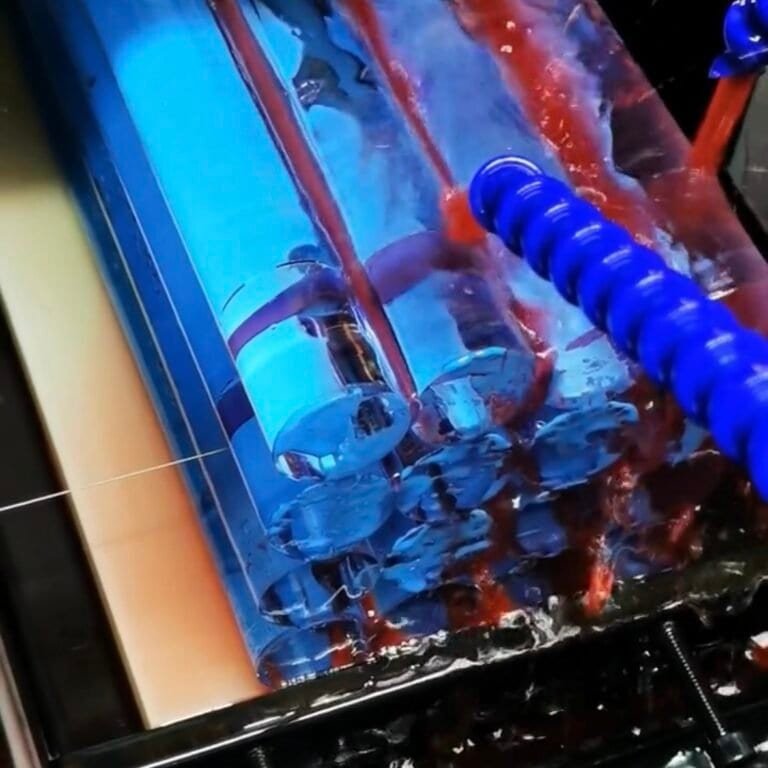
Why Edge Chipping Is a Key Issue in Optical Glass Processing
In the production of high-precision optical components—lenses, prisms, filters—edge chipping is one of the most common causes of yield loss. During dicing or slicing, brittle materials like fused silica, borosilicate, and optical crystal substrates are prone to micro-cracks or flaking at the edges.
Even small chips as little as 50–100 μm can render an optic unusable, especially in AR/VR optics, laser systems, and infrared modules. Chipped edges introduce:
- Optical aberrations
- Mounting instability
- Surface contamination
- Increased polishing workload
Traditional methods like blade sawing, laser scribing, or reciprocating diamond wire often introduce uneven forces or thermal shock—both major causes of edge degradation.
Endless Diamond Wire: A Structural Advantage Against Chipping
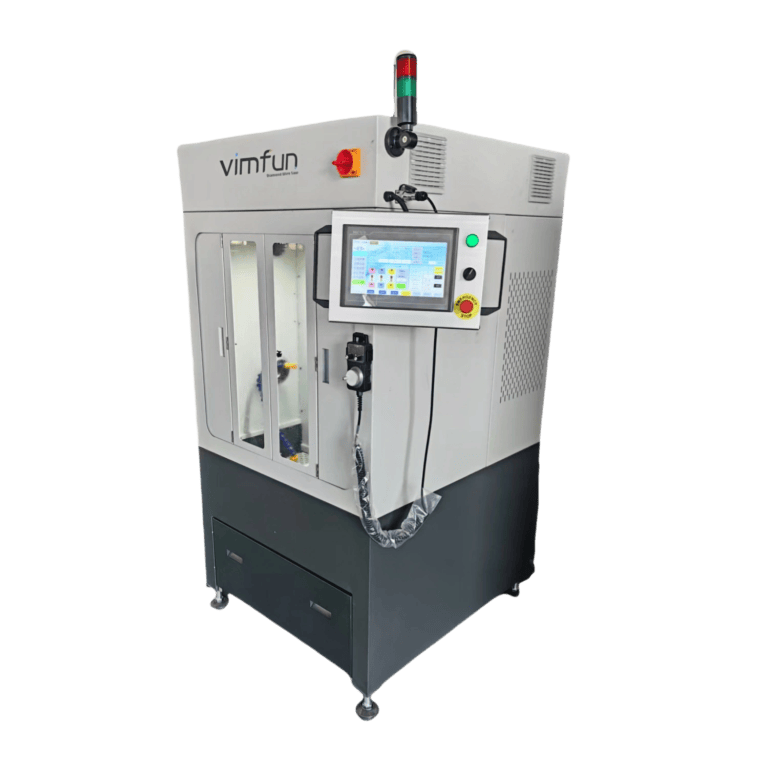
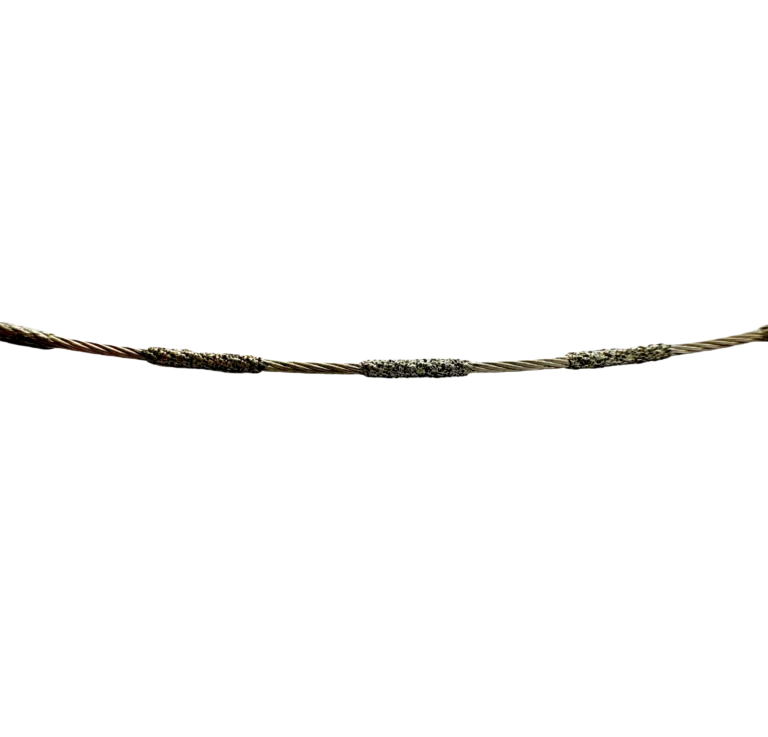
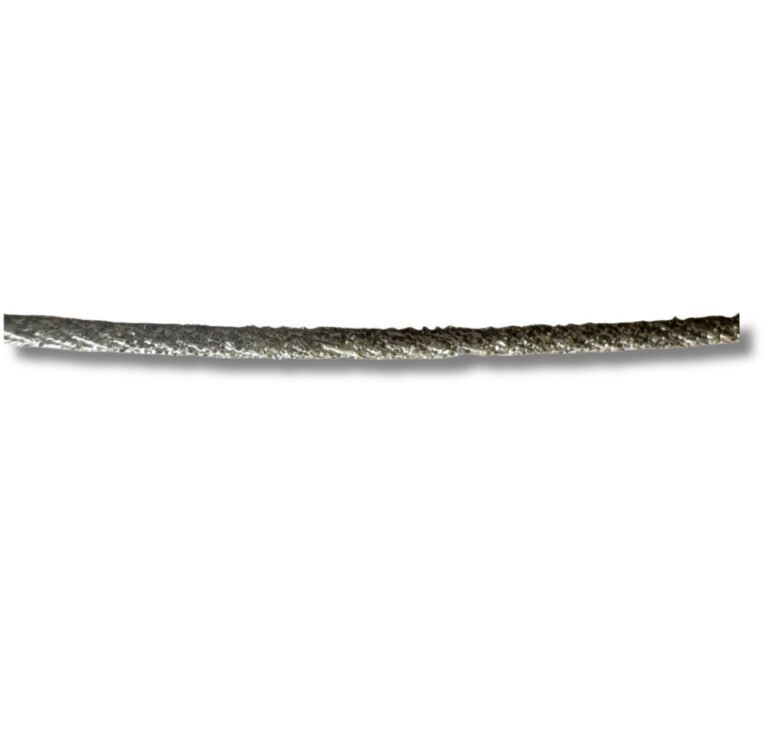
그만큼 endless diamond wire system, such as Vimfun’s SGI series, uses a continuous closed-loop wire that moves in one direction at a precisely controlled tension and speed. This design directly reduces edge chipping through three mechanisms:
✅ Vibration-Free Motion
Unlike reciprocating systems, endless motion removes the need to decelerate or reverse the wire.
- No shock transitions = no edge bursts
- Maintains constant cutting pressure
- Ideal for long, thin optical pieces
✅ Low Contact Force, High Stability
The wire applies distributed force along the contact area.
- Less point stress = fewer fracture initiations
- Stable load = predictable fracture path
- Tension is actively controlled in real-time
✅ Clean, Cold Cutting
Deionized water or alcohol coolant keeps the material temperature low.
- Avoids thermal cracks at the edges
- Reduces microfracture propagation
- Improves adhesion of coatings near edges
Quantitative Edge Quality Improvement
Controlled tests comparing endless wire vs reciprocating wire on 1 mm thick borosilicate wafers (cut size: 20×20 mm):
| Metric | Reciprocating Wire | 끝없는 다이아몬드 와이어 | Improvement |
|---|---|---|---|
| Avg. Chip Depth | 120 μm | 22 μm | ↓ 81.7% |
| Edge Break Rate | 12% | 1.2% | ↓ 90% |
| Rework Time per Piece | 8 min | 2 min | ↓ 75% |
| Ra (Edge Surface) | 0.38 μm | 0.12 μm | Improved polishability |
These differences scale further when cutting larger glass panels or when used for preform wafering in optical module lines.
Application Examples
Edge chipping suppression using endless wire is critical in:
- Wafer-level optics
- Prism block dicing
- Polarizer substrate shaping
- Optical filter blanks
- Optical ceramics (e.g. spinel, sapphire)
Multiple OEMs in the optics sector have replaced laser or saw-based slicing for edge-sensitive parts with SGI endless wire cutters, especially when downstream coating or bonding is involved.
Recommended Models for Different Optical Glass Processing Tasks
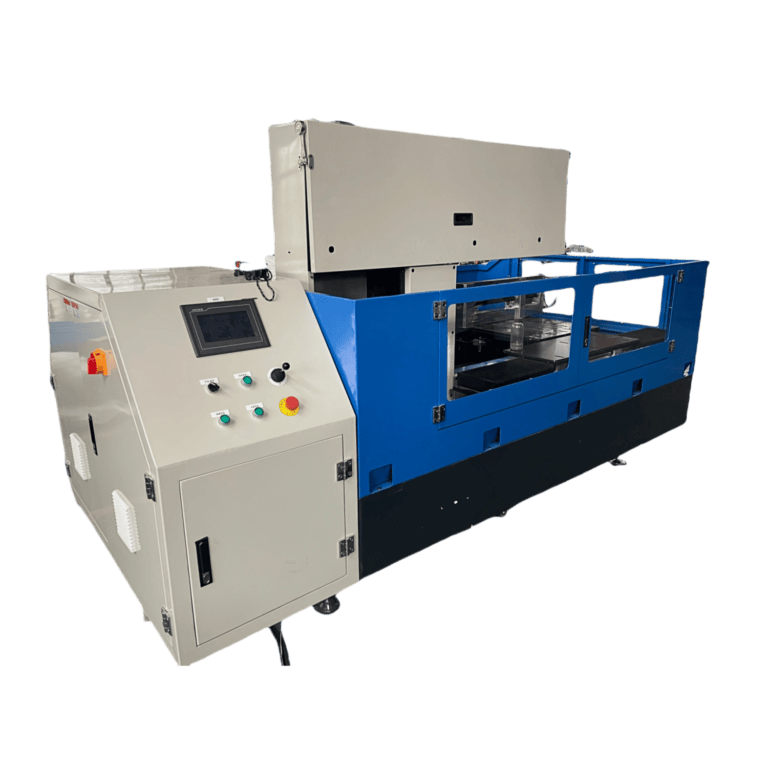
Vimfun offers a complete lineup of endless diamond wire saws tailored to specific optical glass processing needs:

- SG 20 – Optimized for slicing thin glass sheets, wafers, and coated substrates with high parallelism.
- SGR 20 – Designed for high-precision prism cutting with adjustable vertical support and minimal edge deflection.
- SGI 20 – Best suited for cutting microstructured or complex-profile optics, including coated glass with internal relief.
- SGRT 20 – Supports compound motion with tilt and rotation capabilities, ideal for advanced 3D shaping and multi-angle optics.
These models cover a wide range of brittle material slicing challenges, from basic sheet cutting to high-value, irregular optical components.
결론
Edge integrity in optical glass cutting directly impacts performance, yield, and downstream processes.
Endless diamond wire technology, with its stable motion, cold cutting, and stress-controlled slicing, offers a robust solution to edge chipping—particularly where optical precision matters most.
Whether used in prototyping or mass production, it sets a new benchmark for clean, low-defect optical glass processing.