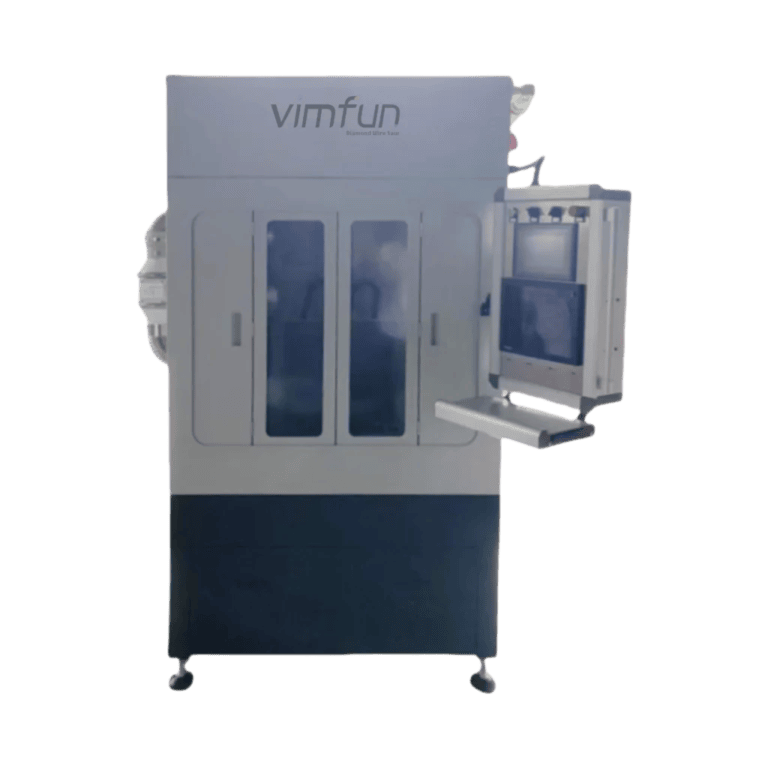
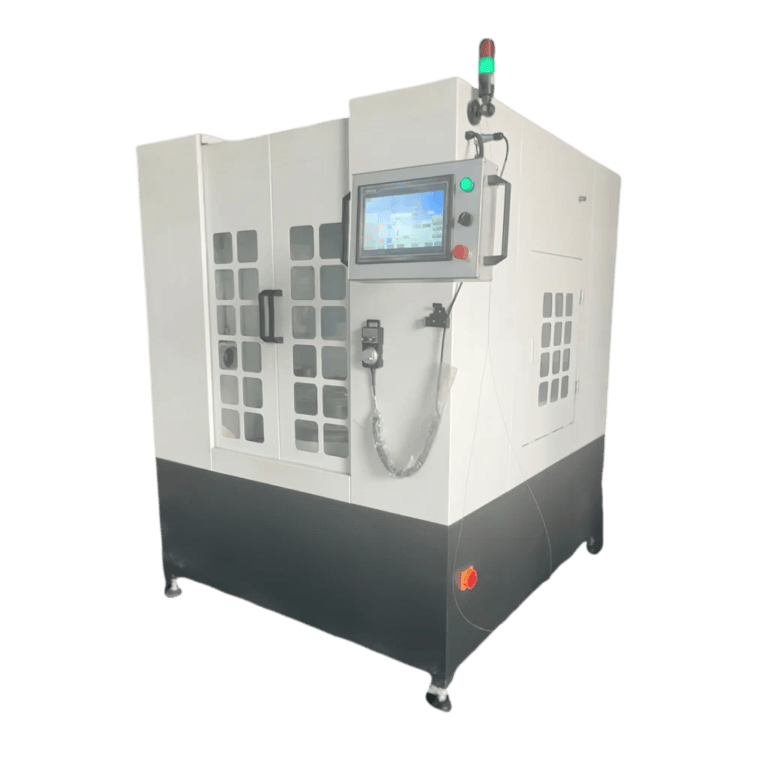
In high-precision optical manufacturing, découpe de lentilles optiques serves as a crucial bridge between rough stock preparation and final surface finishing. Whether for cameras, medical devices, or AR/VR systems, the geometric accuracy, material integrity, and surface quality of lenses heavily depend on this step. This article analyzes the technical aspects of lens cutting and why it directly impacts subsequent processing quality and yield.
The Role of Optical Lens Cutting in the Manufacturing Process
In a typical optical lens production workflow, découpe de lentilles optiques is positioned between raw material preparation and grinding/polishing
- Material Selection and Inspection
Optical glass or plastic blanks are inspected for refractive index, stress distribution, and inclusions. - Rough Cutting
Bulk material is separated according to lens outlines, removing large excess material efficiently. - Precision Optical Lens Cutting
Using high-precision tooling or wire-cutting methods, the lens is cut close to its final dimensions, establishing baselines for subsequent grinding and polishing. - Grinding and Polishing
Surfaces are processed under strict controls to achieve nanometer-level flatness and low scatter. - Inspection and Coating
Interferometry and other metrology tools verify optical parameters before anti-reflective or functional coatings are applied.
In this workflow, lens cutting is not merely material removal but a critical step that defines geometric baselines and ensures downstream processing stability.
Effects of Different Cutting Methods on Downstream Processing
Commondécoupe de lentilles optiques methods include
- CNC Tool Cutting
Precision tools under computer control cut lens outlines efficiently. Pros: high speed, flexible programming. Cons: mechanical forces and vibration can cause micro-damage. - Wire Cutting (Wire EDM)
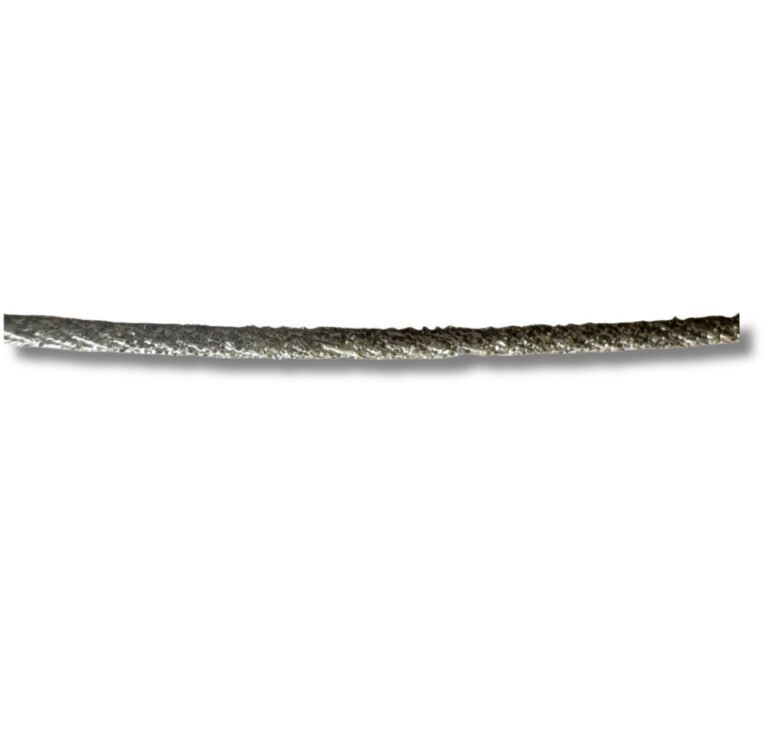
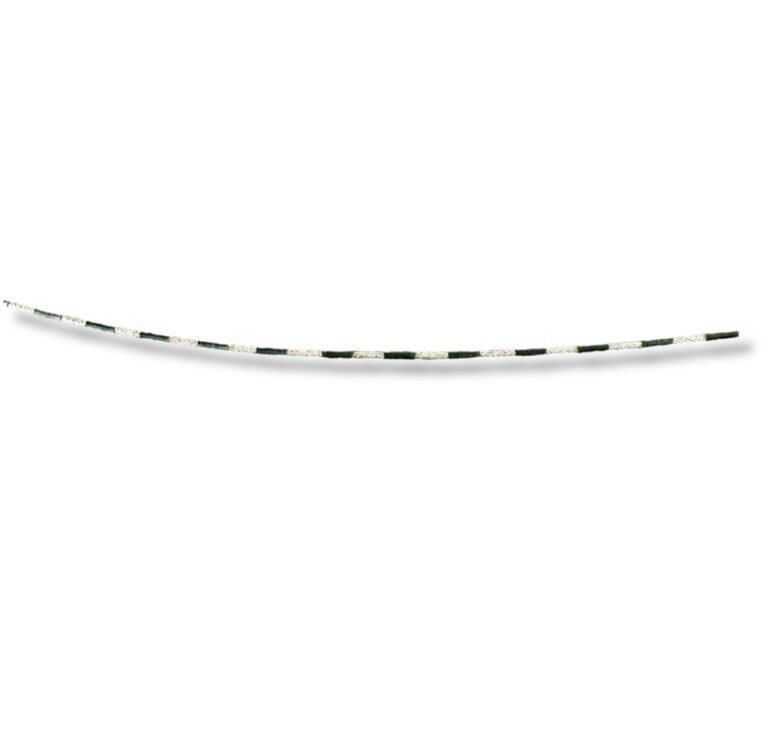
A wire with controlled movement removes material with minimal mechanical stress. Highly suitable for high-refractive-index glass or ceramic lenses.
Reference: Wire EDM for precise manufacturing: https://www.mmsonline.com/articles/wire-edm-precise-manufacturing - Découpe au laser
Effective for thermally sensitive materials, but controlling the heat-affected zone (HAZ) is critical.
Impact on downstream processing:
- Geometric Baseline Quality
Tool precision directly affects grinding tool path and wear distribution. Wire cutting offers high contour precision with low mechanical stress, but requires optimized material removal rates. - Surface Condition and Micro-Damage
Micro-cracks or thermal effects generated during cutting can propagate during grinding/polishing, reducing final optical performance.
The choice of cutting method should balance process efficiency with downstream stability and final optical specifications.

Why Cutting Determines Lens Yield and Consistency
In high-end optical manufacturing, yield and consistency are key metrics. Optical lens cutting affects both because:
1. Baseline Errors Are Amplified in Subsequent Operations
Micron-level geometric errors from cutting propagate during grinding and polishing, affecting centration, thickness uniformity, and surface figure.
2. Micro-Damage Propagation
Micro-cracks or stress concentrations formed during cutting are difficult to remove later and can degrade thermal and mechanical stability.
3. Tool Wear and Repeatability
Cutting tool wear or uneven wear leads to batch-to-batch variability, directly affecting consistency. Using stable tooling systems, real-time monitoring, and compensation strategies helps maintain yield.
Cutting vs Shaping: Technical Boundary and Division
In optical manufacturing, “cutting” and “shaping” are distinct processes:
| Function | Coupe | Mise en forme |
|---|---|---|
| Goal | Remove bulk material, establish geometric baseline | Achieve precise surface curvature and optical figure |
| Tools/Methods | CNC, wire cutting, laser | Grinding tools, polishing wheels, freeform machining |
| Output | Rough or semi-precision outline | High-precision surfaces with low wavefront error |
| Downstream Impact | Determines baseline accuracy | Enhances final optical performance and surface quality |
Coupe provides a controlled base for shaping to produce low-defect optical surfaces. Understanding this boundary helps avoid technical missteps and ensures process stability.
Conclusion
Optical lens cutting is more than material removal—it establishes the geometric baseline that determines downstream processing performance, yield, and consistency. Selecting the right cutting method, controlling tool wear, and maintaining process stability are critical to producing high-performance optical lenses.
As aspheric and freeform lens designs become widespread, integrating advanced cutting techniques with real-time metrology will be essential for improving both yield and consistency.